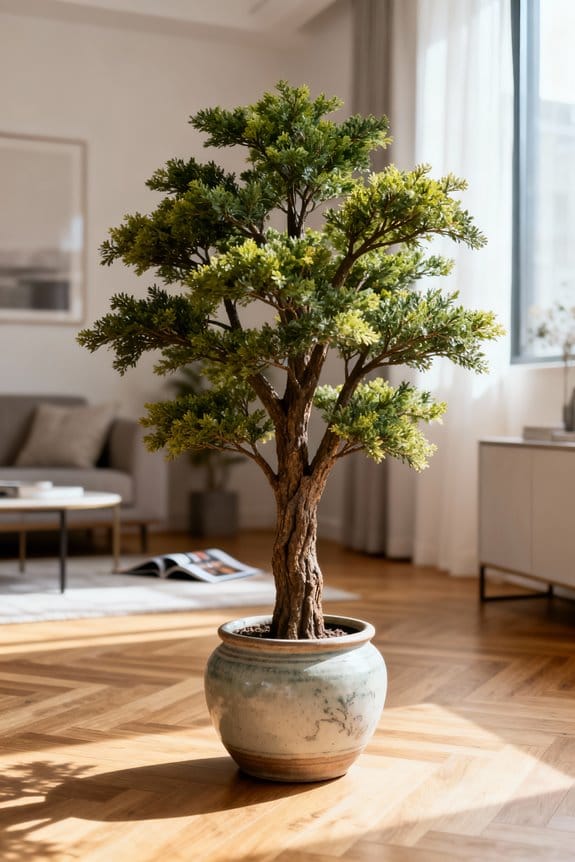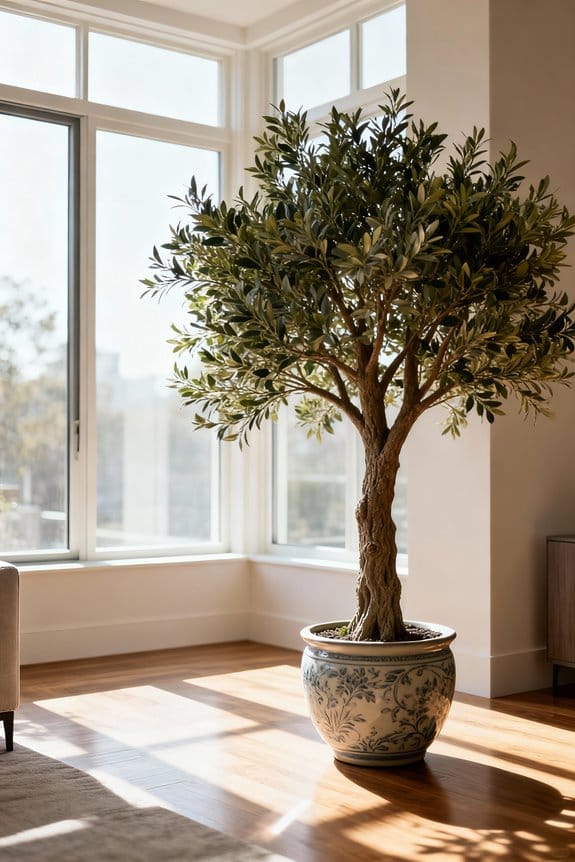
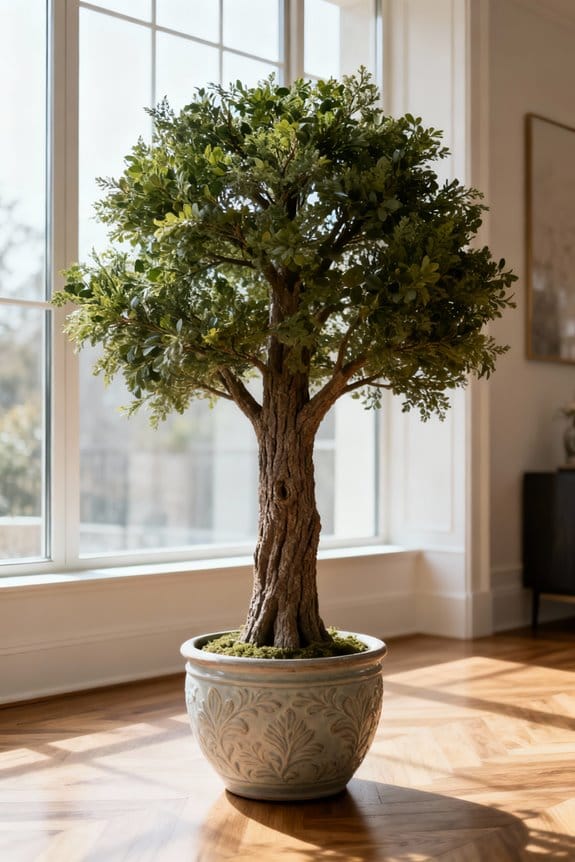

UV-protected faux trees are great for bright spots near your windows because they resist fading and damage from sunlight—phew! Just remember, glass can bounce UV rays around, so your tree might need a little extra care. Dust it off regularly and rotate it now and then to keep colors happy. Choosing high-quality, UV-resistant materials helps too. If you want to keep your greenery looking fresh and lively, there’s more handy advice ahead! 🌿
Key Takeaways
- UV protection helps prevent color fading and material damage in faux trees placed indoors or near glass windows.
- Glass reflections amplify UV exposure, increasing the risk of fading and warping even for UV-protected faux trees.
- High-quality, UV-resistant materials from reputable manufacturers offer better durability and longer vibrancy indoors.
- Regular dusting and cleaning with a soft cloth maintain the appearance and extend the life of faux trees.
- Using UV-blocking window films or sheer curtains can reduce sunlight impact and prevent uneven fading near glass.
How UV Protection Enhances Faux Trees Indoors
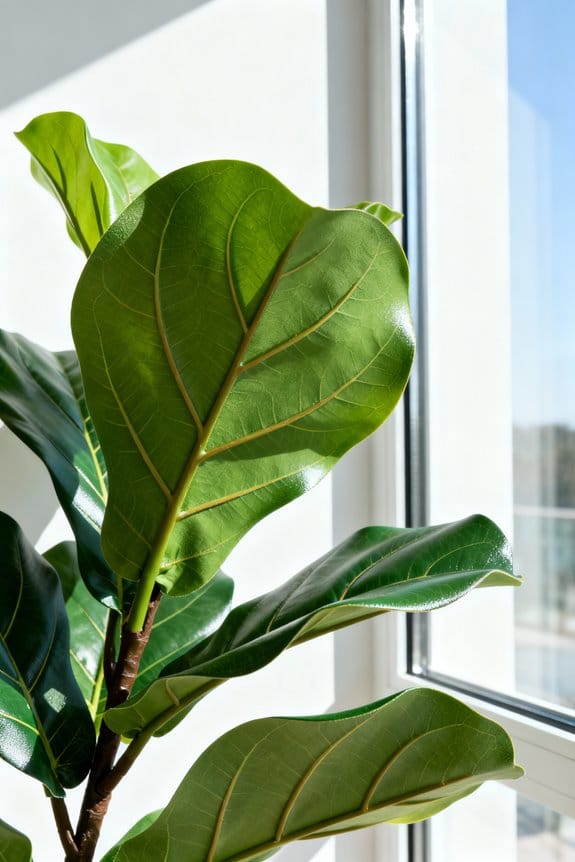
Wondering why UV protection matters for your faux trees indoors? It’s all about keeping that vibrant appearance alive! UV protection helps prevent color fading and material wear caused by sunlight sneaking through your windows. When faux trees are UV-treated, they can hold onto their long-lasting beauty for 5 to 10 years—even in sunny spots. Bonus? Unlike real plants, these beauties don’t have annoying sunlight requirements, so you can place them near glass without worries about fading. Just remember to give them regular dusting to keep them looking fresh; dirt can dull their charm faster than you’d think. So, if you want your indoor space to stay lively without the fuss of watering or sunlight checks, UV-protected faux trees might just be your new best friend! 😊🌿 They are often crafted from high-quality, fade-resistant materials, ensuring a realistic and durable touch to your décor.
Potential Risks of Placing Faux Trees Near Glass
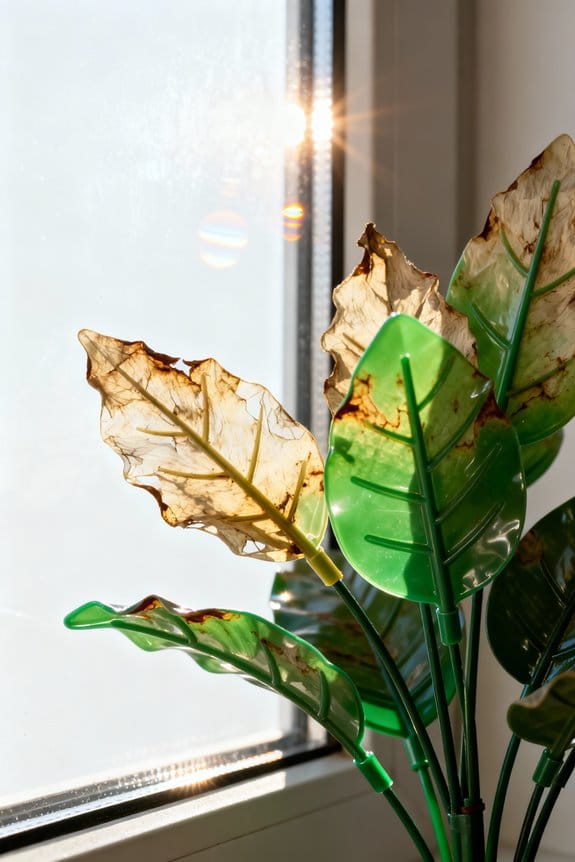
UV protection does make a big difference in keeping your faux trees looking fresh indoors, but placing them right next to glass can still trick them into a bit of trouble! 🌞 Glass surfaces reflect and intensify UV radiation, which speeds up fading even for UV-protected faux trees. Plus, the temperature near glass can spike a lot, causing potential warping or damage if your tree isn’t up for the heat challenge. Though high-quality faux trees offer good UV resistance, putting them too close to sunny windows can shorten their lifespan, especially in hot spots. You’ll want to keep an eye on them and step up your maintenance game to save your green pals from premature aging. Trust me, they’ll thank you with longer-lasting lushness! 😉 Also, regular occasional dusting helps maintain their vibrant appearance and prevents buildup that could accelerate wear from sun exposure.
Material Quality and Its Impact on Longevity
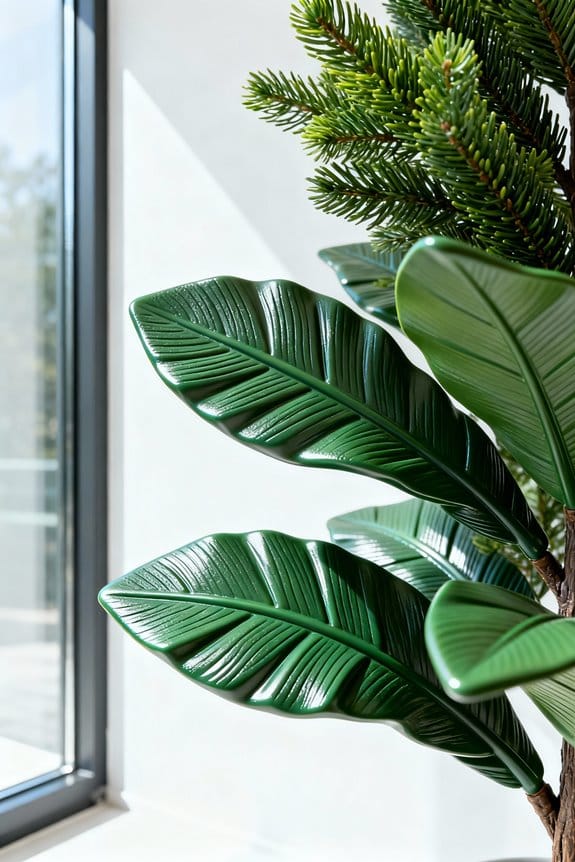
When it comes to faux trees, what they’re made of really matters for how long they’ll stay looking great! 🌿 You might think any UV-protected label means “set it and forget it,” but that’s not quite the case. Material quality plays a huge role in the longevity of your artificial trees. Those made from premium poly-blend with built-in UV protection keep their color vibrancy fresh for 5 to 10 years, especially outdoors in sunlit spots. It’s like the difference between a sturdy coffee mug and a flimsy paper cup! You’ll want to choose UV-resistant trees from reputable manufacturers who use UV stabilizers, not just sprays. This guarantees even protection across all leaves, making your indoor or outdoor spaces look fab for years without fading or peeling. Additionally, selecting trees with a durable polyester construction ensures realistic textures while enhancing their resistance to sunlight and wear.
Effects of Indoor Light Exposure on UV-Protected Trees
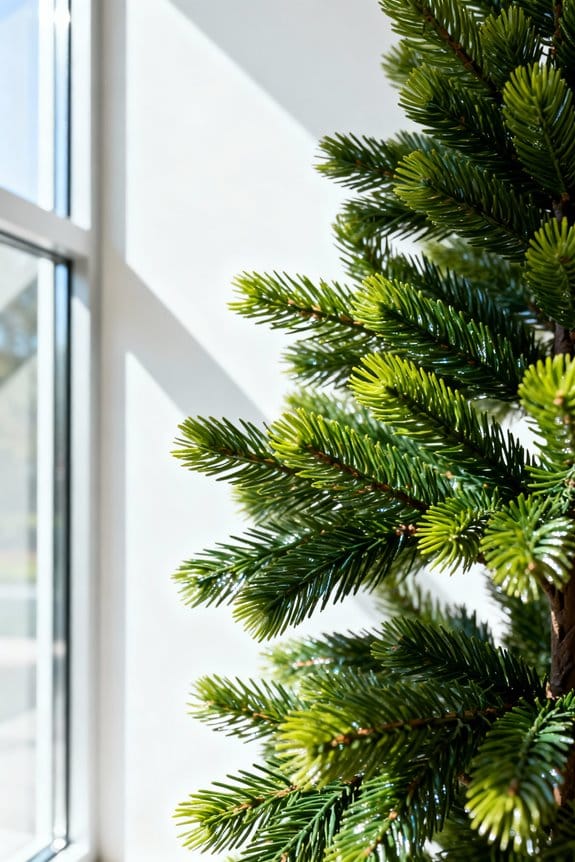
As you’ve probably noticed, keeping faux trees looking fresh indoors isn’t just about picking the right materials outdoors—they face their own challenges too! 😊 Even UV-protected trees can start to lose a bit of their glow if they’re sitting too close to sunny windows for long periods. Indoor light exposure, especially through glass, can cause uneven fading and other signs of deterioration over time. But don’t panic! Choosing high-quality, UV-protected faux trees boosts durability and helps them resist this damage longer. Still, some maintenance is key—regular cleaning and gently rotating your faux trees can keep colors even and vibrant. So, keeping an eye on your trees is a small step that really pays off in the long run! Additionally, regular light dusting is essential to prevent dust buildup, which can diminish the natural appearance of artificial foliage.
Best Practices for Maintaining Faux Trees by Windows
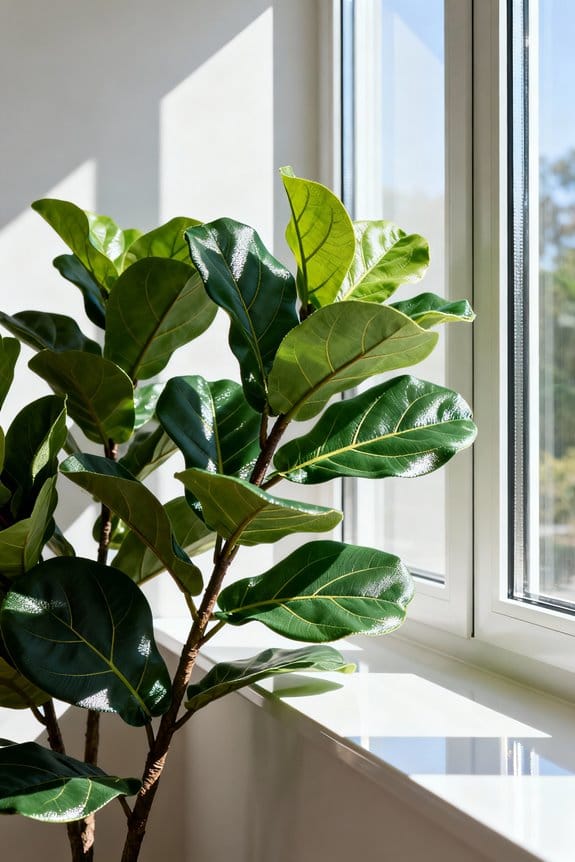
Keeping faux trees looking their best by windows doesn’t have to be rocket science—just a few smart moves can make a big difference! 😊 For starters, make sure your trees are made from high-quality materials that actually stand up to sunlight, because cheap stuff just won’t last. When maintaining faux trees near windows, try rotating them regularly to avoid uneven fading from direct sunlight exposure. Cleaning faux trees every few months with a soft, damp cloth helps keep dust off and protects those UV-protected finishes—who knew dust was such a party crasher? 😅 You can also position your trees behind sheer curtains or add UV-blocking window films for an additional layer of protection. These simple steps keep your faux trees vibrant and happy, even when sitting near glass! It’s also helpful to choose faux trees with UV-resistant materials to ensure they maintain their color and quality over time.
Comparing UV Protection Sprays and Built-in UV Resistance
Protecting your faux trees from sun damage isn’t just about keeping dust off—there’s a bit of a showdown between UV protection sprays and built-in UV resistance! 😊 While sprays sound like a quick fix, they tend to wear off in about six months and need constant reapplication. On the other hand, built-in UV resistance is woven right into the artificial greenery during manufacturing, offering long-lasting protection that you can actually count on. High-quality UV-resistant faux trees keep their non-cracking and non-fading look much longer, often 5 to 10 years, which means less hassle for you. Sprays might save you some upfront cash, but if you want to keep your faux trees’ aesthetic quality without the constant fuss of reapplication, built-in UV resistance is the way to go! For optimal longevity and safety, look for artificial trees made with flame-retardant materials that also enhance durability.
Choosing the Right Faux Tree for Indoor Sunlit Areas
Wondering how to pick the perfect faux tree for your sunny indoor spot? 😊 It’s not just about grabbing any green-looking plant off the shelf! For sunlit areas, you’ll want faux trees made from UV-resistant materials to avoid ugly discoloration that makes them look tired fast. High-quality indoor artificial plants with built-in UV protection stay vibrant for years—up to a decade—even in bright windows! Pick sizes that complement space; a giant tree in a cozy room can feel overwhelming and fade unevenly if sunlight hits some leaves more. Plus, regular dusting and light cleaning keep your faux tree fresh-looking without the fuss of watering. Remember, choosing the right faux tree in sunlit spots means less maintenance and a long-lasting splash of green that really works! 🌿 Look for options with fade-resistant foliage to ensure your indoor tree keeps its vibrant color despite constant sun exposure.
Frequently Asked Questions
Will UV Light Pass Through Glass?
UV light does pass through glass, though UV transmission levels vary with glass types. Window coatings and UV filters can reduce exposure, affecting indoor lighting and artificial sunlight, thereby influencing plant health and sustainability practices regarding UV-sensitive decor.
How to Make Fake Plants UV Resistant?
UV protection methods for fake plants include choosing faux plants made from UV-inhibitor materials. Benefits of UV resistance guarantee long-lasting decor, enhancing aesthetics and indoor plant care. Comparing materials highlights cost-effective, environmentally friendly options.
Does UV Go Through Glass for Plants?
UV penetration varies based on glass properties, affecting plant health in indoor gardening. Interior lighting and artificial lighting contribute to the UV spectrum exposure, influencing faux foliage durability. Environmental factors also impact UV transmission through glass.
Can UV Rays Pass Through Glass and Curtains?
UV rays partially pass through glass depending on glass types comparison and curtain materials, influencing natural light exposure. Window tint options and UV absorption properties affect faux plant care and plant longevity indoors, with indoor lighting effects moderating UV protection factors.