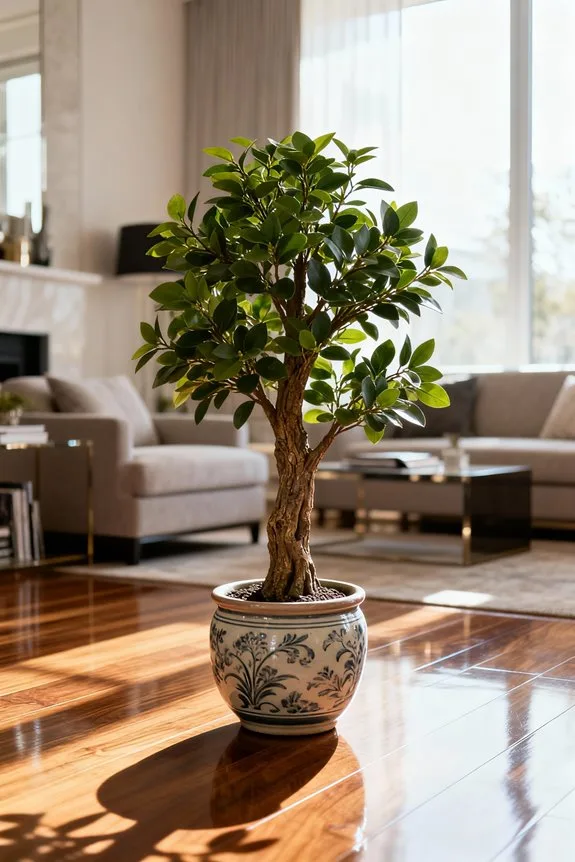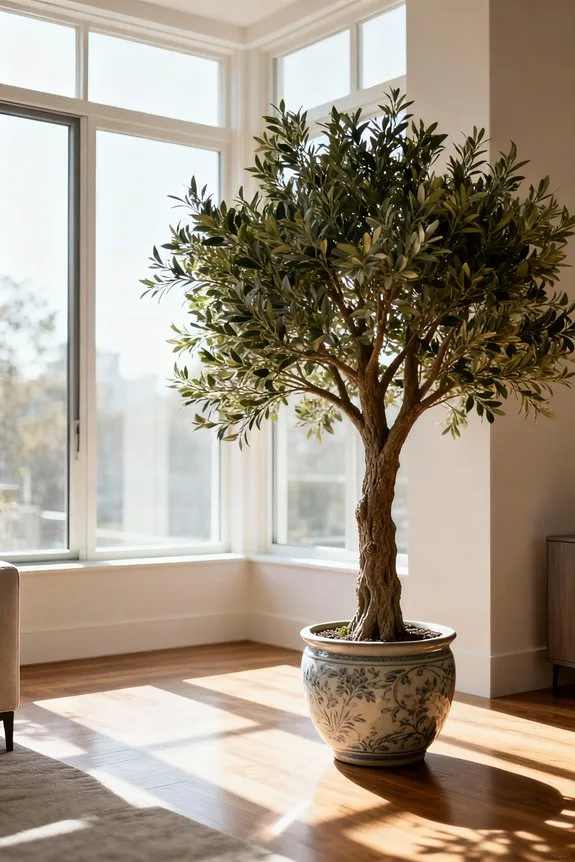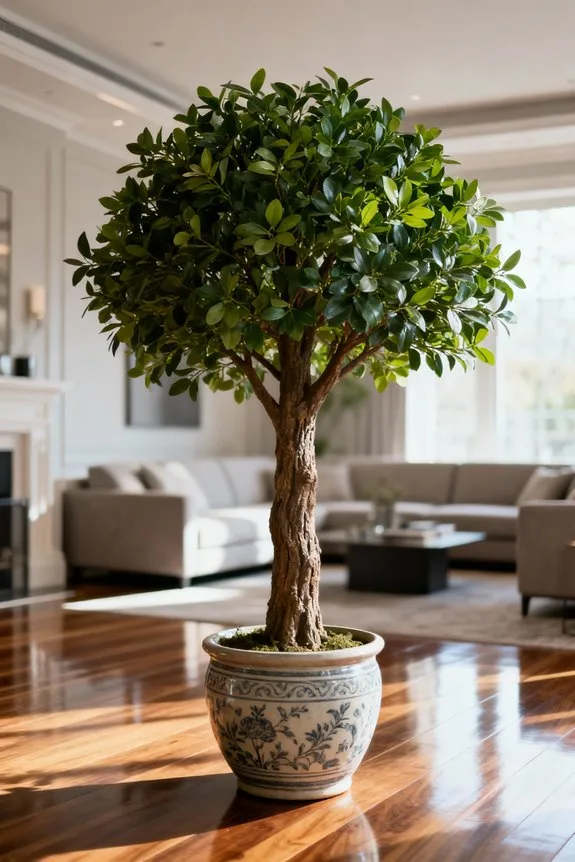


Keeping your indoor trees happy is easier than it seems! Each month, check for pests like aphids and spider mites—you don’t want surprise guests wrecking your plant party. Feel the soil; if it’s dry, give a slow, steady drink. Clear those drainage holes so roots don’t drown, and prune yellow leaves to keep things tidy. Don’t forget to dust off leaves and rotate pots for even sunshine. If roots peek out, it’s repot time! Want some pro tips? There’s more to help your green pals thrive! 🌿😊
Key Takeaways
- Inspect trees monthly for pests, diseases, and signs of stress like yellowing or wilting leaves.
- Check soil moisture weekly and water slowly when the top soil feels dry to prevent overwatering.
- Clear drainage holes of debris to ensure proper water flow and prevent root rot.
- Prune dead or excessive foliage and clean leaves with a damp cloth or lukewarm shower.
- Monitor indoor humidity levels and group plants or mist leaves to maintain 40%-60% humidity.
Inspect Trees for Pests and Diseases
Although inspecting your indoor trees for pests and diseases might sound like a boring chore, it’s actually a quick and easy way to keep them happy and healthy! 😊 You’ll want to check under the leaves and along the stems because sneaky pests like aphids, mealybugs, and spider mites love to hide there. When you inspect trees for pests and diseases, watch for yellowing or wilting leaves—they’re often the first sign that something’s off. Sticky residue can mean sap-suckers like aphids are nearby, so don’t ignore that shiny stuff! Look closely at the soil and base for tiny webs or larvae, hinting at spider mites or other troublemakers. Catching pests early may save your tree from a sad, mushy fate. Trust me, your trees will thank you for the quick check! With low-maintenance artificial trees, you can enjoy greenery without worrying about pests or diseases.
Check Soil Moisture Levels

How do you know when it’s time to water your indoor trees? 🤔 Checking the top inch or two of soil is a simple trick—if it feels dry, your tree is probably thirsty! To be a bit more precise, you can use a moisture meter that helps you checksoilmoisturelevels without guessing—because, honestly, I once overwatered a ficus and learned the hard way! Remember, indoorplants need different amounts of water depending on the season and the type of soil they’re in. Well-draining soil dries faster, so keep an eye on it. Water slowly until you see some drainage (but don’t flood it!), and you’re all set. Regularly checking soil moisture keeps your trees happy and healthy, saving you from some messy mishaps! 🌿 Artificial banana trees require no watering or pruning, making them ideal for those who prefer low-maintenance indoor decor.
Clear Drainage Holes for Proper Water Flow

Keep those drainage holes clear to let excess water escape easily and keep your indoor trees happy! 🎉 Blocked holes can trap water, leading to root rot—a nasty problem no plant lover wants. Each month, check your plant’s drainage holes for dirt, debris, or even sneaky roots poking out. If roots are escaping, it might be time to repot—your tree needs some more room to grow! Using pots with multiple drainage holes is a clever trick to help water flow better and keep soil fresh. When drainage holes don’t do their job, your tree can suffer, but a quick monthly check is an easy habit to avoid trouble. Think of it as your indoor tree’s little lifesaver! 🌿 For those opting for artificial trees, remember that they require no watering or pruning, eliminating drainage concerns altogether.
Prune Dead or Excessive Foliage

Once the drainage holes are clear and your indoor tree is happily hydrated, it’s time to focus on pruning dead or excessive foliage! You might think your plant’s leaves are just being dramatic, but those yellow or brown ones really need to go—think of it as trimming away last season’s bad haircut. Using clean, sharp shears to prune helps your tree heal faster and keeps disease at bay. Don’t be shy about cutting back excessive foliage either; it lets light and air inside, so your tree can breathe and grow. Try to prune during spring or early summer when your tree is in its prime growing mood. Avoid heavy pruning in winter unless you want your tree giving you the silent treatment! Trust me, your tree will thank you! 🌿✂ To prevent water damage and promote healthy root conditions, consider using planters with built-in drainage holes and rubber plugs.
Rotate Pots for Even Growth

Wondering why your indoor tree seems to lean like it’s reaching for the sun? 🌞 That’s a sign it might be craving a little rotation! When you rotate pots every two weeks, you help your indoor plants soak up light evenly. This simple twist encourages balanced growth and stops your tree from looking like it’s always chasing the window. Try turning your pots about a quarter turn each time—not too fast, or your plant might get dizzy! Plus, rotating is a great chance to peek for pests or any sneaky problems hiding behind leaves. It’s like giving your tree a gentle nudge to stand tall and proud, and hey, who doesn’t want their indoor jungle looking its best? Rotate pots—you and your plants will thank each other! 🌿 To ensure stability as your tree grows, consider matching tree height to room size and planter diameter for proper balance with sizing considerations.
Monitor Humidity and Adjust Environment
Although indoor trees don’t carry little humidity meters, you can easily keep tabs on their favorite moisture levels using a hygrometer—a gadget that’s surprisingly affordable and handy! 🌿 Most indoor trees prefer humidity between 40% and 60%, so having a simple way to measure this helps you avoid the dreaded crispy leaf edges or curlies. To boost humidity, try grouping your plants together since they release moisture naturally. Misting leaves once or twice a week also works wonders, but don’t overdo it—you’re not their personal rain cloud! 😅 Placing a pebble tray filled with water beneath pots can slowly raise humidity too. If dry winter air hits hard, a humidifier might be your tree’s best friend. Regularly monitor humidity and adjust accordingly to keep your indoor trees happy and healthy! For those looking for an easy-care alternative, artificial eucalyptus trees offer low maintenance while brightening your space without affecting humidity levels.
Assess Light Exposure and Adjust Placement
Keeping your indoor trees comfy isn’t just about humidity—light plays a big role too! 🌞 You’ll want to check how bright your room really is and figure out if your tree is getting bright, indirect, or just low light. Start by moving your tree near an east or west-facing window for the best natural glow. Rotate it every two weeks; it helps your tree get even light and avoid looking like it’s always sunbathing on one side. If winter’s got your tree feeling gloomy, adding a grow light can save the day. Watch out for the classic signs of too little light—yellow leaves or stems stretching out like they’re reaching for the sun. Adjusting placement might be the simple fix your green buddy needs to thrive! For artificial trees, choosing those made from UV-safe materials ensures they maintain their color and appearance even in sunlit areas.
Fertilize According to Seasonal Needs
Give your indoor tree a little extra love by fertilizing it right when it starts to grow! 🌱 During spring and summer, feeding your tree every 4 to 6 weeks with a balanced fertilizer can make a big difference—think of it as a multivitamin for your leafy friend. Use a fertilizer designed for houseplants that includes nitrogen, phosphorus, and potassium to cover the basics. Remember to follow the instructions carefully—overdoing it can hurt your tree instead of helping. When fall and winter roll around, it’s best to cut back or stop fertilizing since your tree chills out and doesn’t need extra nutrients. Keep an eye out for yellow leaves or slow growth; these hints mean your tree might be craving some extra feedings! Fertilize smart and watch it thrive. For those seeking low-maintenance alternatives, consider artificial trees with real wood trunks, which require no fertilization or watering.
Clean Leaves to Remove Dust and Debris
A good handful of indoor trees start looking droopy or dull when dust settles on their leaves—yikes! 😬 That dusty film blocks sunlight and slows down photosynthesis, which your tree definitely doesn’t want. To avoid this, make it a habit to clean leaves at least once a month. You can gently wipe each leaf with a damp cloth or sponge, getting both the top and underside. For larger trees, giving them a lukewarm shower in the bath or outside works wonders! Just remember, use room-temperature water to avoid shocking your plant. Keeping leaves clean not only boosts your tree’s health but also makes your space look fresher. So, grab that cloth—your indoor tree will thank you later! 🌿 Additionally, for artificial trees, regular dusting helps maintain their lifelike appearance and keeps your decor vibrant without any extra care.
Repot When Roots Outgrow Containers
When those roots start peeking out of the drainage holes or circling around the pot’s inside, it’s a clear sign your indoor tree is ready for a bigger home! 🌱 Repotting might sound a bit scary, but it’s actually one of the best ways to keep your tree happy and healthy. Check if the roots are crowding the soil, which can stop your tree from soaking up water and nutrients properly. The best time for repotting is during spring or early summer—your tree’s active growing season. Grab a pot just one size bigger and fill it with fresh soil to give those roots more room to stretch. It’s like moving into a new apartment with better snacks—you’ll both be happier afterward! For low-maintenance options, consider artificial trees made with hypoallergenic materials to avoid repotting altogether.
Group Trees to Enhance Humidity Levels
Keeping your trees happy doesn’t stop once they have fresh soil and more room to grow. One easy trick you might overlook is to group trees to enhance humidity levels. When you cluster your plants together, they naturally release moisture through transpiration, turning their little corner into a cozy, humid mini-forest! This helps keep humidity between 40% and 60%, perfect for most indoor trees. Especially in winter, when your heater turns your home into a desert (ugh!), grouping humidity-loving trees like ferns, palms, or rubber trees helps them bounce back and avoid stress. So, next time you’re rearranging, try bringing your plants closer. It’s like giving your trees a support group—minus the awkward therapy talk! Your plants will thank you with healthier, happier leaves. 🌿
Observe Overall Plant Health and Growth Patterns
How can you tell if your indoor tree is truly thriving or just pretending? It all starts when you observe the overall plant health closely. Keep an eye on leaf color, wilting, or any signs of stress—these little hints reveal how happy your tree is. Also, watch its growth patterns by tracking new leaves or measuring its height. It’s like checking in on a friend’s mood! If leaves suddenly drop or turn yellow, it might be a code for too much water or not enough light. Don’t forget seasonal changes; your tree usually grows more in spring and summer. Finally, spot any pests or diseases early. By paying attention to these details, you’ll make sure your indoor tree stays vibrant and healthy without needing a plant degree! 🌿😊
Frequently Asked Questions
How to Maintain Indoor Trees?
Maintaining indoor trees requires regular tree pruning to remove dead branches, promoting healthy growth and airflow. Proper watering, adequate light, pest inspection, and fertilization contribute to thriving trees, debunking the myth that indoor trees need minimal care.
What Is the Most Low Maintenance Indoor Tree?
The top picks for the most low maintenance indoor trees include the Snake Plant, ZZ Plant, and Pothos. These species tolerate low light, infrequent watering, and thrive in neglect, making them ideal for minimal care requirements.
How to Take Care of Indoor Plants for Beginners?
Proper watering techniques involve checking soil moisture regularly and watering only when the top inch is dry, promoting healthy roots. Beginners should also consider light requirements, humidity, and regular pest inspections to successfully care for indoor plants.
What Are the 7 Important Things to Consider in Growing an Indoor Plant?
The seven important things to contemplate in growing an indoor plant include plant placement based on light, consistent watering, appropriate soil, regular fertilization, temperature and humidity control, pest monitoring, and timely disease treatment for ideal growth.