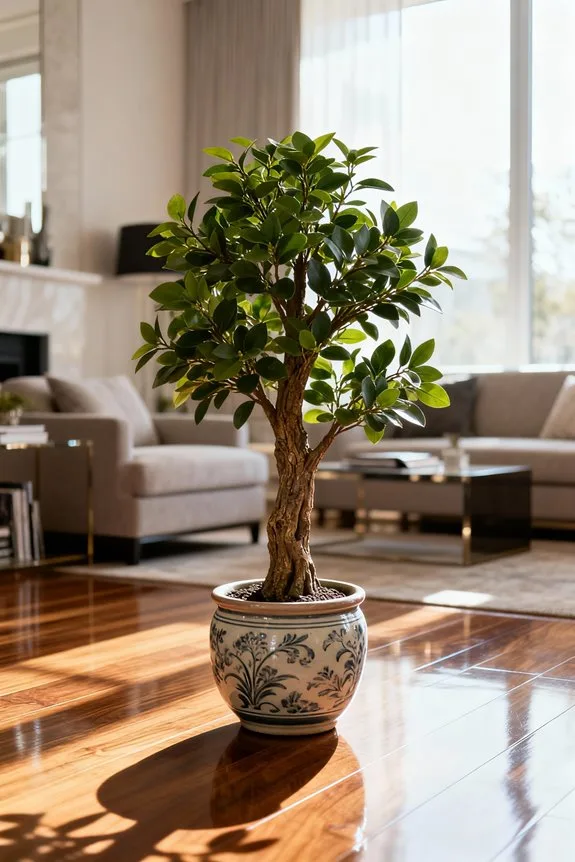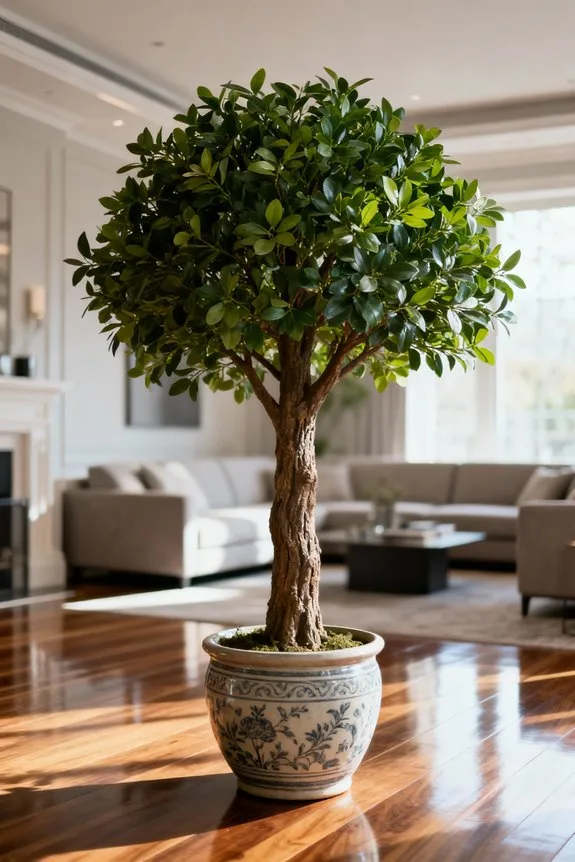
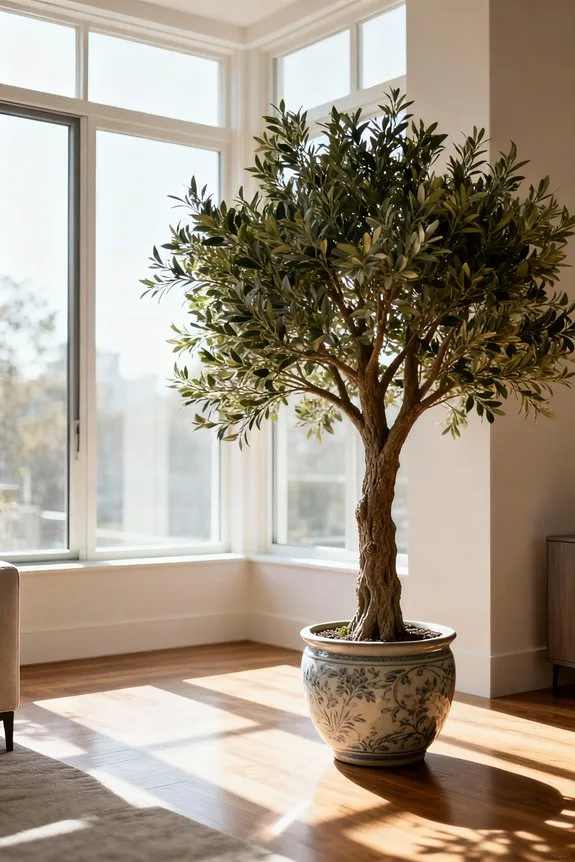

If your indoor tree looks a bit faded near windows, don’t panic! UV rays can bleach leaf colors, so try using UV-blocking window films or sheer curtains to soften that harsh sunlight. Rotating your tree regularly helps it get even light without overdoing it. Keep humidity balanced too—around 35-55% is great for healthy leaves. These simple fixes protect your tree and brighten your space! Stick around to discover more tips for happy, vibrant indoor trees! 🌿
Key Takeaways
- Use solar control window films to block up to 99% of harmful UV rays that cause leaf pigment fading near windows.
- Rotate indoor trees regularly to ensure even light exposure and prevent localized bleaching or fading.
- Apply UV-blocking window films or sheer curtains to filter harsh light while allowing beneficial growth spectrum.
- Maintain indoor humidity between 35-55% to reduce stress and dehydration that worsen leaf fading and scorch.
- Adjust tree placement seasonally to balance light exposure and avoid prolonged direct sunlight causing photo-bleaching.
Understanding Fading in Indoor Trees
While it might seem like your indoor tree is just soaking up some happy sunshine, too much direct light can actually make its leaves fade and lose their bright colors! 🌞 This happens because the strong sun can bleach the pigments that give leaves their green, yellow, or red tones, kind of like how your favorite T-shirt fades after too many washes. For indoor trees, prolonged light exposure means photo-bleaching is a real bummer. UV rays sneak in through windows, speeding up fading and making leaves look dull. But don’t fret! Protective measures like UV-blocking window films or even sheer curtains can save the day. Moving your tree away from direct sunlight or adjusting its spot can work wonders to keep those colors popping! 🌿 Choosing indoor trees made with non-toxic materials can also help ensure longevity and maintain vibrant foliage despite light exposure.
The Role of UV Rays in Plant Health
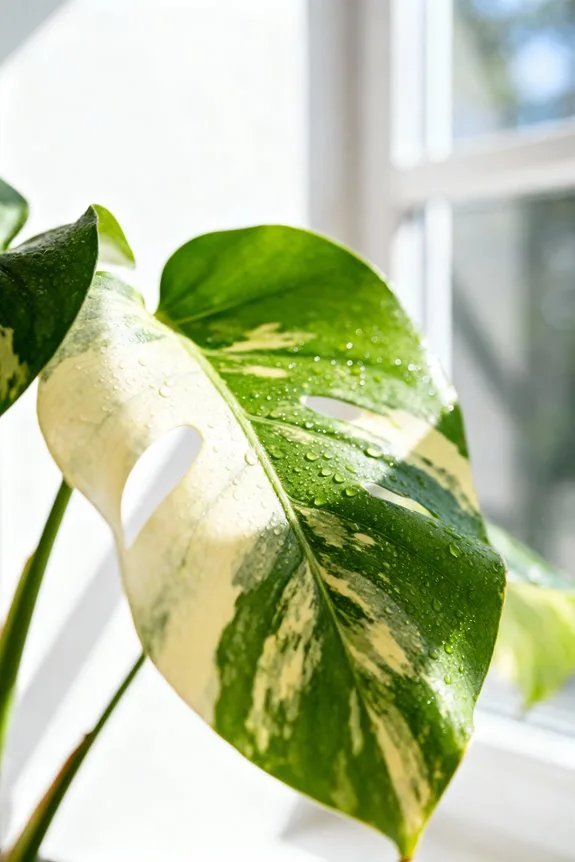
Sunlight is a bit of a mixed bag for your indoor tree, especially when it comes to UV rays! 🌞 These sneaky rays aren’t what your tree uses to make food, but they do play a role in how your plant’s colors and defenses develop. UV rays can help indoor plants produce protective pigments that keep them stronger against pests or stress. But watch out—excessive UV exposure isn’t all sunshine and rainbows! Too much can cause leaf damage like scorch marks and dehydration, which nobody wants. To keep your tree happy and vibrant, consider UV protection like window films that block harmful UV rays. It’s all about balance—too little and your plant misses benefits; too much, and it risks harm. Keep an eye on the sunlight and protect your leafy friend! Artificial trees offer a UV-resistant, low-maintenance alternative that keeps your space green without the risk of fading.
Benefits of Solar Control Window Film
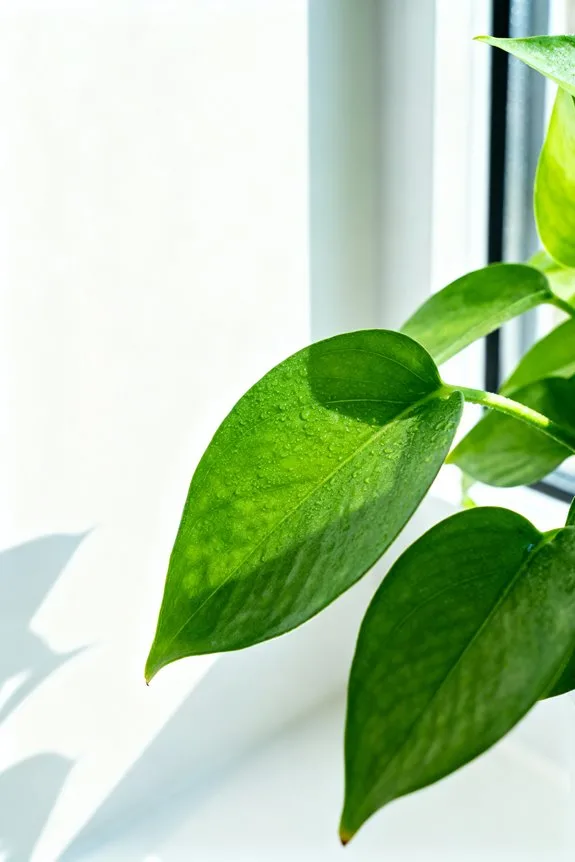
How can a simple window upgrade make a big difference for your indoor tree? 🌿 Solar control window film is like a secret shield, blocking up to 99% of harmful UV radiation that causes leaf scorch and fading. It helps protect your indoor greenery by reducing glare and keeping temperatures steady, which means less stress on your leafy friends. Don’t worry—plants need light, and this film lets through the all-important red and blue light they use for growth. Plus, it can boost your home’s energy efficiency by cutting heat gain, so your space stays comfy without blasting the AC. It’s like giving your plants a sunscreen that doesn’t block the sun entirely—just enough to keep them happy and healthy near windows! For indoor plants, choosing UV-protected materials ensures longevity and vibrancy, aligning with best practices used for durable artificial greenery.
Choosing the Right Window Treatments
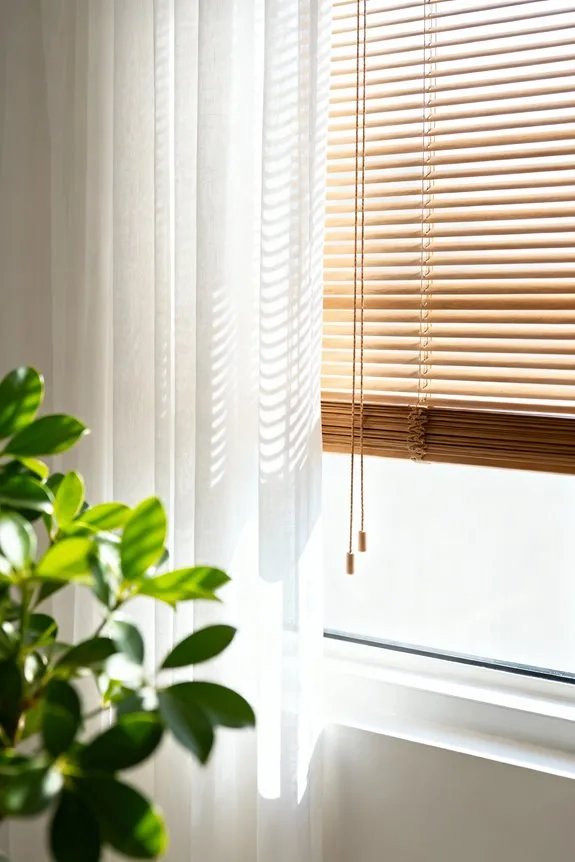
Picking the right window treatments can make a surprisingly big difference for your indoor trees! 🌿 You want to block harsh rays that fade your plants but still keep enough light for them to thrive. Using UV-blocking films is a smart move—they reduce harmful UV rays while letting in natural light. Cellular shades or wooden blinds are great too, helping you control direct sunlight exposure and protect your indoor trees from color loss. For extra protection, consider adding blackout or UV-resistant curtains; they’re adjustable as sunlight changes during the day. Combining these window treatments creates a custom shield, balancing sunlight and protection. Don’t forget to check how sunlight exposure shifts with the seasons—adjusting your setup keeps your indoor trees happy and colorful year-round! For long-lasting vibrancy, it’s also helpful to choose indoor plants made from UV-resistant materials that naturally resist fading even in sunlight.
Optimal Placement and Rotation of Indoor Trees
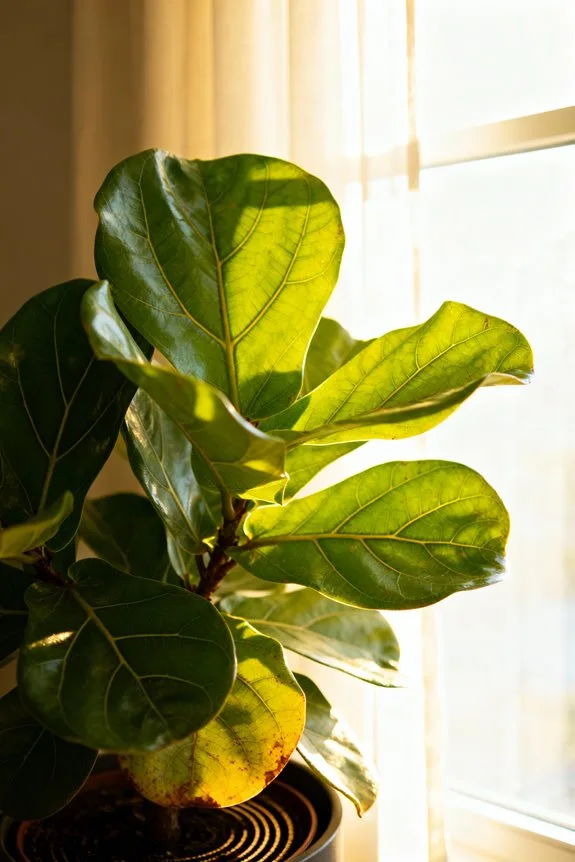
Even if your indoor tree seems perfectly happy where it stands, giving it a little shake-up now and then by rotating its position can make all the difference! 🌱 You see, turning your tree every few weeks helps light reach all sides evenly, so it won’t grow lopsided or lose its vibrant color on just one side. Ideal placement is key too—avoid spots with excessive exposure that cause leaf fading or stress, especially for sensitive plants. Using UV-filtering window films not only protects from harsh rays but lets in beneficial light your tree loves. Keep an eye on seasonal light changes to adjust placement as needed. Rotation strategies and smart positioning work together to keep your leafy friend healthy and glowing, just like that one plant you swore you’d never kill! Additionally, choosing artificial trees made with UV-resistant materials can further prevent color fading near windows.
Using Blinds and Sheer Curtains to Diffuse Light
A clever way to keep your indoor tree happy and colorful is by using blinds and sheer curtains to soften sunlight! 🌞 These simple window treatments act like a gentle shield, cutting down harsh UV rays that can fade leaves or give your plant an unwanted sunburn. Sheer curtains, made from lightweight fabric, diffuse light beautifully, creating a soft glow that helps prevent fading foliage while still letting your indoor plants get enough sunlight exposure. Blinds add flexible light control—you can adjust them throughout the day to avoid overexposure. Combining both gives a double layer of protection, keeping your tree vibrant without blocking all the light it needs. It’s like giving your tree a comfy pair of sunglasses—just without the awkward tan lines! 😄 Using window treatments also helps maintain the vibrant foliage typical of artificial orange trees, preserving their lush appearance indoors.
Supplementing Natural Light for Indoor Trees
While natural light is great, sometimes indoor trees just need a little extra help to shine their brightest! 🌟 That’s where supplemental grow lights come in handy, especially if your room tends to be on the darker side or during those gloomy winter months. These grow lights provide the right kinds of light, like blue and red wavelengths, which plants really love for healthy growth. Using full-spectrum LED grow lights is a smart move—they mimic sunlight well without overheating your indoor trees. Just keep the lights about 12 to 24 inches away, so your plants don’t get light burn. And if you want to reduce stress, using window films can control harsh UV light, while reflective surfaces boost light efficiency. Trust me, supplementing natural light can make your trees happier and brighter! Additionally, opting for fade-resistant silk cloth in your artificial maple tree can ensure vibrant colors even with prolonged sunlight exposure.
Maintaining Healthy Indoor Environment for Plants
Since indoor trees can be a bit like us—they don’t enjoy extremes—keeping your room’s environment just right is key for happy, healthy plants! 🌿 You’ll want to maintain humidity between 35-55% because too dry air stresses them out, especially when sunlight is streaming in. Plants rely on just the right amount of light for photosynthesis, so using window films for homes is a smart move. These films help block excessive infrared and UV rays while letting in visible light, offering the benefits of window protection without leaving your plants in the dark. Rotating your trees now and then guarantees they get even sunlight, preventing uneven growth. Remember, maintaining a healthy indoor environment means balancing light, humidity, and temperature to protect interiors and keep your green friends thriving! Additionally, reducing exposure to harsh sunlight can significantly prevent fading and prolong the lifespan of your indoor artificial trees.
Frequently Asked Questions
How to Protect Indoor Plants From Direct Sunlight?
Like a guardian’s shield, shade curtains and reflective films act as protective veils. Strategic plant positioning with UV filters, refined window treatments, potted plant covers, controlled humidity levels, and grow lights harmonize to defend indoor plants from harsh direct sunlight.
How to Keep Wood From Fading in the Sun?
Wood preservation techniques include applying UV protective coatings and wood finishing products. Installing window films and light diffusing curtains reduces sun exposure. Moisture retention strategies, indoor lighting alternatives, and regular maintenance tips further guarantee long-lasting wood appearance.
Does Sunlight Through a Window Count as Indirect?
Like a whispered conversation, sunlight through a window counts as indirect sunlight. Window glare, filtering techniques, and UV protection reduce light intensity and affect plant orientation. Sunlight duration and optimum exposure guide indoor growth.
Can Plants Still Photosynthesise Through Windows?
Plants can photosynthesize through windows as natural light provides wavelengths essential for the photosynthesis process; however, window types and light intensity influence the photosynthetic rate, so ideal plant placement considers window effects on indoor sunlight and light quality.