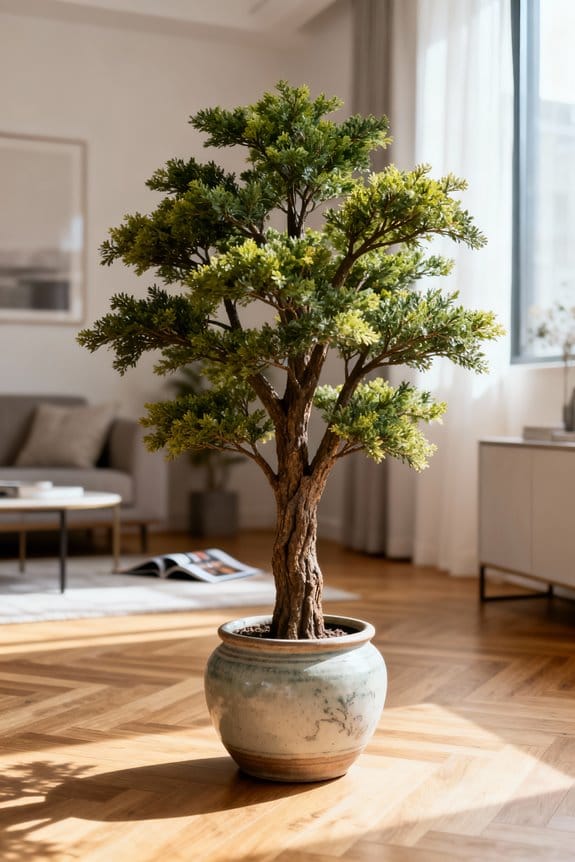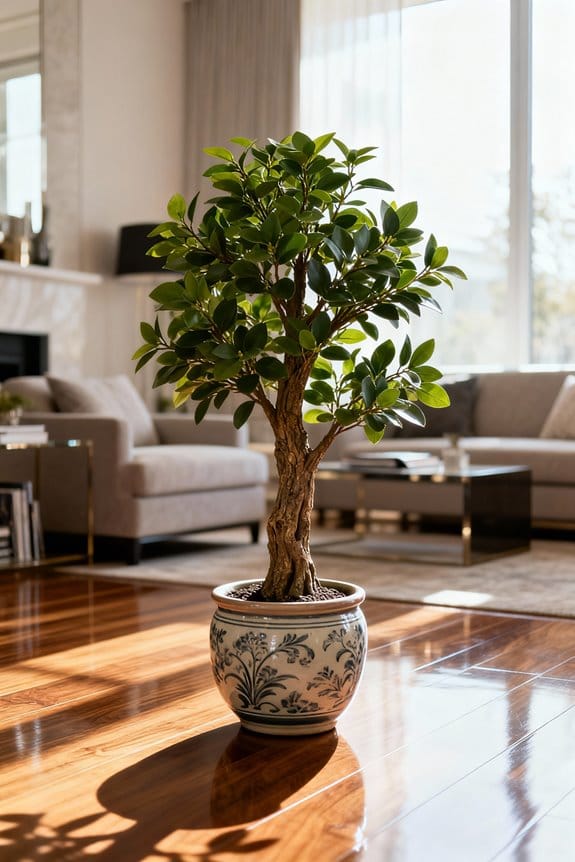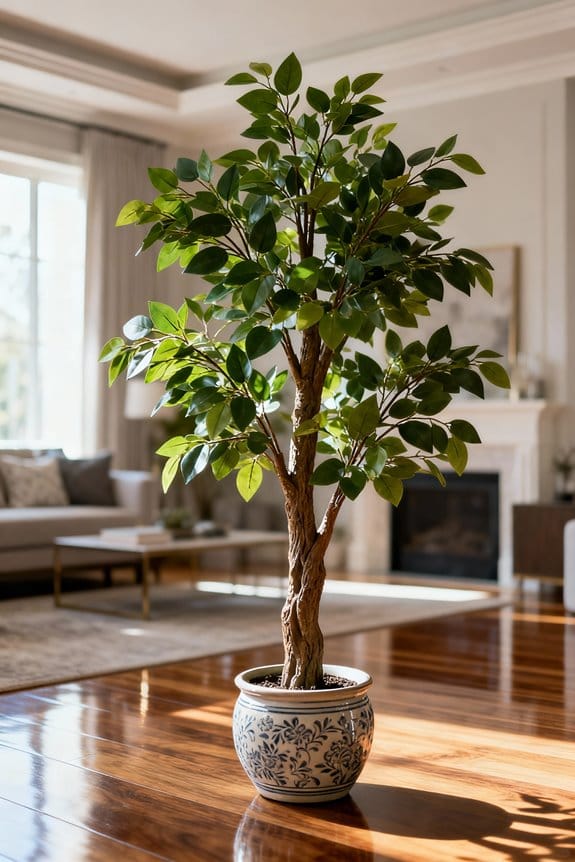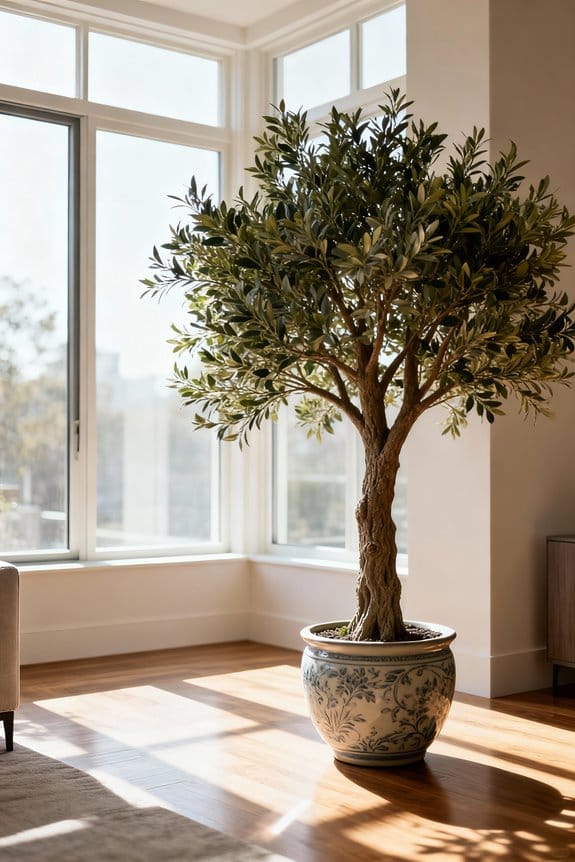
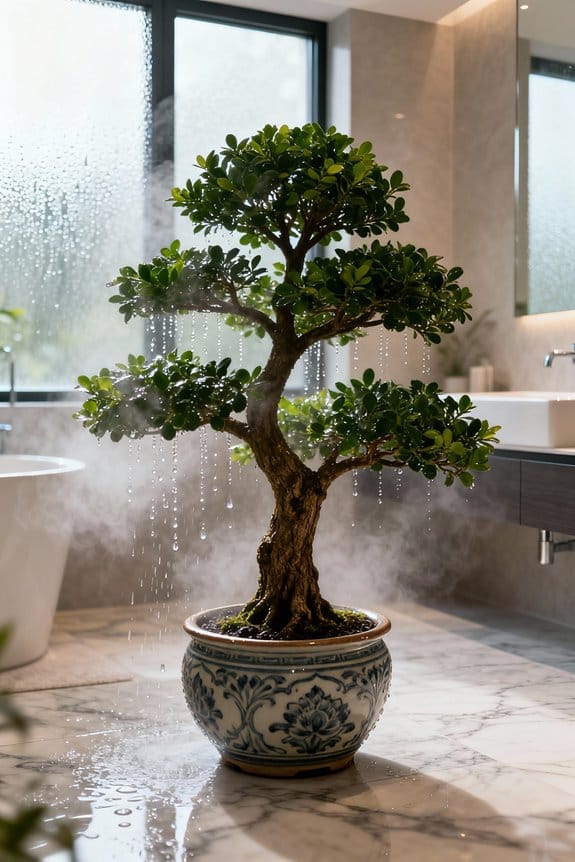

Using indoor trees in bathrooms means paying close attention to moisture—because too much can drown your plant! 🌿 Bathrooms usually have high humidity, which some trees like Ficus or Dracaena love, but you still need pots with good drainage and to check soil moisture often. Overwatering is easy to do, so a moisture meter helps avoid root rot. Plus, good air flow stops mold. Stick around to find out exactly how to keep your leafy friends happy in steamy spots!
Key Takeaways
- Maintain bathroom humidity between 50%-70% for optimal indoor tree transpiration and water absorption.
- Select moisture-loving and low-light tolerant species like Ficus lyrata, Dracaena marginata, ZZ Plant, or Snake Plant.
- Use pots with proper drainage and well-draining soil to prevent root rot in humid bathroom conditions.
- Monitor soil moisture with a moisture meter and water trees only when the top two inches of soil are dry.
- Ensure good air circulation and indirect light to prevent mold growth and promote healthy tree development.
Humidity Levels and Their Impact on Indoor Trees
Although it might sound surprising, your bathroom’s humidity is actually a secret weapon for keeping indoor trees happy! 🌿 Many plants love it when the air stays between 50% and 70% humidity—kind of like a spa day for them. High humidity in the bathroom creates the perfect moisture environment for moisture-loving indoor trees to thrive. When humidity levels are just right, these trees increase their transpiration rate, meaning they absorb water better and stay healthier. You can keep track of this using a simple hygrometer, so you know your bathroom provides ideal humidity. Trust me, your indoor trees will thank you by looking lush and vibrant. Just don’t be shocked if you start enjoying the bathroom fog more than your morning shower! In addition, selecting artificial bonsai trees can be an excellent choice for bathrooms, as they require no watering and withstand humidity without damage.
Selecting Indoor Trees Suited for Moist Bathroom Environments
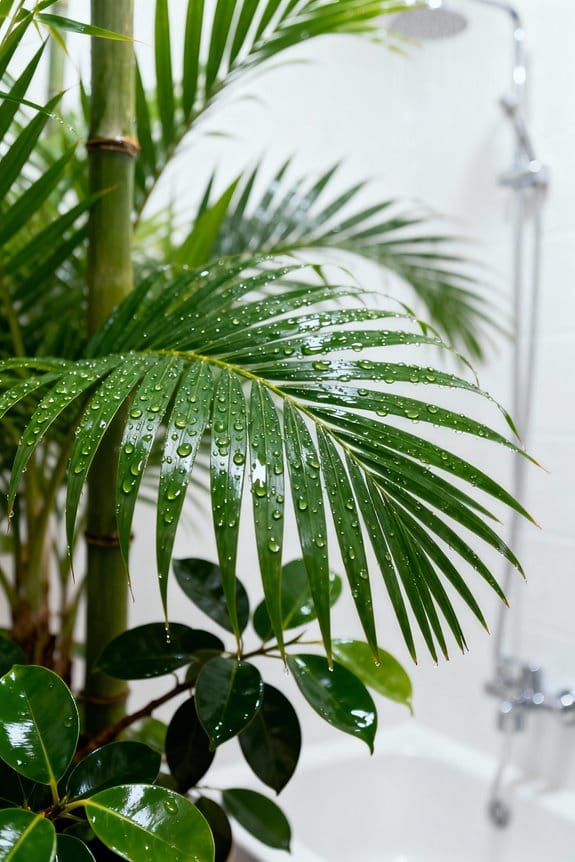
Now that you know how humidity works its magic in your bathroom, it’s time to pick the right green buddy for that space! 🌿 Bathrooms can be tricky since they’re often a bit darker and mugglier than other rooms, so choosing a tree that actually loves these conditions can save you from some sad, droopy leaves. Moisture-loving species like Ficus lyrata and Dracaena marginata thrive in high humidity environments and can brighten your bathroom while improving air quality. Don’t forget trees that handle low light, such as the ZZ Plant or Snake Plant. Always pick a tree’s pot with good drainage to avoid soggy roots, and remember regular monitoring of soil moisture is your new best friend in humid conditions. These indoor trees make your bathroom a revitalizing green haven! For low-maintenance options suitable for busy or humid environments, artificial indoor bamboo trees offer a lush look without the worries of moisture or soil care.
Monitoring and Managing Soil Moisture in Bathrooms
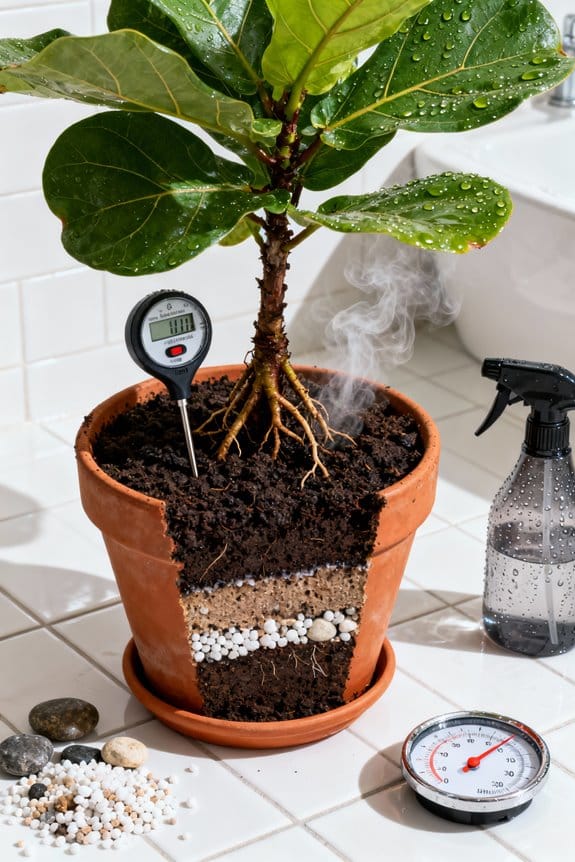
Since bathrooms are humid little jungles, keeping an eye on your indoor tree’s soil moisture is super important! 🌱 It’s easy to assume the soil is always wet, but sometimes the top feels damp while deeper layers are dry—kind of like when you think your coffee cup is full but it’s just latte foam. In humid bathrooms, monitoring moisture with a moisture meter can help you check those sneaky deep moisture levels. Water your indoor trees when the top two inches of soil are dry to keep roots happy without risking root rot. Since excess humidity changes water frequency, adjusting your watering practices depending on seasons and moisture levels is smart. This way, your bathroom jungle stays thriving and avoids moisture troubles! Choosing an Areca Palm Tree can be a great option for bathrooms because they thrive in bright, indirect light and humid environments.
Preventing Overwatering and Root Rot in Indoor Trees
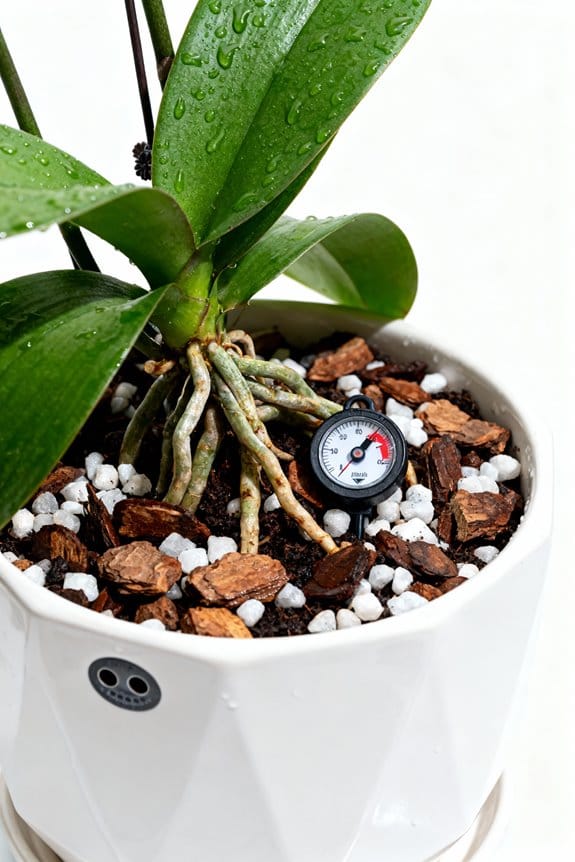
When caring for indoor trees in your bathroom jungle, preventing overwatering is probably the trickiest part! 🌿 It’s tempting to give your tree a drink whenever you spot dry soil on the surface, but your roots might actually be swimming already. In humid environments like bathrooms, excess moisture can linger, so using a moisture meter is a smart move—it tells you exactly when the soil really needs water. Choosing well-draining soil and planting your bathroom plants in terra cotta pots helps wick away extra moisture, cutting down on root rot risk. Keep an eye out for yellow leaves or a funky smell, which hint at trouble. Trust me, avoiding overwatering takes patience, but your indoor trees will thank you with healthy, happy growth! Alternatively, consider low-maintenance faux trees that require no watering or pruning, making them ideal for humid spaces like bathrooms.
Optimizing Drainage and Air Circulation for Tree Health
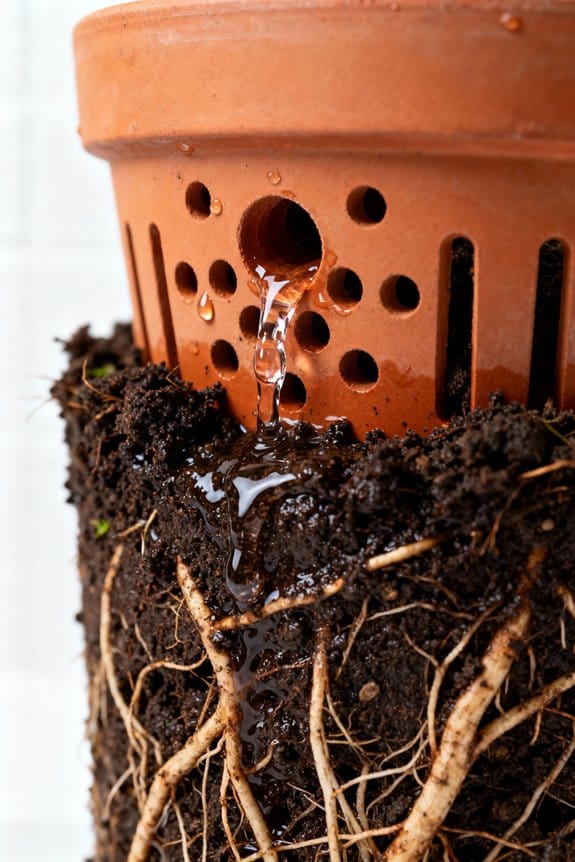
Although bathrooms naturally provide humidity that indoor trees love, it’s easy to go overboard with water that just sits around. 🌧 Your pots need drainage holes—otherwise, your tree’s roots could drown, which no one wants! Using well-draining potting soil helps keep moisture balanced: enough to keep your tree happy but not so much to cause root rot. Remember to pick pots with a wider base or add stones at the bottom—like little moisture-absorbing superheroes. Also, good air circulation is key! Stagnant moisture can lead to mold, and that’s bad news for tree health. Keep your bathroom plants in spots with indirect light and a gentle airflow to encourage ideal growth. Checking humidity levels now and then can help you tweak your setup for thriving indoor trees! 🌿 Additionally, selecting plants with layered foliage and realistic textures can enhance both the aesthetic and health benefits by mimicking natural environments.
Frequently Asked Questions
What Is the Best Plant to Absorb Moisture in the Bathroom?
The Peace Lily reigns supreme among indoor plant types, conquering bathroom humidity with ease. Its best soil and light requirements enable low-maintenance growth, enhancing air quality, offering decorative options, respecting space considerations, and thriving in diverse scent preferences and growth habits.
Do Plants in the Bathroom Prevent Mold?
Plants in the bathroom support mold prevention by balancing humidity levels and improving bathroom air quality. Thoughtful plant selection enhances moisture balance, contributing to health impacts and bathroom aesthetics, illustrating key plant benefits within indoor gardening practices.
Do Indoor Plants Reduce Humidity?
Indoor plants can dramatically transform humidity levels, enhancing air quality and moisture control. Selecting plant types suited for bathroom conditions maximizes foliage benefits, improving health impacts, aesthetic appeal, and effective plant placement within indoor gardening environments for balanced moisture control.
What Plant Removes 78% of Airborne Mold?
The Peace Lily, a humidity-loving, low light indoor plant, removes 78% of airborne mold spores. This mold-fighting species offers air purifying benefits, supports fungal growth prevention, requires minimal maintenance, and enhances bathroom decor and air quality.