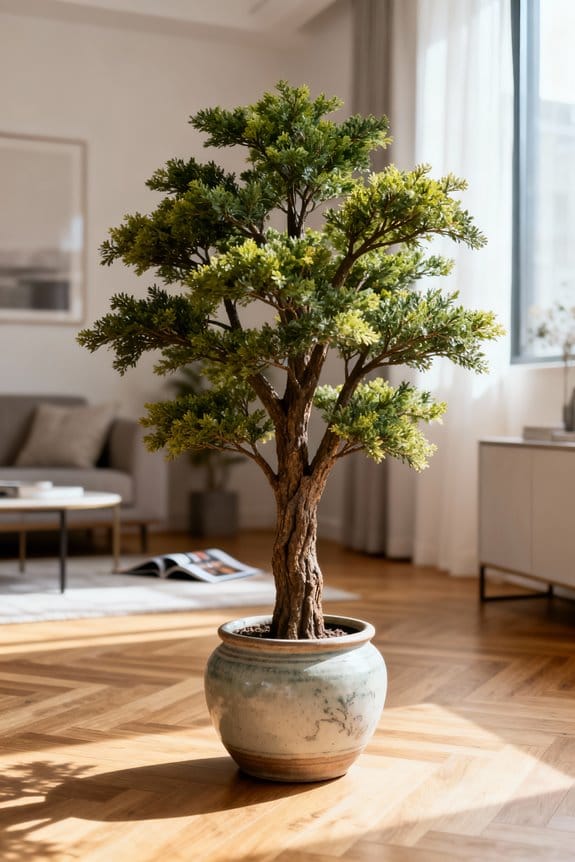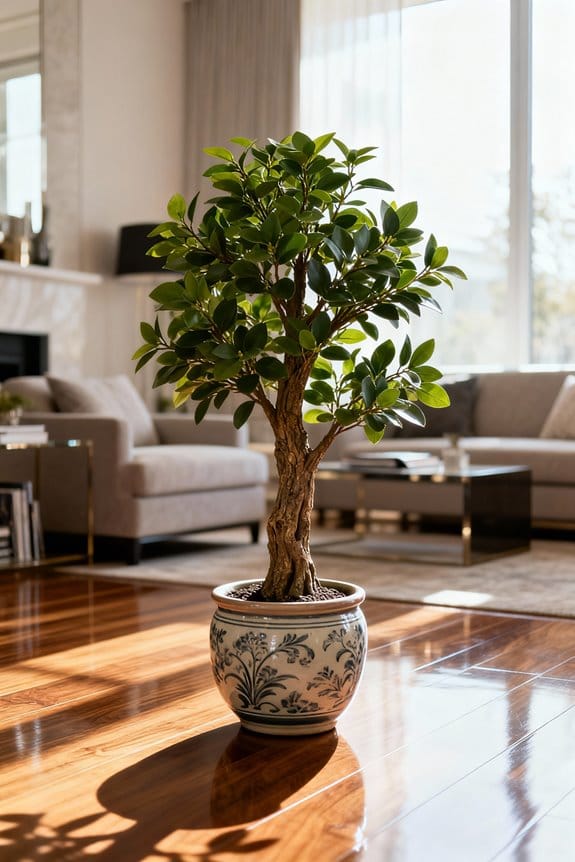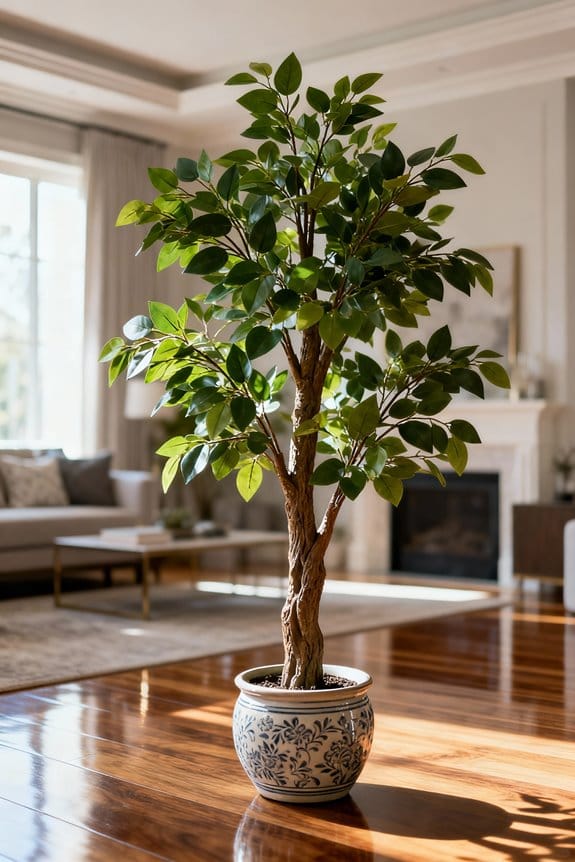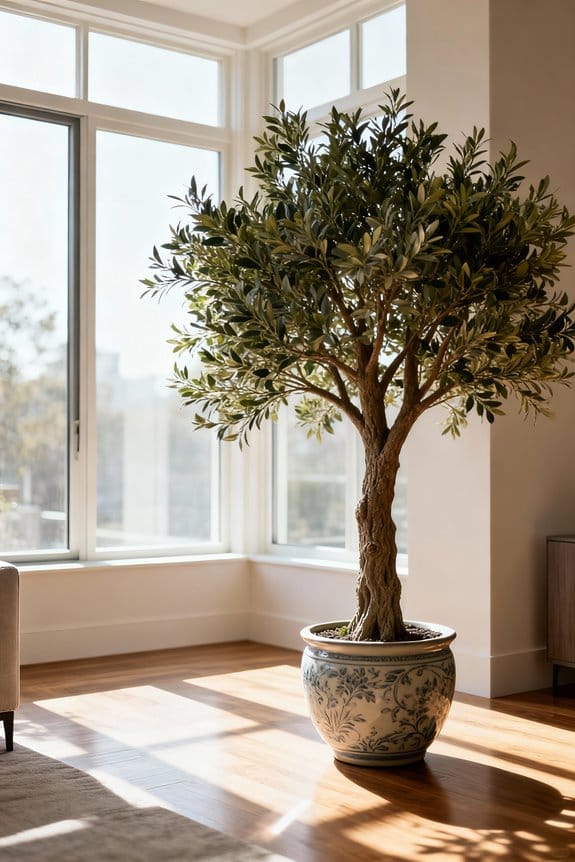
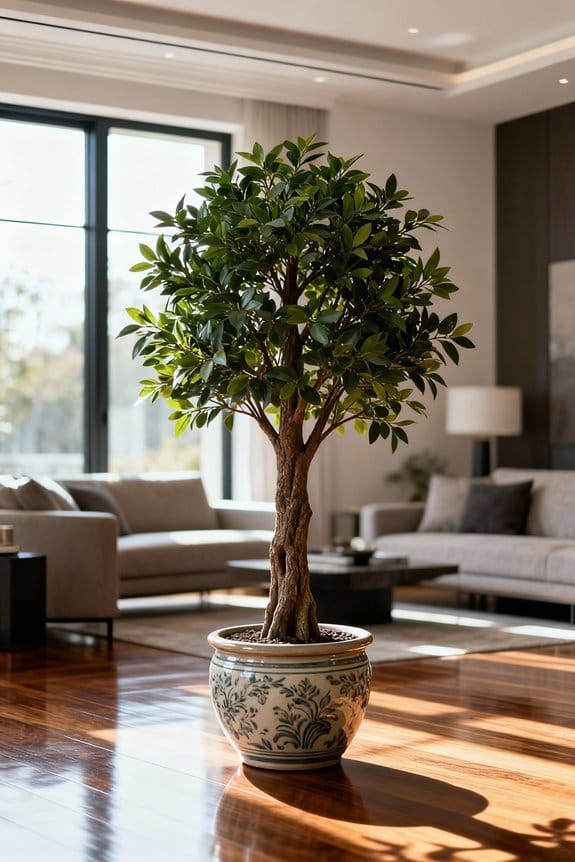

Faux indoor trees usually last about 7 to 10 years if you treat them right! Keep your tree out of direct sunlight to avoid fading, and give it a dust every week or two to stay fresh. Using high-quality materials, like UV-resistant silk or polyethylene, really helps too. It’s kind of like a pet plant that never needs watering but deserves a little TLC. Stick around to find out how to keep yours looking amazing! 🌿
Key Takeaways
- Faux indoor trees typically last 7 to 10 years with proper care in home conditions.
- High-quality materials like UV-resistant polyethylene or silk extend the tree’s lifespan.
- Keeping trees out of direct sunlight prevents color fading and material deterioration.
- Regular dusting every 1-2 weeks maintains the tree’s vibrant, realistic appearance.
- Stable placement reduces tipping and damage, enhancing overall durability.
Overview of Faux Indoor Trees
Faux indoor trees are a smart way to bring greenery into your home without the hassle of watering or pruning! 🌿 They can brighten up any space, whether you have a busy schedule or not-so-green thumbs like me. When you pick faux indoor trees made from high-quality materials, you’re getting a piece that can have a long lifespan—often 7 to 10 years or more with proper maintenance. Just keep them out of direct sunlight because UV exposure can cause color fading. Opt for UV-resistant materials if your space is bright or near windows. Don’t forget regular dusting to maintain their vibrant appearance! Also, placing them in a stable environment helps keep them looking fresh longer. They’re a fuss-free way to enjoy greenery without turning into a plant nurse. Choosing sturdy planters for your faux trees can help prevent tipping and allows for seasonal decoration options.
Factors Affecting Longevity of Faux Trees
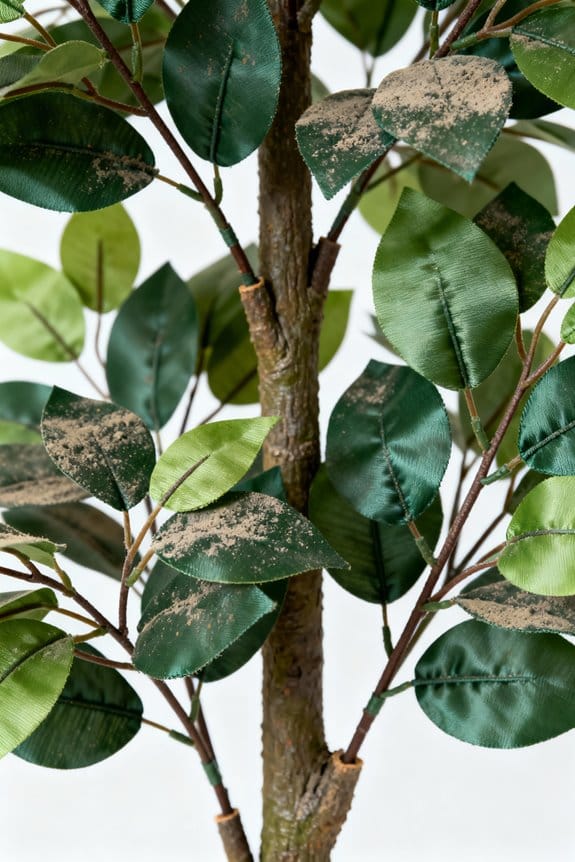
When you want your leafy décor to stick around for years, a few key things come into play that might surprise you! 🌟 The type of material your tree is made from—think UV-resistant polyethylene or silk—makes a big difference in how long it lasts without looking tired and faded. High-quality artificial plants usually have an average lifespan of 7 to 10 years indoors, but proper maintenance is key! Regular dusting keeps dust from dulling leaves, while avoiding direct sunlight reduces UV exposure, which causes fading and deterioration. Placement of faux trees in spots with indirect light means less environmental damage overall. So, if you want your indoor faux trees to keep looking fresh and lively, a little care goes a long way—because nobody wants their “forever” tree looking 5 years too old! Choosing trees with UV-treated materials can further enhance their durability and maintain vibrant colors over time.
Material Quality and Its Impact
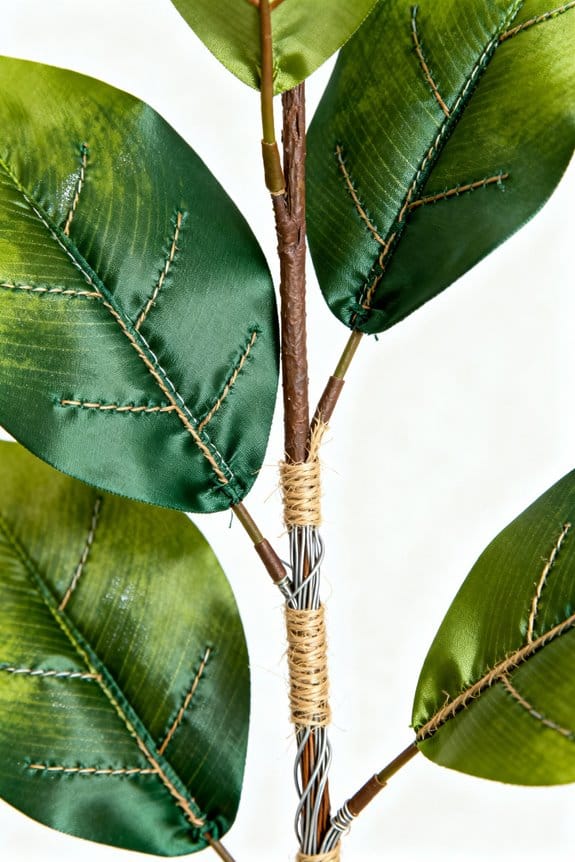
Quality really matters when it comes to how long your indoor tree sticks around looking fresh! 🌿 You might think any fake plant will do, but cheaper materials often fall apart or fade faster, leaving your once-proud décor looking kind of sad after just a few years. The material quality directly affects your faux tree’s lifespan—artificial trees made from durable materials like high-grade silk or sturdy synthetic materials tend to last 7 to 10 years. These premium picks resist fading and keep a realistic aesthetic that’ll fool most guests. Of course, regular care like dusting and keeping them out of the sun helps, too. So, if you want your faux tree to look great without turning into a dusty old art project, investing in quality and a little maintenance goes a long way! Additionally, choosing trees made with flame-retardant materials can boost safety and durability in your home.
Environmental Influences on Faux Tree Durability
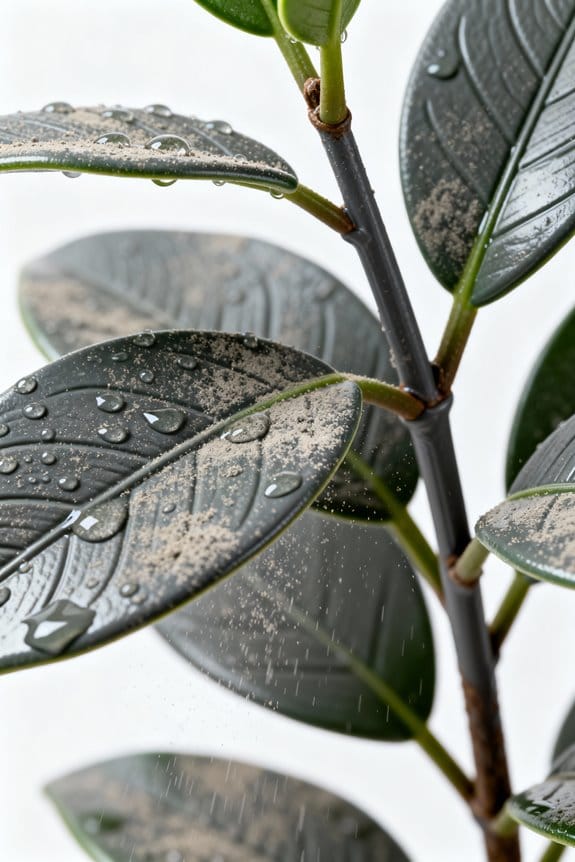
Besides picking out good materials, paying attention to where you place your indoor tree can really make a difference! 🌞 Keeping it away from direct sunlight can stop those colors from fading too fast—because nobody wants their “lush” faux tree to turn into a dull, leafless-looking thing after just a year or two. Environmental influences like light exposure and temperature can impact the durability and resistance of your faux indoor trees. If you choose ones made with high-density polyester or quality materials used to make them, they’ll last longer. Always aim for indirect light exposure and keep your home’s temperature stable for the best longevity of faux trees. Proper care, including regular dusting, also keeps them looking fresh and helps preserve their charm over time. Additionally, selecting trees with UV-resistant materials helps prevent discoloration and extends their lifespan when placed near windows or brighter areas.
Maintenance Practices to Extend Lifespan
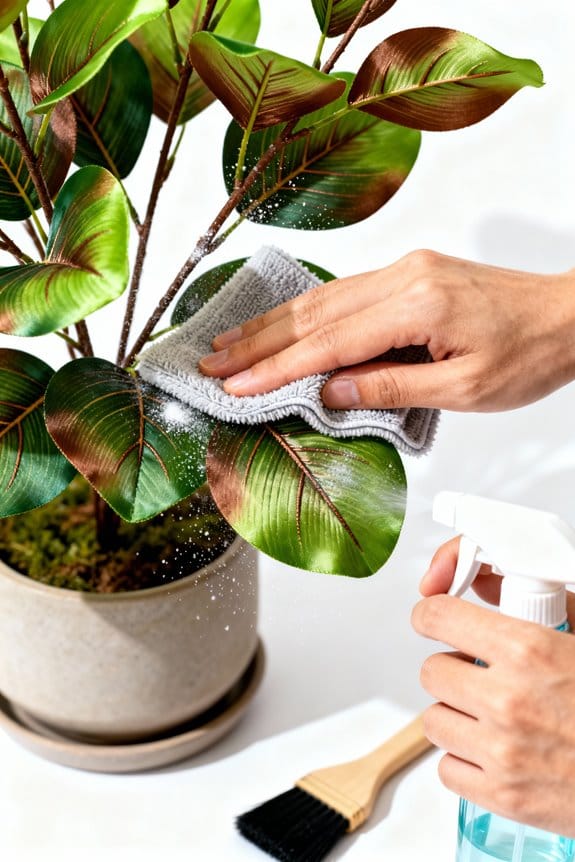
A couple of quick habits can make your faux indoor tree last much longer and look way better! 🌿 Dusting it every week or two with a soft cloth or gentle vacuum brush keeps those leaves shiny and prevents a sad, dusty mess that screams neglected plant parent. Regular cleaning tackles dust buildup and helps your tree maintain a realistic appearance. Remember to avoid direct sunlight, as it can fade that high-quality plastic over time—indirect light is your tree’s best friend for longevity. Every now and then, reshape and fluff the branches to keep things lively and fresh. These simple maintenance practices not only protect your faux tree’s look but also save you from fake-plant regret later on. Trust me, your room and your laziness will thank you! Choosing faux trees made from high-quality materials also ensures long-lasting color retention and texture, enhancing their durability and appearance over time.
Typical Lifespan Ranges for Faux Indoor Trees
Faux indoor trees usually stick around for about 7 to 10 years if you treat them right—kind of like that one friend who thrives with just a bit of attention! 🌿 You’ll notice they hold up better when you pick ones made from good materials like polyethylene or high-grade silk. The lifespan of faux indoor trees really depends on proper care and regular maintenance, like dusting to keep leaves looking fresh. Also, be mindful about sunlight exposure; indirect light helps prevent fading, which keeps your tree looking lively longer. High-quality materials boost durability, so investing in a well-made faux tree pays off in longevity. With simple habits, your faux indoor companion can comfortably brighten your space for years without acting “fake” about it! Additionally, choosing trees with UV-resistant foliage enhances their ability to maintain color and appearance over time.
Signs Your Faux Tree Needs Replacement
When your faux tree starts showing faded or brittle leaves, it’s usually a clear sign that it’s ready for retirement—kind of like your favorite old sweater that’s lost its cozy charm! 🌿 You’ll know it’s time to say goodbye when branches become loose or break easily, or if no amount of dusting brings back its sparkle. If you notice discolored leaves or constant shedding, that means the tree’s structural integrity is weakening, and it’s probably seen better days. Sometimes, dust and grime build up so stubbornly that cleaning just won’t cut it anymore. Also, if your once-stylish faux tree looks outdated or clashes with your decor, a replacement can brighten the whole room. Trust your gut—fresh greenery can really lift your space! Consider factors like the durability of UV-resistant, waterproof materials to ensure your faux tree lasts longer in normal home conditions.
Common Mistakes That Shorten Lifespan
How exactly can something meant to brighten your room end up looking dull and sad? 🤔 It usually comes down to a few easy-to-make mistakes that sneak up on you—like picking a tree made with cheaper plastic or forgetting to dust regularly. Many people don’t realize that neglecting regular cleaning lets dust and grime build up, which zaps the visual appeal of your faux plants. Positioning faux trees where they bake in the sun is another classic slip-up; they fade in the sun and suffer material breakdown over time, shortening lifespan. Also, ignoring signs of loose branches or crowded spots can hurt structural integrity. These common mistakes might seem small but can really cut your faux indoor tree’s life short. So, a bit of care goes a long way! Regular dusting with a microfiber cloth is essential to keep your artificial tree looking fresh and vibrant.
Best Practices for Cleaning Faux Indoor Trees
Even though cleaning fake trees might seem like a chore you’d rather skip—hey, nobody loves dusting!—keeping your indoor greenery looking fresh is actually pretty easy with a little regular care. The best practices for cleaning faux trees start with dusting every one to two weeks using a soft cloth or microfiber duster to prevent dust buildup. When it’s time for a deeper clean, grab a mild soap solution and a soft cloth, gently wiping the leaves, then air dry them in the shade to avoid any color fading. Be sure to inspect periodically for wear and avoid direct sunlight—that sneaky culprit fades colors and harms material integrity. When not in use, store your trees in a cool place to keep them happy and lasting longer! Additionally, regular weekly dusting and gentle vacuuming are recommended to keep your artificial trees looking their best.
Choosing Durable Faux Trees for Your Home
Picking the right faux tree can make a huge difference in how long it brightens up your room—and how much you have to worry about it! 🌿 Believe it or not, choosing ones made from strong materials like high-grade silk or polyethylene is like giving your tree a superhero cape against fading and wear. High-quality faux trees made from durable materials resist color fading and keep their appearance and vibrancy longer. To keep your synthetic plants looking fresh, position them away from direct sunlight and don’t skip regular dusting and cleaning every week or two. This simple combo of proper care and smart placement lowers maintenance stress and helps your realistic-looking tree stay beautiful for years, proving fake plants can be surprisingly low effort! Many popular artificial tree models also feature UV protection, making them less vulnerable to sun damage and ideal for both indoor and outdoor use.
Frequently Asked Questions
How Long Should a Fake Tree Last?
The lifetime expectations of a fake tree depend on material quality, environmental factors, and usage scenarios. Proper maintenance tips prevent color fading and preserve structural integrity, affecting aesthetic appeal. Product warranties and cost considerations also influence longevity.
What Are the Disadvantages of Artificial Trees?
Artificial trees are castles of permanence, yet shadows loom—artificial maintenance, fading aesthetic appeal, cost comparison to live plants, environmental impact, allergy concerns, lack of sunlight needs, durability issues, absent seasonal changes, fleeting design trends, and texture realism often disappoint.
Are Fake Indoor Plants Tacky?
Fake plant aesthetics have evolved, making artificial foliage trends stylish and maintenance free options popular. Realistic designs and pet safe plants offer indoor greenery benefits, while thoughtful styling with faux supports seasonal decor ideas, reflecting faux plant popularity and environmental impact discussions.
How Long Do Fake Plants Last Inside?
Indoor plant longevity largely depends on materials used and maintenance tips like dusting and proper cleaning methods. Popular types thrive with strategic placement ideas, balancing aesthetic appeal and environmental impact while offering cost comparison advantages against seasonal trends in real plant care.