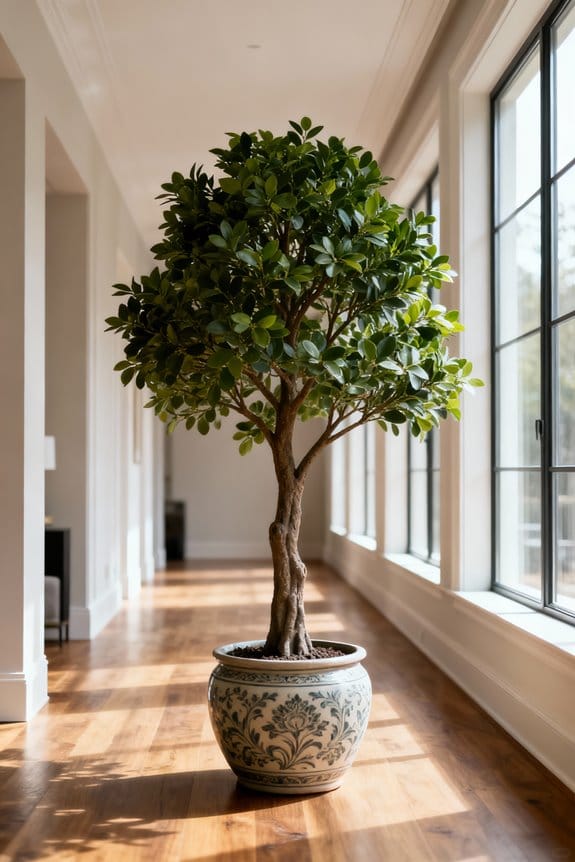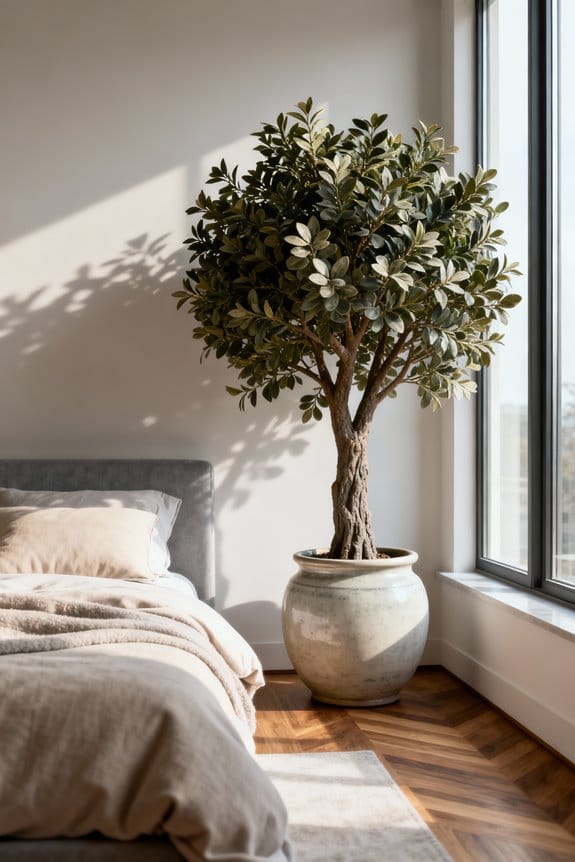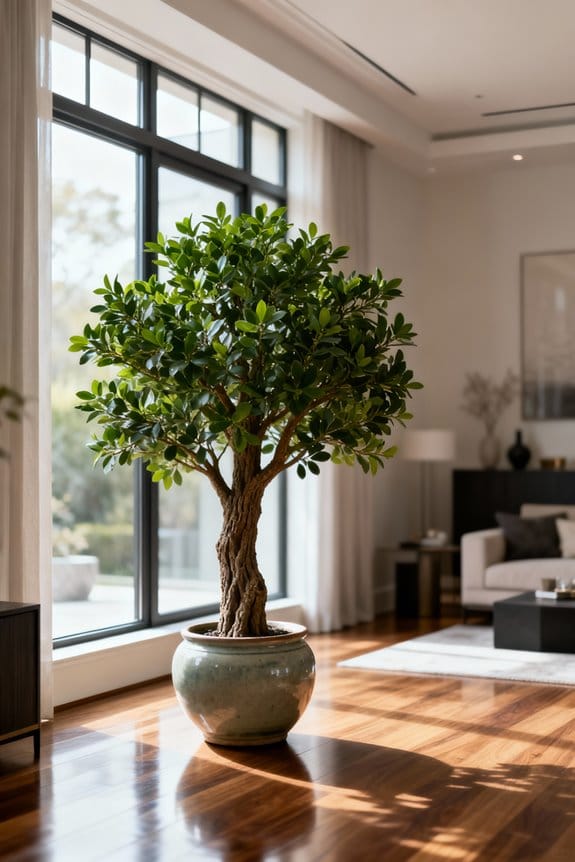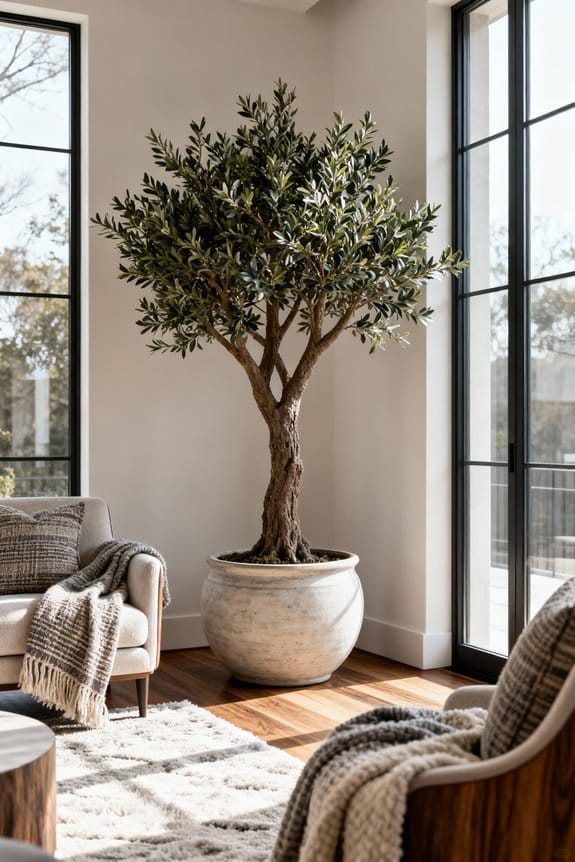
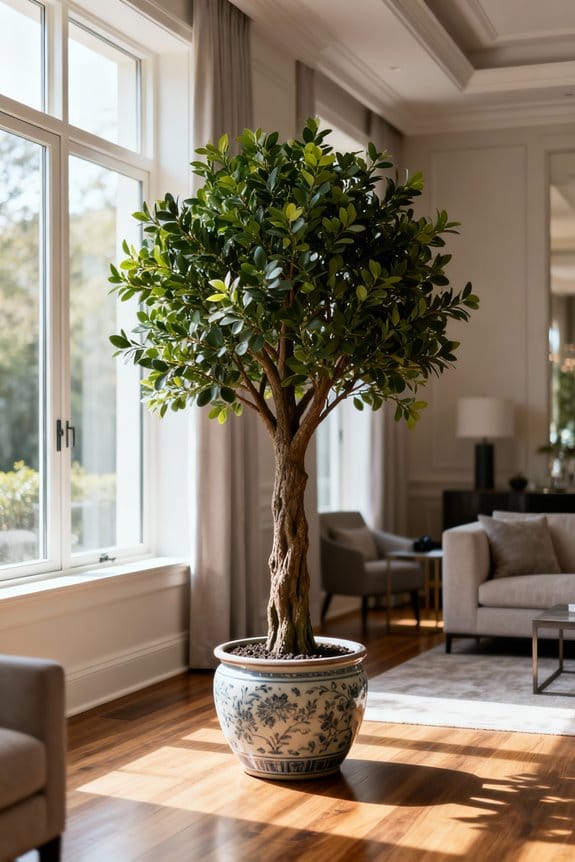

Before placing a faux tree by your window, check the light—south-facing spots give the best glow, while too many trees could block your view or light! 🌞 Pick a size that fits without crowding or tipping (heavy planters help!). Match the tree’s look to your room style, and use cute accents like faux moss to keep it natural. A bit of planning stops your tree from becoming a plant diva! 🌿 Keep going to discover tips that make your space shine even brighter!
Key Takeaways
- Assess natural light levels and window direction to ensure the faux tree’s colors and appearance are enhanced, not diminished.
- Choose a faux tree size that complements window height and furniture without blocking light or views.
- Match the tree’s style, color, and texture with the room’s décor for seamless integration.
- Ensure the faux tree is stable with a heavy, UV-resistant planter to prevent tipping and fading.
- Position the tree to preserve outdoor views and consider decorative base elements and lighting to enhance visual appeal.
Assessing Natural Light Levels in Your Space
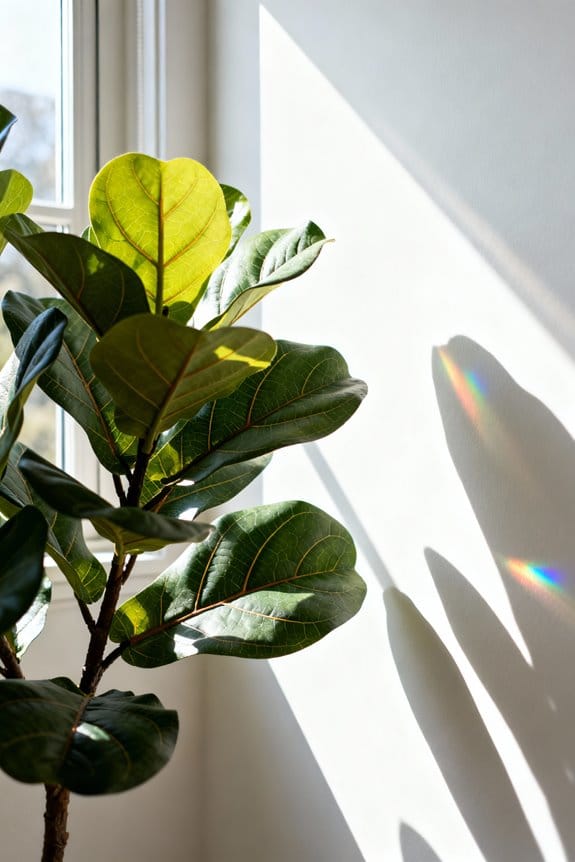
When you’re thinking about placing a faux tree near a window, it’s usually a good idea to first check how much natural light the spot actually gets throughout the day. 🌞 It’s easy to assume every window floods a room with sunshine, but sometimes nearby buildings or trees throw a little shade, literally. Knowing the light levels helps your faux tree look its best and keeps that natural look you’re aiming for. South-facing windows often win the light competition, while north-facing ones give softer, cooler vibes. Don’t forget about the changing seasons — sunlight shifts, so your faux tree might shine differently in winter than summer! Even though faux trees don’t need sun, placing them where light plays nicely can brighten your whole space’s mood. Additionally, choosing trees with waterproof design ensures they remain beautiful whether placed indoors or near windows where humidity may vary.
Choosing the Right Size for Your Faux Tree
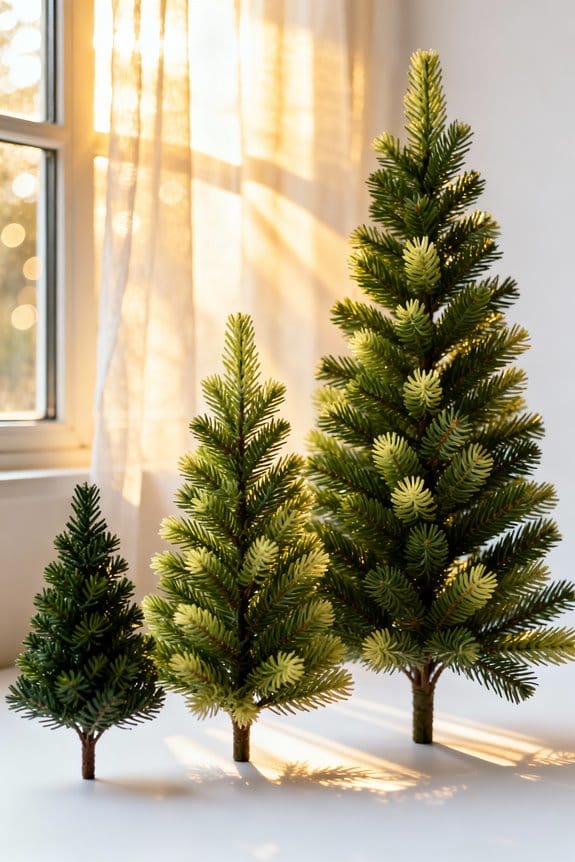
Picking the right size faux tree near your window can really change the vibe of your room! 🌿 You don’t want a giant tree stealing all the light or a tiny one that gets lost among your furniture. When choosing faux trees, think about how tall they are compared to your window—too tall blocks light, too short might look like a sad little plant whispering, “I’m here.” A bigger tree can be a bold focal point that brings life and style, but smaller ones fit nicely on tables or ledges without crowding. Also, consider your furniture’s size; your faux tree should blend in, not scream, “Look at me!” Finding the right size helps keep your room inviting and your faux tree looking realistic, not like a fake plastic mess. Keep in mind that some models come with adjustable branches to help you customize the shape and fullness of the tree for the perfect fit.
Matching Tree Style to Your Interior Decor
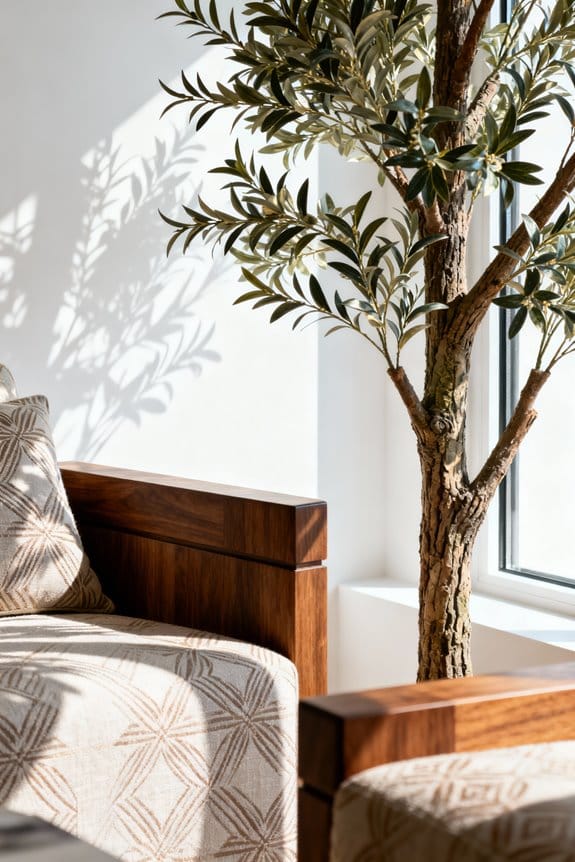
Three key things to think about when matching your faux tree to your room’s style are shape, color, and texture. 🌳 You don’t want a shiny rubber plant popping out like a disco ball in a cozy farmhouse! When picking faux plants, consider the overall interior design first. A modern fiddle leaf fig fits sleek spaces, while a classic rubber plant suits traditional rooms. Colors matter too—choose greens that blend with your walls and furniture to help your tree look more realistic and natural. Don’t forget texture! Glossy leaves might seem fake in rustic rooms, while matte finishes fit right in. Finally, put your faux tree in a planter that matches the room’s style to make the whole look seamless and like you really know what you’re doing! Many lifelike faux trees also feature adjustable branches to customize the shape and enhance the natural appearance.
Understanding the Impact of Window Direction
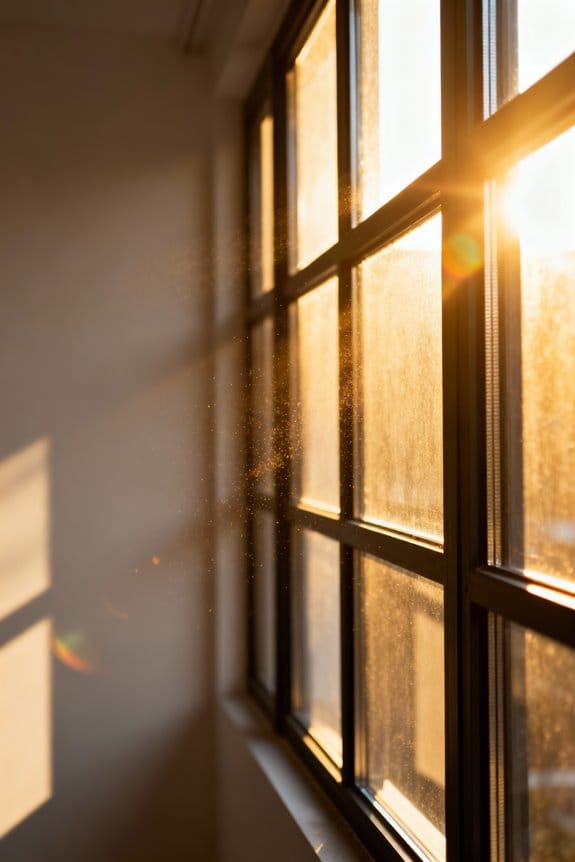
Although faux trees don’t need sunlight to survive, the direction your window faces still plays a big part in how good your artificial plant looks! 🌞 For example, south-facing windows flood a room with light, making your faux tree pop with vibrant colors, while west-facing windows might be a bit too harsh, possibly causing some fading over time. When thinking about window orientation, east-facing windows offer gentle morning natural light, which helps keep faux trees looking fresh and colorful without dulling them. North-facing windows give less light, perfect if you want a softer vibe and don’t want your faux tree to risk any “sunburn.” Understanding this helps you choose the best spot and make your faux tree look naturally amazing—without any green thumbs needed! Additionally, selecting a tree with hypoallergenic and fire-retardant materials can enhance safety and longevity when placed near windows with variable light exposure.
Avoiding Overcrowding Near Windows
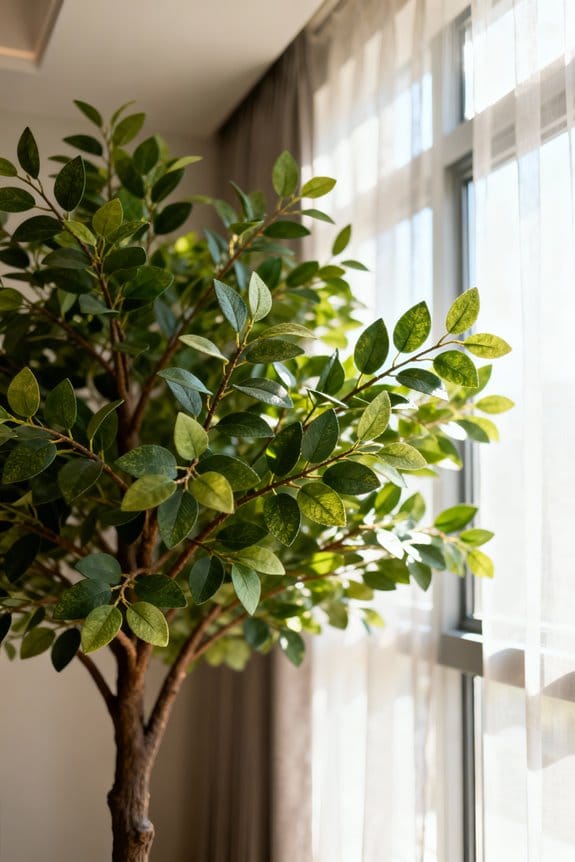
A well-placed faux tree near a window can really bring a room to life, but overcrowding can quickly turn that vibe into chaos! 😊 Think of it like this—your window needs to shine and let in light, so don’t block it with a bunch of plants squished together. When choosing artificial trees, pick one standout faux tree instead of clustering many small ones. Overcrowding not only blocks sunlight but makes your space feel cluttered—I know, sometimes harder than resisting that extra slice of cake! Make sure your faux tree fits the window size and leaves enough room to see outside and walk by easily. Placing the tree at an angle lets it catch light and look stylish, without cramming the area or making your window feel like it’s trapped behind a forest. Also, selecting a tree with a sturdy planter can keep your display safe and stable near frequently used windows.
Selecting Faux Trees With Realistic Proportions
Getting the faux tree’s size and shape right is like picking the perfect pair of shoes—too big or too small, and it just feels off! 😊 When you’re near a window, look for trees that mimic real trunks and branches in their proportions, so your tree doesn’t scream “fake!” Try to find ones with leaves that vary in size and shape; it’s this little detail that fools the eye and keeps things natural-looking. Choosing faux trees that create a full, balanced silhouette helps the tree blend beautifully with your space without overpowering it. Flexible branches also make it easier to arrange your tree naturally around sunlight. Remember, a nicely sized and well-shaped faux tree can be your room’s quiet hero, making things feel cozy without the fuss! Consider also that some faux trees come with adjustable branches to enhance their natural look and fit your space perfectly.
Considering Color and Texture Compatibility
Color and texture make a big difference when you tuck a faux tree next to a window! 🌿 You want your tree’s leaves to either blend in or pop just right against your room’s colors—no clashing like socks with sandals, please! 😉 Think about how the smoothness or bumpiness of the leaves plays off your furniture and curtains. If your furniture has rough textures, a faux tree with smooth leaves can brighten things up, while intricate leaf patterns look amazing against plain walls. Also, check your color scheme carefully; vibrant greens can change under natural light, so pick shades that match your curtains or wall art to keep the vibe cozy and unified. This way, your faux tree won’t steal the show but will fit right into your space! Opting for trees with realistic rubber-fabric leaves ensures the best match for natural-looking decor near light sources.
How to Position Your Faux Tree for Balance
Wondering where your faux tree will look best near that window? 🌞 Positioning it just right is key to making the space feel balanced without blocking too much light or turning your tree into a sad, flat shadow puppet. Try placing your faux tree at an angle instead of right in front of the window—this lets light reach its leaves, boosting that realistic appearance. Keep taller trees a few inches away from the window so they don’t hog all the sunlight. Also, rotate your faux tree every now and then to keep its shape even and prevent one side from looking sad and sparse. Finally, think about the other decor around it; grouping objects of different heights can help balance your room without making it feel cramped or heavy! Using UV-resistant materials can help prevent your faux tree from fading over time when placed near windows.
Maintaining Stability and Safety by the Window
Although faux trees don’t need watering, they still demand a little TLC to keep your space safe and stylish by the window! 🌿 Placing your faux tree in a heavy planter helps avoid those awkward moments when a sudden breeze almost sends it tumbling out the window—yikes! To keep your fake leafy friend upright, check its base often, especially after cleaning or moving stuff nearby. Tall faux trees might need extra anchor supports because nobody wants a plant crash during stormy winds! Also, avoid crowding the window—your tree needs some breathing room so it doesn’t block light or mess with window functions. Remember, stability is key—not just for your tree’s looks, but for your peace of mind too! A little care goes a long way with these green pals! 🌱 Additionally, using weatherproof materials ensures your faux tree maintains its vibrant appearance even when placed near sunlight-exposed windows.
Preventing Glare and Reflection Issues
How can a faux tree near your window stay as charming as you imagined without those pesky glare and reflection issues? 🌞 It’s easy to get excited about adding greenery, but sunlight bouncing off the glass can create odd light spots or wash out your tree’s colors—kind of like when you try to take a selfie with the sun right behind you! To keep your artificial indoor trees looking their best, try moving them just a bit away from direct sunlight. Sheer curtains are lifesavers here—they soften that harsh glare without stealing your natural light. Also, pay attention to when glare hits hardest during the day. A quick repositioning now and then keeps your faux trees looking fresh and real, no weird light show needed! Additionally, choosing a UV-resistant finish on your planter can help maintain the vibrant look of your artificial tree even in strong sunlight.
Enhancing Visual Appeal Without Blocking Views
Now that glare and reflections are under control, it’s time to think about how that faux tree fits into your window space without stealing the show—or your favorite view! 🌿 You want your greenery to feel alive but still let in all that beautiful natural light and outdoor scenery. When picking faux trees, go for ones with a slim shape, like pencil cypress, so they tuck nicely against the window without being too bossy. Angle your tree just right to keep your view clear while adding a leafy pop inside. And hey, a taller planter can help make the tree look stylish while keeping lower window spots open. Trust me, your view deserves the spotlight too—no one likes a leafy curtain blocking their favorite sight!
Incorporating Faux Tree Accessories for a Natural Look
Often, it’s the little touches around your faux tree that bring the whole look together and make it feel more natural 🌿. You might think a fake tree alone does the trick, but adding faux moss around the base can soften that weird plastic-pot edge and add an organic feel. Try tossing in decorative rocks or faux dirt—it’s a sneaky way to mimic real earth and fool your guests, or, well, yourself! Picking a decorative planter that fits your room’s vibe also helps your faux tree blend right in, not stick out like a sore thumb. If you’re feeling fancy, small artificial plants around the base create a layered, garden-like effect. Hey, even a little spotlight can make your tree pop with some cool shadows! Easy, right?
Frequently Asked Questions
Where to Put Fake Trees in a House?
Fake trees find their stage in softly lit corners, where design considerations meet gentle light exposure, enhancing room aesthetics like silent sentinels. Thoughtful placement breathes life, weaving natural beauty into home harmony without competing for attention.
Are Fake Plants Considered Tacky?
Fake plants are not inherently tacky; their aesthetic appeal depends on quality and plant maintenance. When carefully selected and cared for, they enhance home decor, offering a practical, stylish alternative that contributes positively to interior design.
Where Not to Put a Christmas Tree?
Approximately 40% of holiday fires are tree-related. Tree safety tips emphasize avoiding windows with direct sunlight to prevent fading and space considerations to keep the tree from obstructing light or risking damage from drafts and traffic areas.
What to Put Under a Fake Tree?
Under a fake tree, one should place decorative accents such as faux moss, stones, or a stylish planter to enhance care for faux greenery. Incorporating seasonal themes with rugs or small plants further enriches the overall aesthetic.