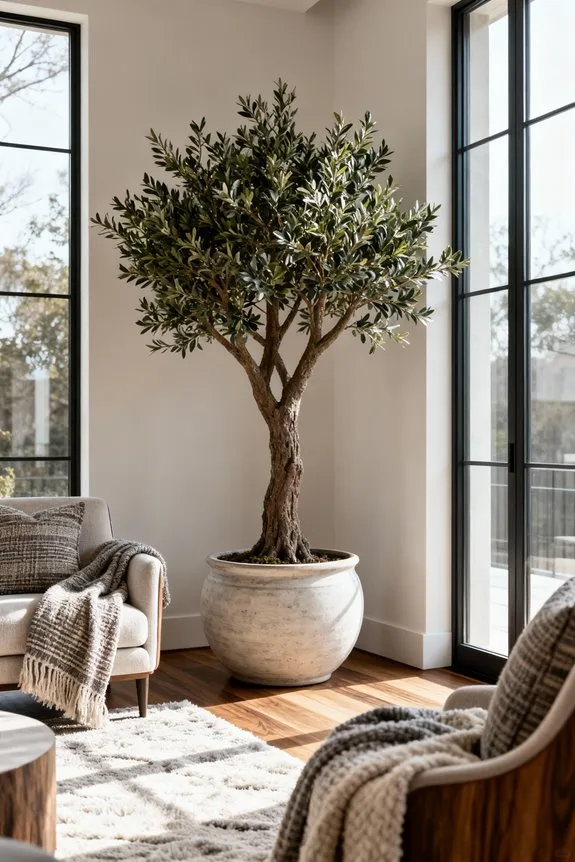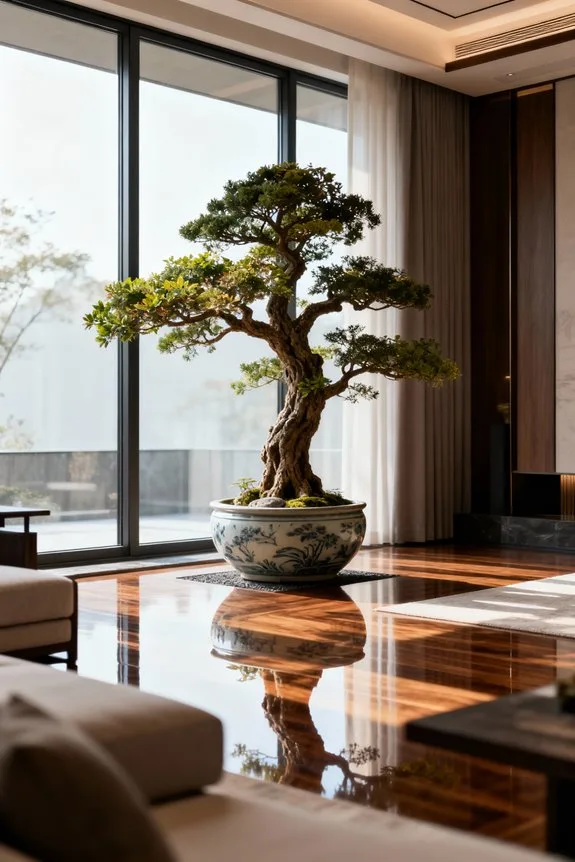


Planning a year-round styling calendar for your indoor trees is easier than it sounds! Start by adjusting watering and fertilizing with the seasons—less in winter, more in spring and summer. Prune in early spring to keep them happy. Swap decorations quarterly: bright pastels in spring, bold colors in summer, earthy tones come fall, and cozy jewel tones in winter. Keep an eye on leaf health and position your trees near windows for the best light. Stick with these tips, and you’ll discover even more ways to keep your indoor trees thriving and styling effortlessly! 🌿
Key Takeaways
- Assess seasonal needs and adjust watering, fertilizing, and pruning schedules for optimal tree health throughout the year.
- Plan tree placement near windows with suitable light to support seasonal growth variations and aesthetics.
- Rotate decorations seasonally using complementary colors, natural elements, and themed ornaments for cohesive indoor styling.
- Incorporate cozy lighting and texture variations like fabrics and fairy lights to enhance winter and holiday appeal.
- Maintain a care and decoration journal to track changes, health, and styling decisions for consistent yearly planning.
Assessing Your Indoor Trees’ Seasonal Needs
Although indoor trees don’t face outdoor storms, they still have their own seasonal ups and downs you need to watch for! 🌿 Your trees’ needs change with light, temperature, and humidity shifts throughout the year, which means what worked in summer might not be great in winter. To care well for them, it helps to keep track of your tree’s seasonal needs—like watering less when growth slows and watching out for pests in warmer months. The best times for pruning usually come in early spring before new leaves pop, which helps your tree breathe and grow strong. Many people forget that a simple journal to note repotting, humidity tweaks, and other care tricks can make a huge difference—plus, you won’t forget what worked and what didn’t! It’s like keeping a diary but for your trees. If you prefer a hassle-free alternative, consider using artificial trees which require no seasonal care or maintenance.
Scheduling Watering and Fertilizing Throughout the Year

Watering and fertilizing your indoor trees might feel a bit like trying to keep a goldfish happy—simple, but with some sneaky details! 😊 Most people find that watering every 7 to 10 days works well, but you’ll want to water less often in the winter since your trees slow down. Scheduling is key here: check the soil with your finger or a moisture meter before watering to avoid drowning your plant’s roots. Fertilizing is best every 4 to 6 weeks during spring and summer with a balanced, water-soluble fertilizer, but ease off in fall and winter. Using room-temperature water and ensuring good drainage helps keep roots healthy. Keeping a plant journal for watering and fertilizing times can make this whole process easier—and even a bit fun! For those with limited time or lighting, maintenance-free artificial trees can provide vibrant greenery without any care needed.
Pruning Techniques for Healthy Growth

Getting your indoor tree ready for a healthy glow-up starts with pruning at just the right time—late winter or early spring is perfect! ✂ You want to use sharp, clean shears to avoid damaging your leafy friend and to keep pesky plant germs away. Pruning techniques during the dormant season help your tree bounce back stronger and healthier. Start by trimming dead, damaged, or diseased branches to clear the way for fresh growth and better air circulation. Shape your tree by cutting selective branches, letting sunlight reach deeper leaves. Just a heads-up: don’t go overboard—snip no more than 15-20% of its foliage at once to avoid stressing it out. Regular, gentle pruning keeps your tree looking sharp and feeling great all year! For those who prefer hassle-free greenery, considering low-maintenance artificial trees can provide year-round aesthetic appeal without pruning needs.
Choosing Seasonal Decorations to Complement Your Trees

Wondering how to keep your indoor tree looking fresh and fun all year? Seasonal decorations are your best friends here! 🌸 In spring, think bright flowers and soft pastels to add a cheerful vibe. Summer calls for vibrant foliage and bold hues that scream liveliness. When fall rolls around, swap in pine cones, berries, and warm, earthy tones to create cozy charm. Winter? That’s the time for rich fabrics and jewel tones—plus some fairy lights for extra sparkle! ✨ To keep a cohesive look, rotate these decorations every few months. It avoids last-minute fluster and keeps your tree interesting. Remember, adding natural elements like twigs or dried flowers helps celebrate each season’s uniqueness while making your tree feel right at home. Easy, right? Additionally, choosing decorations from fade-resistant materials can help maintain their vibrant appearance over multiple seasons.
Styling for the Holiday Season: Ornament Ideas

Now that the seasonal decorations are set, it’s time to give your indoor tree some holiday sparkle! 🎄 Choosing the right ornaments can feel a bit like picking an outfit for a big party—you want something that fits well with your style and makes you smile. Start by picking a color scheme that matches your room—classic red and gold or chic white and silver both work great. Mix up materials like glass, metal, or natural bits to keep things interesting. Don’t forget themed ornaments that tell a story, like handmade pieces or souvenirs, which make your tree uniquely yours. Finally, wrap it all up with cozy lighting—fairy lights or LED candles add that warm glow and highlight your decorations perfectly. For the best effect, consider selecting a tree size that fits your space to keep your decor balanced and harmonious with your surroundings, as recommended in guides on tree size. Who knew holiday styling could be this fun?
Refreshing Decor With Spring Blooms and Greenery
Why not invite some fresh life into your space by revitalizing your indoor decor with spring blooms and greenery? 🌷 Adding cheerful flowers like tulips, daffodils, or hyacinths can brighten a room instantly and fill it with a lovely scent—bonus points if you’re like me and secretly enjoy sniffing your plants way too often! To keep your decor lively, mix in greenery like ferns or spider plants; they’re great for freshness and even boost air quality. Try using pots and planters that match your style to keep everything looking neat and coordinated. Also, rotate your indoor trees sometimes for even light and extra healthy growth. Don’t forget—pastel-themed accessories can really set off your spring blooms and greenery nicely! For a worry-free alternative, consider adding faux lemon trees that bring lasting color and charm without maintenance.
Summer Styling Tips for Vibrant Indoor Trees
With spring blooms and greenery brightening up your space, it’s time to give some love to your indoor trees as summer rolls in! ☀ Placing your trees near south-facing windows helps soak up as much sunlight as they can handle—think of it as giving them their daily power boost. One thing you might find is that summer heat dries out leaves faster, so increasing watering and misting regularly is a good idea to keep your trees happy. Pruning yellow leaves not only saves you time later dealing with pests but also keeps your tree looking fresh. Don’t forget a balanced fertilizer every few weeks—that extra nutrient boost really shows in vibrant foliage. These simple tips make summer styling easier than you’d think! For those looking for zero maintenance options during the summer months, consider choosing artificial indoor trees that require no watering or pruning.
Preparing Your Trees for Fall: Decorating and Care
Even though fall means cooler days and shorter sunlight, your indoor trees still need some TLC to stay happy and healthy! 🍂 You might want to move them to spots where they can catch enough natural light—south-facing windows usually do the trick. Adjust your watering, too, since cooler air means less water is needed; overwatering is a sneaky mistake many make. Adding a slow-release fertilizer early in fall gives your trees the nutrients they need as they wind down. While decorating, try creating a simple autumn vibe with mini pumpkins or festive garlands around the base. Also, keep an eye out for pests—they love fall as much as you do! A quick check keeps your green friends comfy and cozy all season. Maintaining humidity levels between 40-60% during fall is crucial to prevent leaf drop and promote overall health.
Monitoring Tree Health and Adapting Your Schedule
Keeping track of your indoor trees’ health is a bit like being a detective—there’s always something to notice if you look closely! 🕵♂ You want to watch for yellow leaves, drooping branches, or any unwelcome pests that might crash your tree’s party. Using simple tree diagnosis techniques like checking leaf color and growth patterns helps spot troubles early. Pest management strategies can be as easy as wiping leaves or using gentle sprays, so don’t panic if you find some bugs! Also, humidity control tips are a lifesaver; your trees love higher humidity, especially in dry winter months—consider a small humidifier to keep them happy. Keep a care log to tweak your watering and feeding routines seasonally—it’s like giving your trees a personalized health plan! For those seeking a low-maintenance alternative, artificial weeping fig trees provide consistent greenery without the worry of pests or watering.
Combining Function and Aesthetics in Tree Placement
Three key steps can make placing your indoor trees both functional and fabulous! 🌿 First, think about where your trees get the best light—near windows is usually a winner. Matching the tree heights with light orientation guarantees each plant thrives without blocking natural light or looking out of place. Next, embrace design contrasts by mixing trees on colorful stands or pedestals to lift them visually and physically—this adds layers and interest to your space without crowding. Don’t forget to group plants with complementary colors and shapes; it makes your room feel intentional, not like a jungle threw up in there. Plus, using moisture-wicking mats below helps keep floors safe while staying subtle. A little planning means your indoor trees stay happy and your home looks great year-round! To ensure lasting beauty, consider opting for trees made of UV-resistant materials to maintain vibrancy in sunny areas.
Tools and Materials for Year-Round Tree Maintenance
Finding the perfect spot for your indoor trees is just the start—now comes the fun part: gathering the right tools and materials to keep them happy all year long! 🌳 Trust me, a little gear goes a long way in making plant care feel less like a chore and more like a hobby. You’ll want watering tools that help you stick to a schedule, adjusting for seasons—less in winter, more in summer. Good soil quality matters too; potting mixes with perlite or vermiculite keep roots cozy and moist without drowning them. Don’t forget pest control—regularly check leaves and soil for unwelcome guests, and use natural options like neem oil. Also, a moisture gauge or humidity meter can save you from guessing games. Your trees will thank you!
Frequently Asked Questions
What Is the 70 30 Rule in Gardening?
The 70/30 rule in gardening advises 70% of plants to be climate-adapted for reduced plant maintenance, with 30% exotic species for visual interest. This balance aids seasonal adjustments and optimizes indoor lighting requirements effectively.
What Is the 3-Hour Gardening Rule?
The 3-hour gardening rule recommends dedicating three hours monthly to indoor tree care. This includes seasonal pruning and pest management, promoting healthy growth and early problem detection, fostering a consistent, effective maintenance routine throughout the year.
What Is the 3 Year Rule in Gardening?
A newly planted maple requires three years to establish roots, reflecting the 3 year rule in gardening. During this period, pruning techniques, soil amendments, and adapting to seasonal changes support steady growth and long-term plant health.
How to Create a Plant Diary?
Creating a plant diary involves recording plant species, care dates, and observations to track health. It supports plant maintenance tips, indoor gardening essentials, and seasonal care adjustments, improving overall management and success in nurturing indoor trees effectively throughout the year.