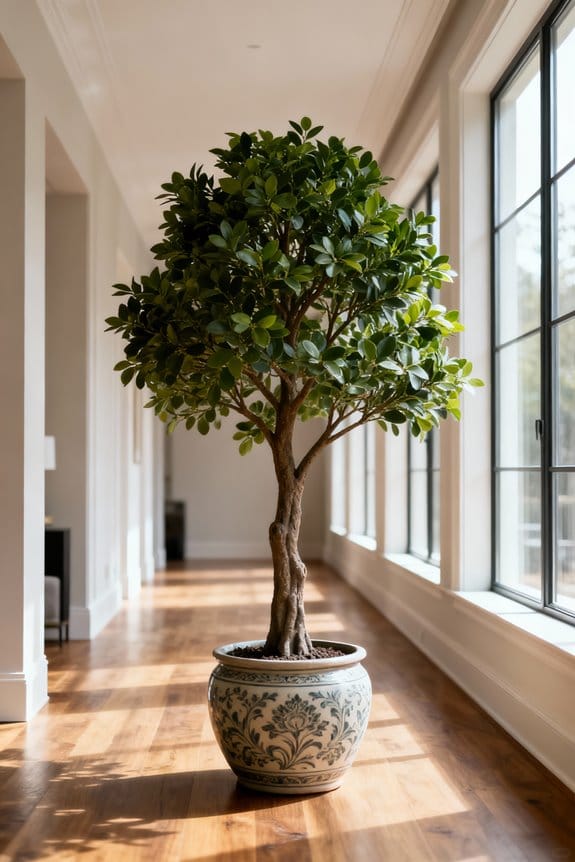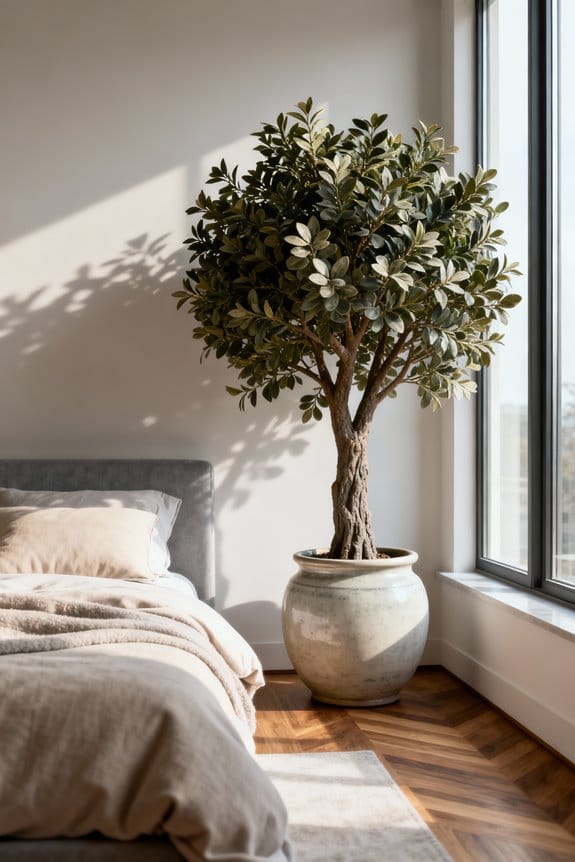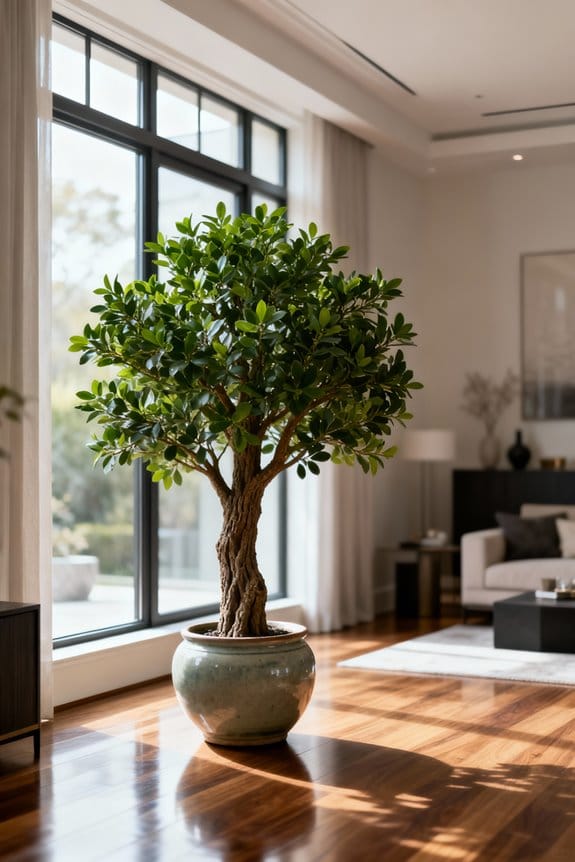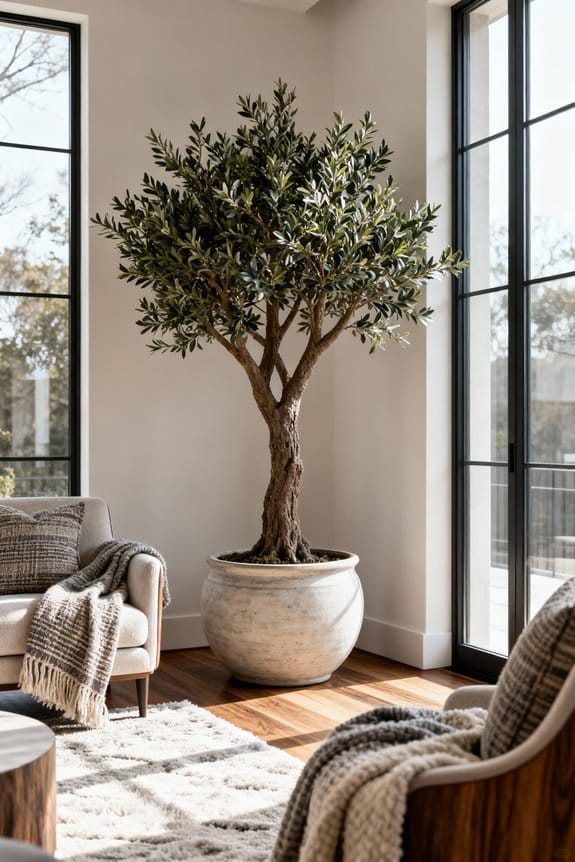
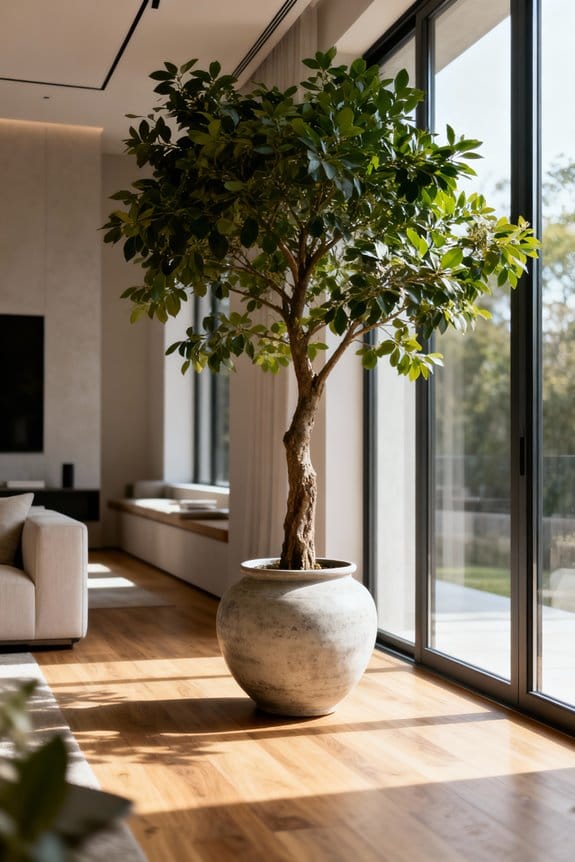

Using indoor trees is a clever way to soften those sharp, cold architectural lines in your space 🌿. Trees like the Dwarf Umbrella or Dragon Tree add natural curves and warmth, making rooms feel friendlier without much fuss. Just position them near windows for light and keep watering simple—your plant won’t judge if you forget sometimes! If you want to learn how to pick the perfect tree and place it for the best effect, there’s more helpful info ahead!
Key Takeaways
- Position indoor trees at room corners to soften harsh angles and create a smoother visual transition.
- Use trees with softer, flowing foliage like the Shady Lady Tree to balance and soften sharp architectural lines.
- Place vertical trees near windows to fill tall, angular spaces with natural texture and height.
- Group trees at varying heights to add visual depth and break up rigid linear structures.
- Select trees with rounded or feathery leaf shapes to contrast and soften cold, sharp interiors.
Benefits of Introducing Indoor Trees in Modern Architecture
Although indoor trees might seem like just a trendy decoration, they actually bring a bunch of real benefits to modern architecture! 🌿 When you add trees inside your space, they soften those harsh lines and cold surfaces that can make rooms feel too stiff or sterile. Indoor trees enhance architectural designs by adding warmth and natural texture, making interiors more welcoming and less like a spaceship. Plus, these living plants often become a focal point, grabbing attention and highlighting a room’s height or scale, especially in big spaces with high ceilings. You might even find that having an indoor tree improves the air and makes you feel calmer—bonus points for your well-being! So, while it might feel like a tiny jungle takeover, it’s a smart way to make your space friendlier and more interesting! For those who want the look without the upkeep, rustic artificial trees provide a maintenance-free alternative that still brings natural charm indoors.
The Role of Natural Forms in Softening Geometric Structures
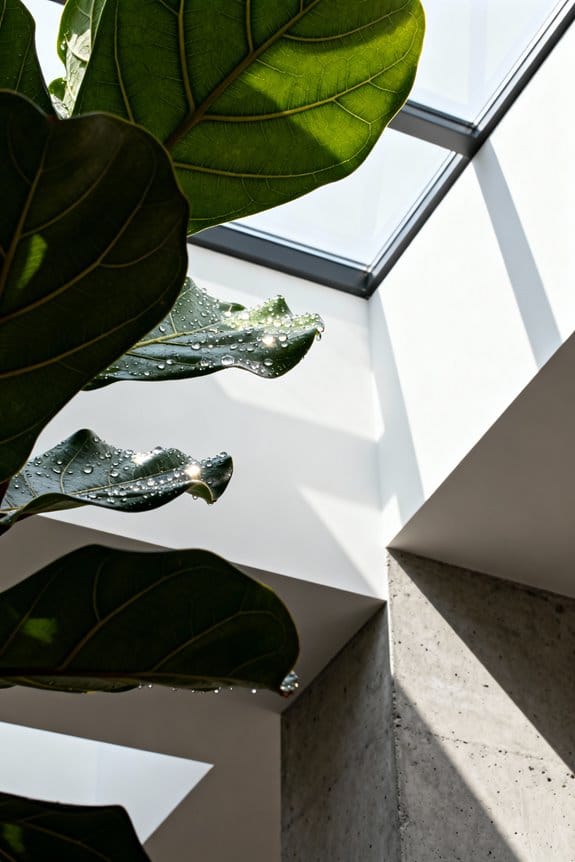
If you’re looking to soften those sharp angles and stiff lines in your space, natural shapes from indoor trees are a surprisingly simple fix! 🌳 Think about it: trees like the Umbrella Tree with its wide canopy gently break up those geometric edges, making your room feel more comfy and less like a math problem. Indoor trees bring natural forms into interior design that balance harsh lines with soft, organic shapes. For example, the Banana Leaf Fig adds a vertical flair that eases the feeling of tall ceilings, while the Shady Lady Tree creates gentle shadows that dance around sharp corners—kind of like nature’s way of saying “calm down.” So, adding trees isn’t just pretty; it actually makes your space more inviting and peaceful. Easy to love, right? For a low-maintenance option that still offers authentic texture and subtle lighting, consider realistic lighted artificial birch trees which bring warmth and softness without the upkeep.
Selecting Tree Species Suitable for Indoor Spaces
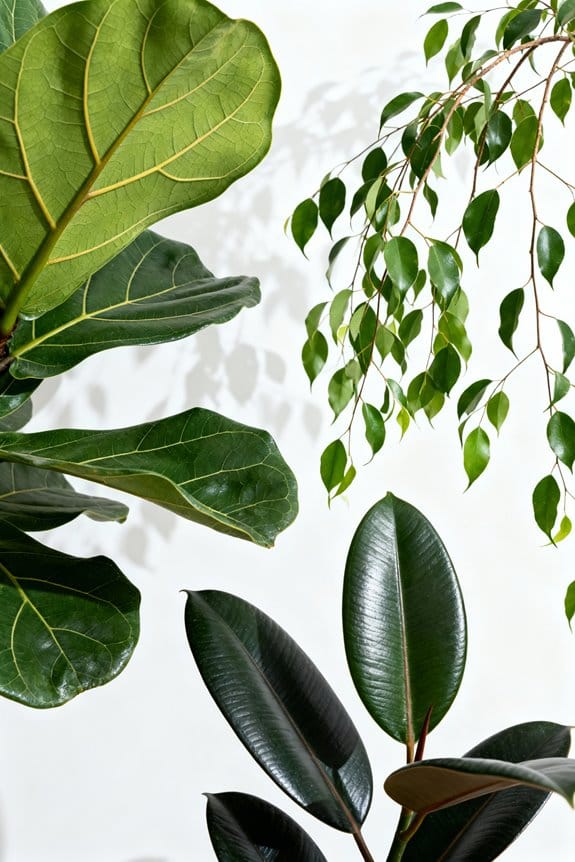
Choosing the right indoor tree for your space can feel a bit like dating—you want something that looks great but doesn’t ask for too much! 🌿 Luckily, there are plenty of low-maintenance options that thrive in medium to bright indirect light and fit well in smaller rooms. Use plants like the Dwarf Umbrella Tree, which stays compact, making it perfect when tree rises are limited. If you want something taller, the Banana Leaf Fig adds a striking vertical touch with slender leaves. For softer, more textured vibes, the Shady Lady Tree offers lovely movement and shadow-play. Just remember, your indoor tree should complement your space without turning into a full-time job. So pick wisely, and soon your room will look fresher and friendlier! Artificial trees provide an excellent alternative, offering the same aesthetic benefits without the need for watering or sunlight, perfect for those seeking low-maintenance greenery.
The Australian Bottle Tree as a Statement Indoor Plant
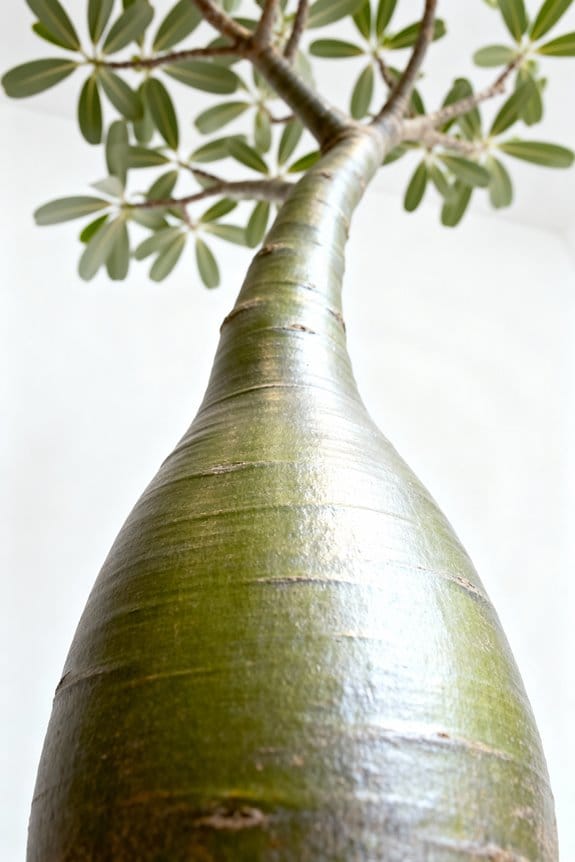
Indoor trees can really define a room, and the Australian Bottle Tree is a fantastic example of a showstopper that’s also surprisingly low-maintenance! 🌳 You might think it looks a bit “out there” with its bulbous trunk, but that unique shape actually works wonders in spaces with clean, sharp lines—it softens the vibe without stealing the spotlight. This tree is perfect if you want the right indoor plant to add flair without fuss. It thrives in bright, indirect light, so placing it near a window works best. Plus, its tall, sculptural trunk fits great in rooms with high ceilings, making your space feel bigger. Trust me, it’s perfect if you’re after a bold look that’s easy to care for—you might even forget you have a plant! Additionally, many artificial trees feature weighted pots for stability, ensuring they stay securely in place without tipping over.
Characteristics and Uses of the Dwarf Umbrella Tree
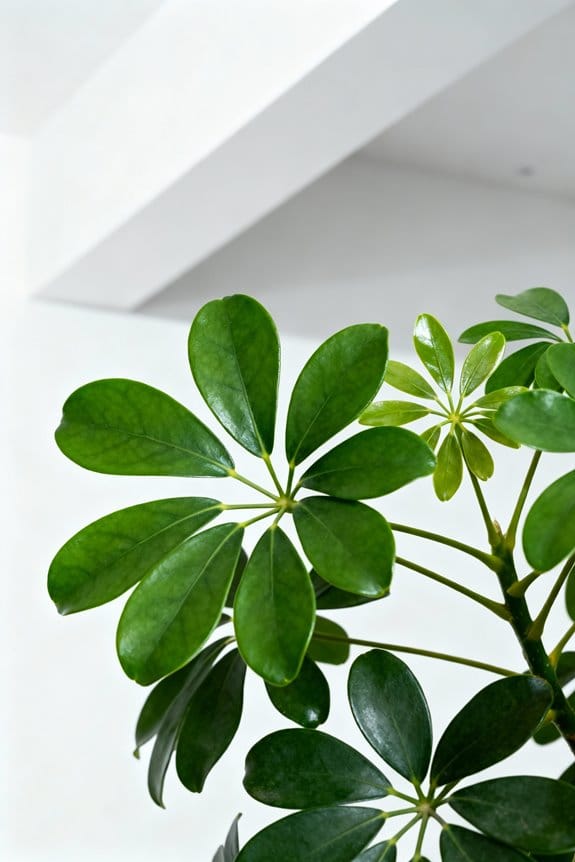
The Dwarf Umbrella Tree is like the perfect little green sidekick for your indoor space! 🌿 It’s a smaller version of its taller relative, making it super easy to fit into cozy rooms or desks without feeling like a jungle takeover. Its leaves structure is glossy and umbrella-shaped, which cleverly softens sharp architectural lines in your home. Thanks to its tree adaptability, this plant thrives in medium to bright indirect light and manages to look great without demanding much attention. Growing up to 2 to 4 feet tall, it adds vertical interest and livens up your indoor aesthetic without crowding your space. If you want greenery that’s easy-going but still stylish, the Dwarf Umbrella Tree is a smart, low-maintenance choice you’ll actually remember to water! For those seeking a hassle-free alternative, no-pruning artificial trees offer a similar look without the need for watering or sunlight.
Enhancing Interiors With the Classic Umbrella Tree
If you’re looking to add a bit of life to those sharp, modern corners in your home, the Classic Umbrella Tree is a fantastic buddy to invite over! 🌿 With its big, glossy leaves spreading out like a natural umbrella, this tree softens tough lines while giving your space a breezy, fresh vibe. Its broad canopy adds depth and warmth to your design aesthetics, blending nature with sleek interiors. Plus, it helps improve indoor air quality—bonus for anyone who forgets to open windows as often as they should. The good news? Tree maintenance is pretty low-key; just keep it in bright, indirect light and water it when the topsoil feels dry. It’s a stylish, easygoing helper for making your space feel a little more welcoming! For those wanting a similar effect with less upkeep, consider a faux palm tree that offers low-maintenance beauty and requires no watering or sunlight.
Incorporating the Shady Lady Tree for Visual Balance
Switching from the broad, bold leaves of the Classic Umbrella Tree to something a bit more delicate can really change up your space’s vibe! 🌿 The Shady Lady Tree, or Black Olive, brings in those feathery branches that soften hard corners in a way that’s subtle but noticeable. Its delicate silhouette adds a natural touch that balances sharp architectural lines without stealing the spotlight. When placed in bright, indirect light, this tree filters sunlight beautifully, creating dynamic shadows that boost your room’s visual depth and focal point aesthetics. Besides looking nice, it helps make your space feel calm and inviting—perfect for when you want to chill out after a long day. Honestly, it’s like nature’s way of whispering, “Relax, I got this!” Give it a try; your walls will thank you! Additionally, the Bellacat 7ft Faux Olive Tree features a natural wood trunk that enhances its realistic and sturdy design, making it ideal for homes seeking both charm and durability.
Bringing the Tropical Feel With the Banana Leaf Fig
While it might not turn your room into a rainforest overnight, the Banana Leaf Fig definitely brings a tropical vibe that’s hard to miss! 🌴 Its long, slender leaves stand tall and graceful, making it perfect for softening those sharp edges in modern spaces without going overboard. The leaf texture adds a gentle, natural touch, offering a nice contrast to hard surfaces. This tree’s vertical elegance fills tall rooms beautifully, drawing eyes upward and creating a sense of space and calm. Best of all, it’s low-maintenance—just give it bright, indirect light and water when the topsoil feels dry, and you’ll keep that tropical ambiance alive with minimal fuss. So, if your space needs warmth without looking like a jungle, this fig’s a great pick! For those who want the look without the upkeep, consider a UV-resistant artificial banana tree for a vibrant, maintenance-free tropical accent.
The Unique Appeal of the Dragon Tree
Few indoor trees bring as much character as the Dragon Tree! 🌟 With its thick trunk and sharp, sword-like leaves, it stands out without trying too hard—kind of like that friend who’s effortlessly cool. Dragon tree characteristics include its sturdy trunk and arching foliage, giving your space a bold yet natural vibe. Don’t worry about dragon tree maintenance; it’s pretty low-key and adapts well to different light levels, even those dim corners you forget about. Plus, this tree has an interesting dragon tree history—the reddish resin it produces was once prized for medicine and dyes. So, not only does it look great, but it carries a cool story too! If you want a tree that’s both chic and chill, the Dragon Tree’s your buddy indoors. Many indoor tree alternatives, like artificial banana leaf trees, provide a maintenance-free way to add lush greenery without sacrificing style.
Placement Strategies to Maximize Tree Impact Indoors
Even though it might seem tricky at first, placing indoor trees the right way can totally change your room’s vibe! 🌿 For example, tall trees like the Umbrella Tree really shine near windows or open areas where they catch natural light and soften those harsh lines in your home. Using simple tree arrangement techniques, you can also place trees in room corners to ease sharp angles and make the space feel more welcoming. Don’t be shy about grouping trees at different heights—they add depth and boost indoor foliage aesthetics while breaking up any boring, flat surfaces. Placing trees in the center of open rooms or atriums draws your eye upward, maximizing spatial perception and heightening that cozy, natural feel. Just remember, picking the right species helps keep everything looking fresh and lively! Choosing trees with compact heights and narrow silhouettes is especially effective for apartments and smaller spaces where saving space is essential.
Lighting Considerations for Healthy and Vibrant Indoor Trees
Getting the right light balance for indoor trees is like finding the perfect coffee blend—it takes some tweaking but is totally worth it! 🌞 Your leafy friend needs bright, indirect light to stay healthy and green without those painful sunburned leaf spots. Managing light intensity is key: placing trees near windows while avoiding harsh direct sunlight keeps them happy. If natural light is scarce, don’t worry—artificial lighting options like grow lights can save the day by supplementing sun exposure. Remember to rotate your tree regularly so it grows evenly instead of leaning like a sunflower gone rogue. Also, combine these lighting setups with smart humidity control techniques to prevent dry air from stressing your tree, helping it stay vibrant and lively indoors!
Maintenance Tips for Long-lasting Indoor Tree Installations
Now that your indoor tree is basking in the perfect light, it’s time to chat about keeping it happy for the long haul! 🍃 Think of maintenance as the friendly check-up your tree needs—nothing too fancy, just regular TLC. First, keep an eye on soil moisture; water only when the top inch feels dry to avoid overwatering and root rot. Seasonal care means adjusting humidity—many trees love a little extra moisture, so grouping plants or using a humidifier helps! Pruning techniques are key, too: trim dead or yellow leaves and shape your tree for better growth and style. Don’t forget repotting every couple of years with fresh, well-draining soil to boost tree health. Your tree will thank you with vibrant leaves—and you can brag about that green thumb! 🌿
Frequently Asked Questions
What Is the Art of Clipping Trees and Shrubs Into Decorative Shapes Called?
The art of clipping trees and shrubs into decorative shapes is called topiary. It involves topiary techniques and ornamental pruning to create sculpted foliage, enhancing aesthetic appeal through carefully maintained geometric or fanciful plant forms.
How to Shape House Plants?
Shaping house plants involves trimming, thinning, and pinching to promote balanced growth, applying plant pruning techniques to create decorative foliage arrangement. These methods contribute greatly to enhancing indoor aesthetics by maintaining form, encouraging health, and showcasing natural beauty.
Are Indoor Trees in Style?
Indoor trees remain in style due to indoor greenery benefits like improved air quality and stress reduction. Careful tree selection tips guarantee adaptability to interiors, greatly enhancing home aesthetics and aligning with contemporary biophilic design trends.