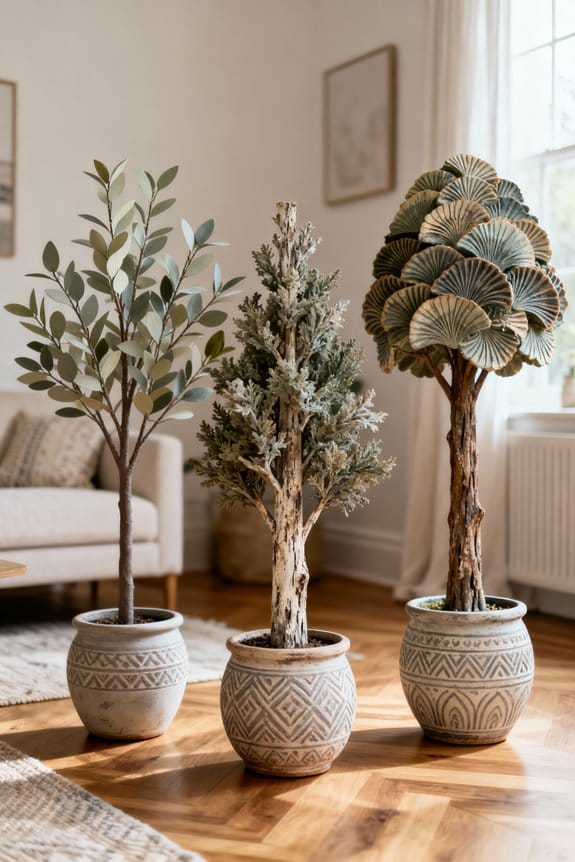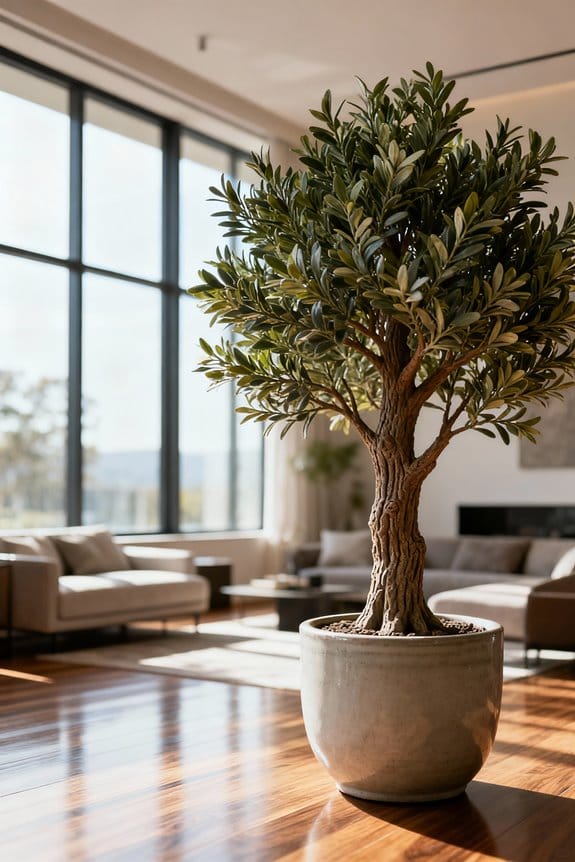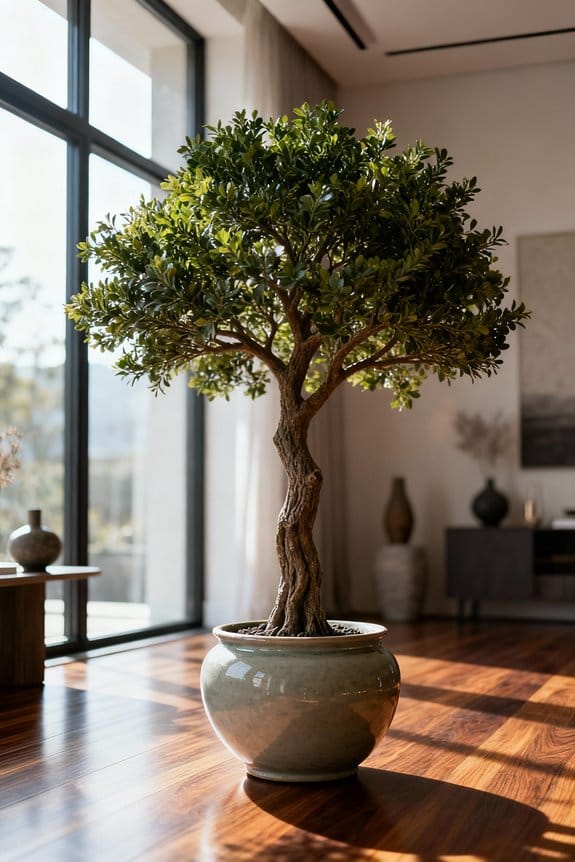
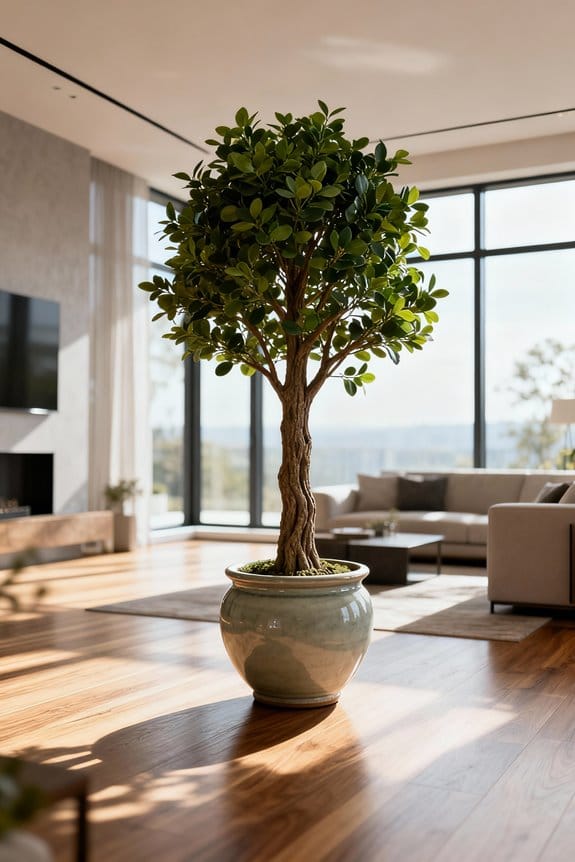

Pairing faux trees with furniture is all about balance—taller trees should be about 1.5 to 2 times the furniture height to avoid looking awkward or like a jungle gym! 🌿 Keep your tree’s width around half its height for a natural feel. Too big trees near delicate furniture? Big no-no! And smaller trees near tall furniture? Great for softening the space. Space them well, around 90 cm apart, to keep things comfy and stylish. Stick with these tips, and you’ll nail the vibe—and there’s more cool stuff to explore!
Key Takeaways
- Faux trees should be 1.5 to 2 times taller than nearby furniture for balanced visual harmony and proportional room design.
- Matching tree diameter to 40%-60% of tree height enhances scale and prevents overcrowding with furniture.
- Taller faux trees paired with low seating direct the eye upward and create engaging focal points in open spaces.
- Smaller trees complement tall furniture by being about 1.5 times shorter and 30-40% of furniture height in width.
- Proper spacing of 90-120 cm between trees and furniture maintains openness and prevents cluttered or jarring decor.
Understanding Height Dynamics in Interior Design
How tall should your faux trees be compared to your furniture? Well, the trick is to aim for artificial trees about 1.5 to 2 times taller than your furniture. This really helps with height dynamics, making the room feel balanced and harmonious. Don’t forget to think about your ceiling height! If your tree is too tall, it might hit the ceiling or look cramped, which nobody wants. Taller trees naturally grab attention and create a cool focal point, while shorter ones are perfect for cozy corners or smaller pieces. Mixing heights adds depth and interest, so your space doesn’t look boring or flat. It’s like giving your room a little personality boost without trying too hard! 🌿 Just remember to keep things feeling open and fresh. Plus, choosing faux trees with adjustable branches can help you customize the look to fit your space perfectly.
Balancing Scale Between Trees and Furniture
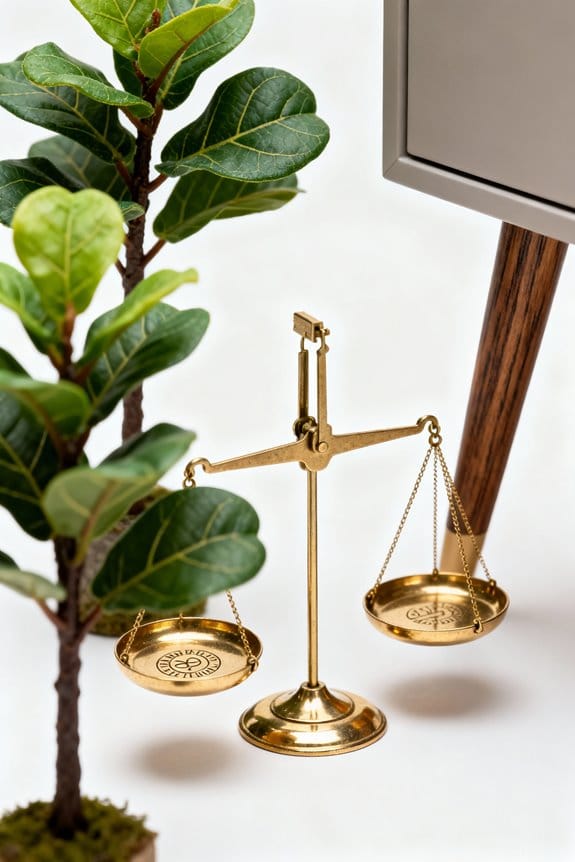
Although picking the right size faux tree might seem tricky at first, keeping the tree’s height about 1.5 to 2 times taller than your furniture usually hits the sweet spot for balance and style. 😊 You don’t want a tree that’s so wide and bushy it looks like it’s smothering your couch, right? When choosing faux trees, aim for a diameter that’s around 40%-60% of its height to keep the scale just right. Think about the space too—large trees shine in open areas, while smaller ones pair nicely with low furniture to keep visual balance. Matching colors and textures between your faux trees and furniture can make your whole room vibe feel intentional. Remember, it’s all about blending height, scale, and space for that perfect interior design harmony! Additionally, incorporating faux trees with real wood trunks can significantly enhance the authenticity and visual appeal of your decor.
Selecting Tall Faux Trees for Low Seating Areas
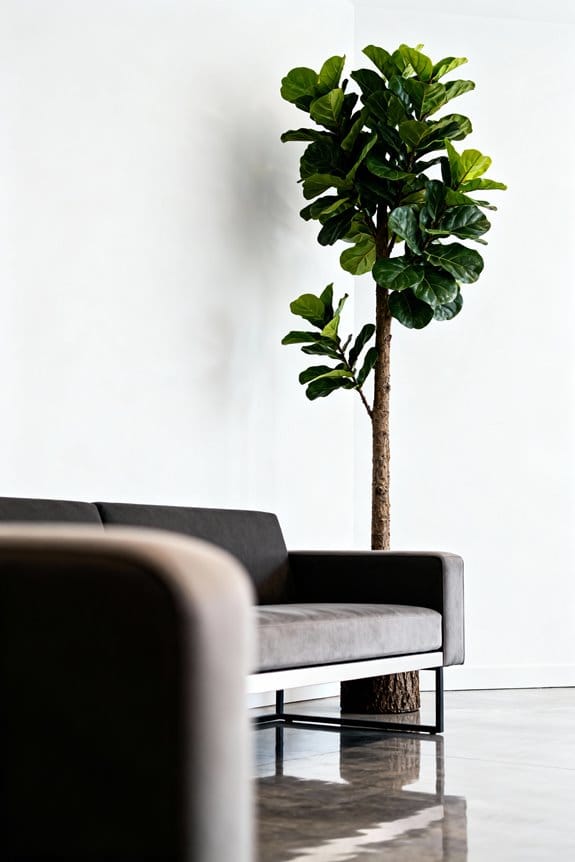
Picking the right tall faux tree for your low seating area can be like finding that perfect coffee mug—it just has to fit just right! 😊 Aim for a tree that’s about 1.5 to 2 times taller than your sofa or chair to create eye-catching visual balance without making the tree feel like it’s stealing the show. Place tall faux trees behind your low seating to draw the eye upward and keep conversations clear. Watch your ceiling height; leave 30-50 cm above the tree to keep the space feeling open. Opt for skinny varieties with a slim profile like pencil cypress to add height and width without overpowering. Use tall planters to tie the tree and seating together, creating a cozy, integrated design that feels just right! For added stability and a natural look, consider options with a weighted pot that prevents tipping and keeps your decor secure.
Complementing Tall Furniture With Smaller Faux Trees
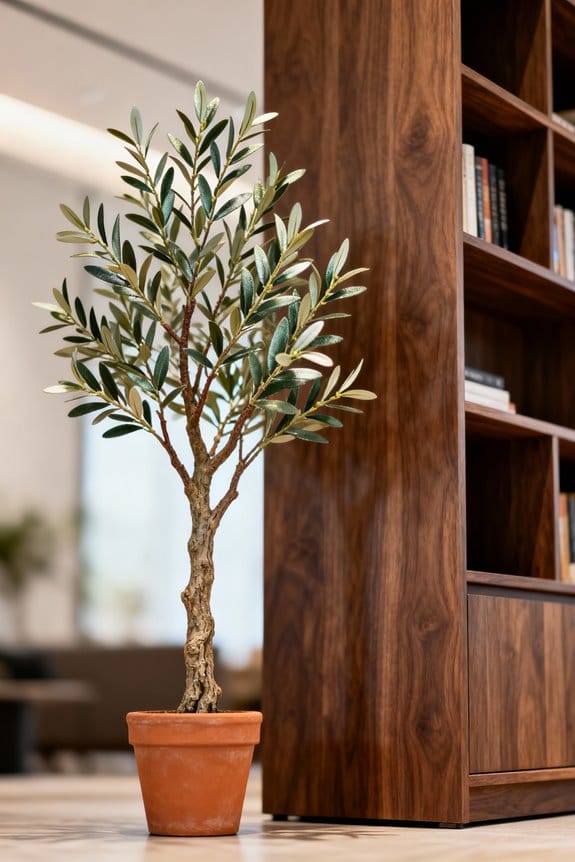
Let’s say you’ve got some tall furniture towering in your space—it’s like having a giant friend at a party, and you want the smaller faux trees to be the perfect sidekick, not the wallflower or the loud one! 😉 To keep things balanced, choose smaller trees about 1.5 times shorter than your tall pieces so they don’t get lost or look like they’re trying too hard. Aim for faux trees with widths around 30-40% of the furniture’s height to keep proportions right. Vertical trees like pencil cypress work great here—they add height without stealing the spotlight. Placing these smaller faux trees nearby softens the tall furniture’s visual impact and boosts your room’s aesthetic. Trust me, it’s like giving your tall furniture a stylish little buddy! Plus, opting for compact heights ensures your space remains open and clutter-free while maintaining lifelike greenery.
Impact of Tree Height on Room Perception
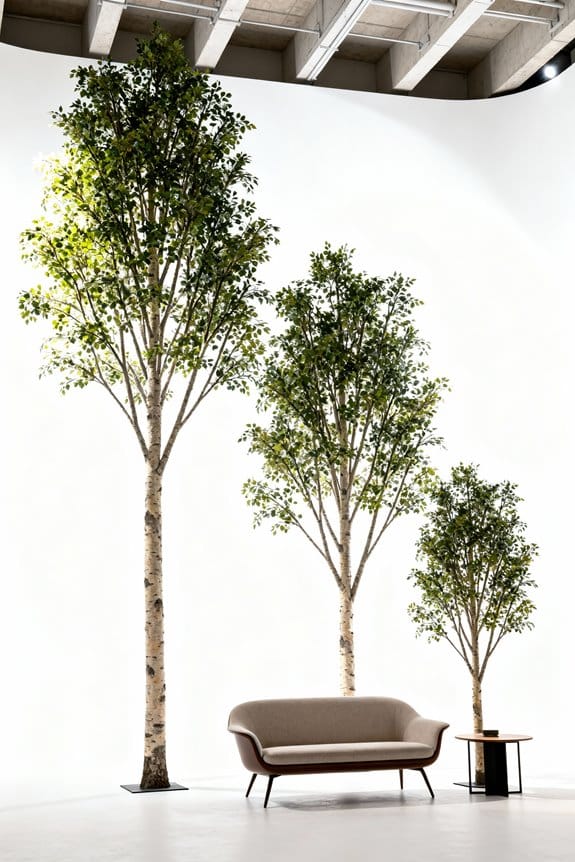
When you think about adding faux trees to your room, their height isn’t just about the plant itself—it’s a game-changer for how your space feels! 🌿 Tree height can totally shift your room’s vibe. Taller artificial trees draw your eye up, enhancing verticality and making ceilings seem higher—perfect for indoor settings with low roofs. But watch out: too tall can feel overwhelming, like your tree’s trying to steal the spotlight! 😊 A good rule? Choose trees about 1.5 to 2 times the height of nearby furniture. This keeps balanced visual proportions and adds visual interest without crowding your space. In smaller rooms, stick with shorter trees to keep things cozy. So next time, think tall but balanced for a fresh, airy room feel! Also, selecting trees with adjustable branches allows you to customize the silhouette to better suit your space and furniture arrangement.
Using Scale to Create Visual Harmony
Even though it might seem easy to just grab a tree you like, scaling it to fit your furniture is the real trick! 🌳 You want your faux tree to stand about 1.5 to 2 times taller than nearby furniture, so it looks balanced and not like it’s auditioning for a jungle show. Getting the right height and scale creates visual harmony by matching proportions carefully. A tree too wide or too skinny throws off that balance and can either swallow up your furniture or feel lost. Keep in mind, the tree’s full shape should be about 40%-60% of its height in width to avoid looking awkward. When you nail those proportions, your space feels cozy and polished, not chaotic or cramped—like a well-rehearsed plant-furniture duet! Choosing a tree with adjustable branches allows you to fine-tune its shape to better complement your furniture’s scale and style.
Placement Strategies Based on Tree and Furniture Dimensions
Although picking the right faux tree might seem straightforward, placing it well makes all the difference! 🌿 You want your tree to play nicely with your furniture, like friends finding the perfect spot at a party. Placement strategies start by matching the tree’s height to 1.5 to 2 times that of your furniture to keep visual balance. Don’t forget the scale: aim for tree widths about 40%-60% of their height, so nothing feels awkwardly bulky or too thin. Larger faux trees do best in open spaces, while slimmer ones fit cozier spots without cluttering your room. Also, check the ceiling height—subtract 30-50 cm to avoid your tree hitting the ceiling and overwhelming the space. With these dimensions in mind, your home will look both stylish and balanced! Additionally, choosing a tree with sturdy, weighted pots helps ensure stability and safety in your space.
Enhancing Room Flow With Proper Tree Sizing
Picking the right faux tree is just the start—you also want to make sure it helps your room flow nicely! 🌿 A tree that’s too tall or wide can block sightlines or make a space feel cramped, so aim for trees about 1.5 to 2 times the height of your furniture. This keeps the height and scale balanced, giving your room better visual coherence. Also, think about the tree’s width—around 40%-60% of its height works well with furniture dimensions. Placing faux trees near lower furniture draws the eye upward, making great use of vertical space. Don’t forget to leave 90-120 cm around your tree for easy movement and to avoid a garden maze situation! This way, your room will feel open and inviting. Additionally, choosing faux plants made from high-quality silk can enhance the realistic appeal and elevate your room’s decor.
Avoiding Common Mistakes in Height and Scale Coordination
Lots of folks make the mistake of mixing huge faux trees with tiny furniture pieces—trust me, it doesn’t look great and can make your room feel like a jungle gym! 🌳😅 To avoid this, aim for trees that are about 1.5 to 2 times taller than your furniture so everything feels balanced and cozy. A common mistake is ignoring ceiling height—too tall trees in low spaces can feel cramped, while short trees get lost in tall rooms. Also, pairing big wide faux trees with delicate furniture throws off scale and visual harmony. Keep a balanced arrangement by spacing your trees well, at least 90-120 cm from furniture, so your room feels open and stylish. Trust me, these simple tips save you from decorating disasters! Many artificial corner trees are designed specifically for tight spaces, ensuring vertical impact without crowding your room.
Frequently Asked Questions
How Tall Should My Faux Tree Be?
Faux tree sizes should never be underestimated—as their height commands the room! Choosing heights that respect room proportions and furniture scale achieves visual balance. Proper plant placement guarantees harmony, enhancing the living space’s appeal without overwhelming it.
Does the Height of an Artificial Tree Include the Stand?
The height of an artificial tree includes decorative stands, as total tree size impacts visual harmony. Considering room proportions, furniture scaling, and plant placement guarantees aesthetic balance, avoiding disproportionate effects while maintaining cohesive interior design.
How Do You Add Height to a Fake Tree?
Like reaching for the sky, adding height to a faux tree involves elevating it with tall planters or stands. This faux tree styling enhances vertical space, promotes decorative balance, supports furniture harmony, respects room proportions, and employs artistic layering design tips.
What to Do if an Artificial Tree Is Too Tall?
If an artificial tree is too tall, tree trimming may reduce height for better plant placement. Ceiling considerations guarantee height balance, minimizing visual complexity. Proper room design with artificial foliage maintains harmony and prevents overwhelming the space.