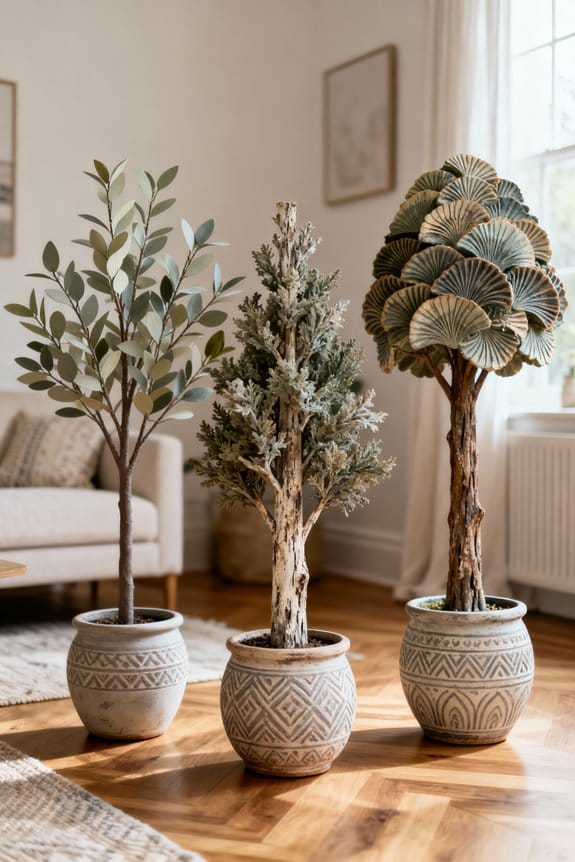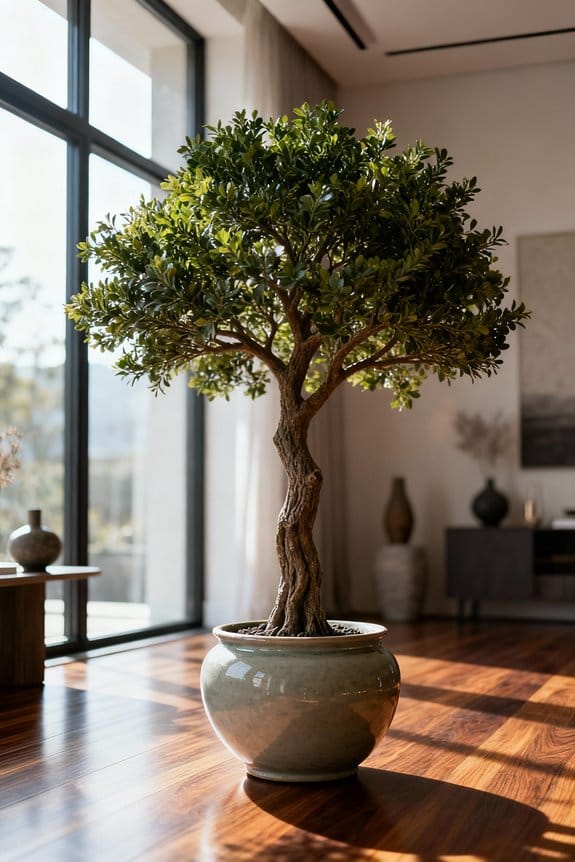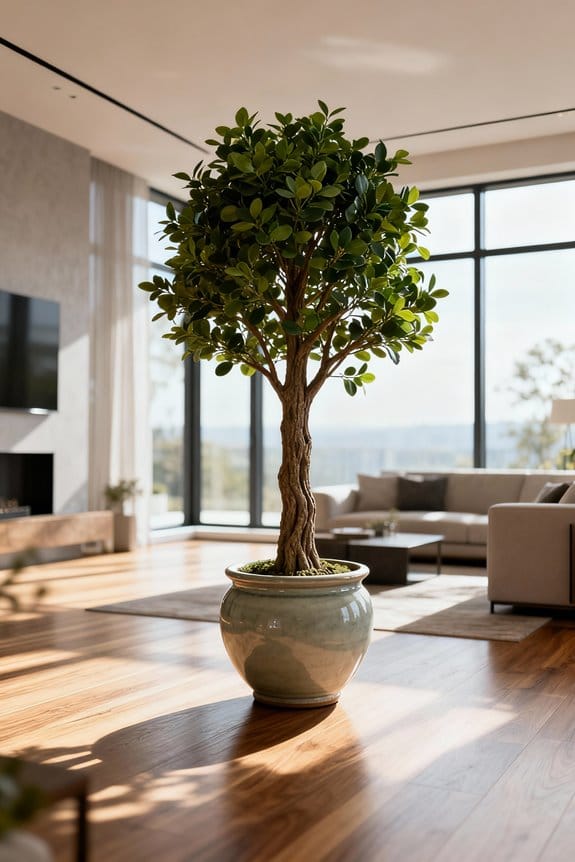
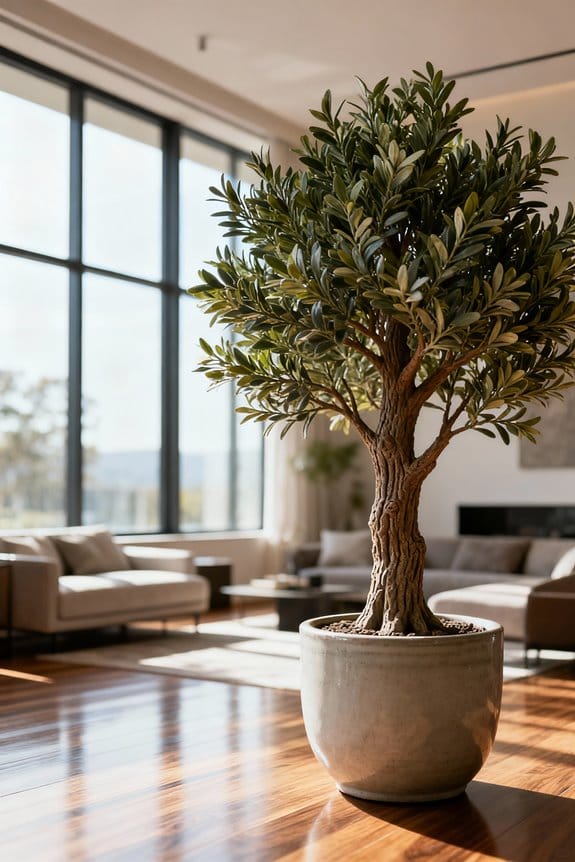

When decorating with faux trees, people often pick ones that are too short or place them awkwardly—like stuffing a tall tree in a tiny corner, yikes! 😅 Forgetting to fluff branches or bend stems makes trees look stiff and fake. Plus, using cheap plastic pots or skipping regular dusting can kill the vibe. Your faux tree should feel natural and balanced with the room’s scale. Want tips to avoid these goofs and make your space shine?
Key Takeaways
- Choosing faux trees that are too short or placed awkwardly disrupts room balance and visual flow.
- Neglecting branch fluffing and regular cleaning causes faux trees to look flat and dusty.
- Using low-quality or shiny faux trees results in an unnatural and uninviting appearance.
- Placing faux trees in plain plastic pots lowers their aesthetic appeal and realism.
- Keeping stems and branches perfectly symmetrical makes trees look stiff and artificial.
Choosing Faux Trees That Are Too Short
Wondering why your faux tree just isn’t making the splash you hoped for? 🤔 Often, picking a tree that’s too short ends up leaving your space feeling a little off balance. When your faux tree is too small, it gets lost, overshadowed by furniture or décor. It’s like showing up to a party underdressed—you just don’t stand out! To avoid this, make sure your faux tree reaches at least one-third the height of your wall. Measure your room and ceiling first! Investing in a taller faux tree can really boost the room’s vibe, making everything look more balanced and inviting. So next time, go big or go home—your space will thank you for the extra oomph! 🌳✨ Consider the height and scale when selecting your tree to ensure it complements your space perfectly.
Neglecting to Properly Fluff the Branches
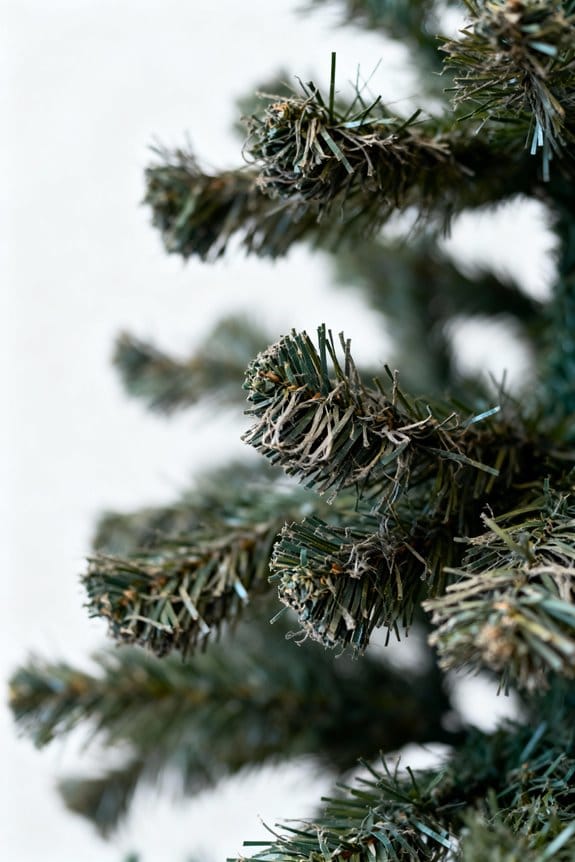
Give your faux tree a little TLC by fluffing its branches—yes, it’s a must-do step that many people skip! 🙈 Without fluffing, even high-quality faux plants can look flat and lifeless, like they’ve been squished in a box. Take a moment to bend and spread the branches individually—it breaks up that boring, perfect symmetry and mimics how trees grow naturally. This not only makes your tree look fuller and more real but keeps it looking fresh over time. Plus, fluffing helps dust settle less awkwardly, so your faux tree stays clean without constant fuss. So, if you want your faux tree to be the stylish standout it deserves, don’t be lazy—give those branches some love! Your room will thank you. 🌿 Regular maintenance considerations like dusting and adjusting branches are essential to keep your artificial plant looking its best.
Using Low-Quality Faux Trees
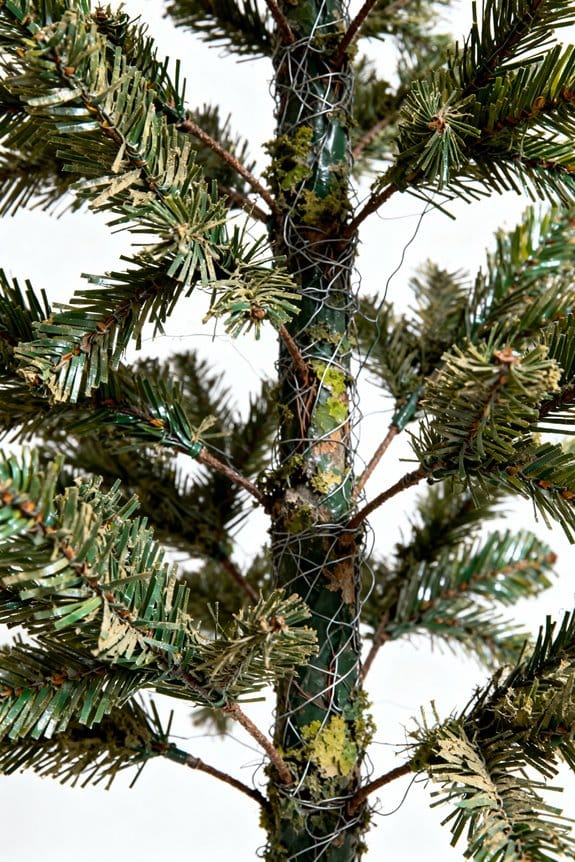
While it might be tempting to grab the cheapest faux tree you can find, low-quality versions often stick out like a sore thumb with their unnatural colors and shiny leaves! 😬 These little details might seem minor, but they can really mess with the vibe of your space, making it feel less cozy and more like a fake jungle. Using low-quality faux trees usually means sacrificing the natural look your home needs. But don’t stress! If you already have one, try repotting it with decorative rocks or faux dirt to boost its realism. And next time, aim for trees with varied textures and subtle color changes—they mimic real plants’ imperfection and add depth to your decor. Trust me, your space will thank you! Choosing models with lifelike leaf texture and visible veins enhances authenticity and overall appeal.
Placing Faux Trees in Unnatural Locations
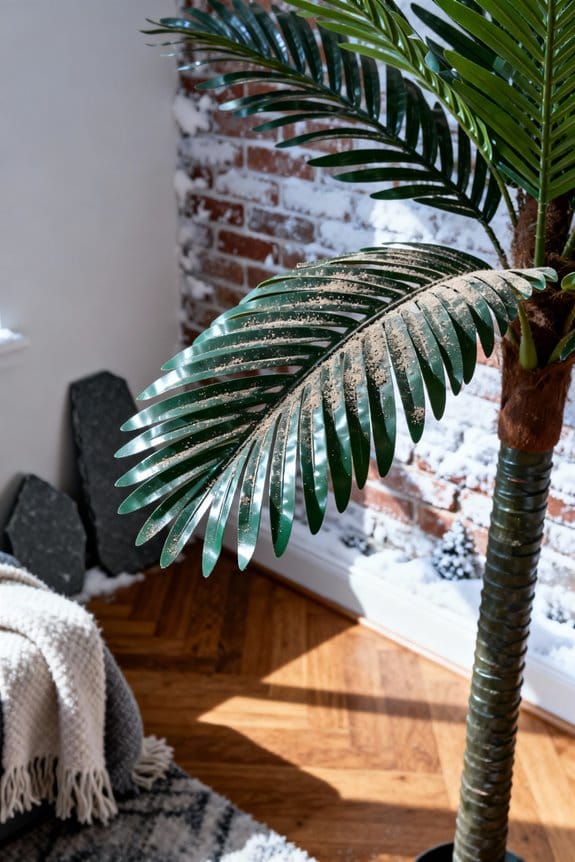
If faux trees are plopped in random places like the bathroom or a crowded countertop, the whole room might feel off—like something’s just not right! 😅 It’s easy to get excited and stash them anywhere, but they actually look best where live plants would naturally grow, such as cozy corners or by windows. Placing faux trees in unnatural locations can make your space feel awkward or cluttered, and nobody wants that! Instead, try putting them in entryways or open spots to create cool focal points. Also, avoid cramming giant trees into tiny rooms—it’s like wearing clown shoes to a dinner party, just too much! With a little thought, your faux trees will fit right in, adding charm without being the “weird plant” everyone notices. 🌿
Skipping the Repotting Process
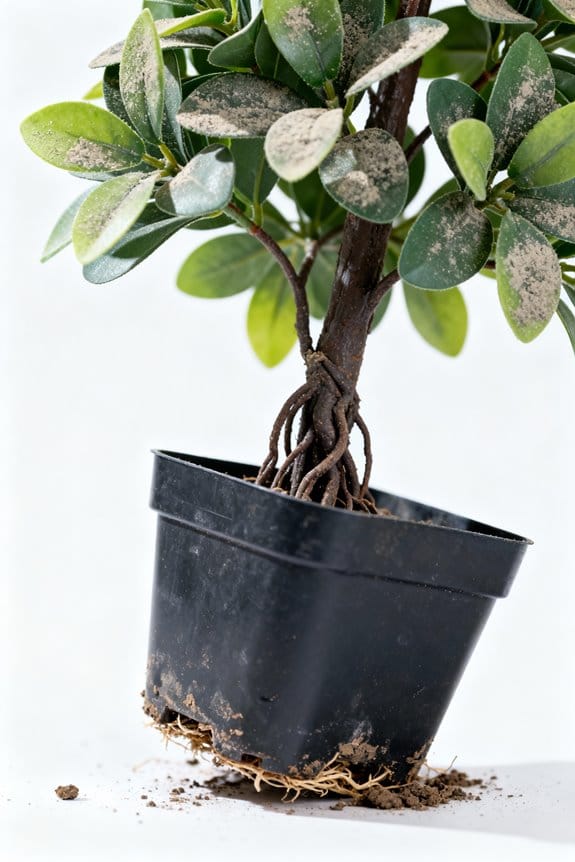
Though skipping repotting might seem like a time-saver, leaving faux trees in their original plastic pots can seriously cramp their style! 🌵 Nobody wants an expensive-looking tree stuck in a dull, plastic container—that’s like wearing pajamas to a fancy dinner. Repotting faux trees is a simple way to boost their look and help them blend better with your space. Swap out those boring plastic pots for something stylish that matches your decor. Adding decorative stones or moss on top can trick the eye into thinking your tree is thriving in real soil. Plus, bending stems just a bit while repotting can break up that stiff, fake vibe. So, don’t skip this step — your faux tree deserves a better outfit! Choosing a terracotta pot with good drainage features can also enhance both the stability and overall appearance of your artificial tree.
Overcrowding With Too Many Faux Trees
When you pack a room full of faux trees, it can quickly start to feel less like a cozy forest and more like a crowded jungle gym! 🌿 You want each tree to shine and add life to your space, not compete for attention or make your room look cluttered. Overcrowding a space with too many faux trees can lead to chaos, making your decor feel overwhelming and messy. Instead, try mixing a few faux trees with some real plants to keep things balanced and fresh. Use larger faux trees alongside smaller real ones to create a nice scale, so your room doesn’t feel cramped. Remember, less can be more! Let your trees breathe—this way, you’ll enjoy a cleaner, cozier vibe without getting lost in the greenery jungle! To maintain an appealing look, it’s crucial to consider tree heights relative to ceiling height to create harmony and balance in your decor.
Ignoring Regular Cleaning and Maintenance
Now that the room isn’t looking like a fake forest jam session, it’s time to talk about keeping those faux trees in tip-top shape! 🌿 Nobody wants dusty, droopy-looking greenery pretending to be real, right? One of the biggest mistakes is ignoring regular cleaning and maintenance. Dust can settle quickly, making your faux trees look dull and sad. Try dusting them every few weeks with a soft cloth or feather duster—easy, right? Every few months, give them a deeper clean with mild soap and water to wash away stubborn dirt. Also, don’t forget to fluff and adjust the branches now and then. It keeps the tree lively, not stuck in “I’ve-been-here-forever” mode. Treat your faux trees like real ones, and they’ll thank you by brightening your space longer! Unlike real plants, faux trees require no watering or pruning, making their upkeep focused mainly on maintaining their durability and appearance.
Failing to Consider Scale and Proportion
Getting the size-right game down is a must when decorating with faux trees! 🌳 You don’t want a tiny plant swallowed up in a huge room or a giant tree cramping a small space like it’s starring in its own drama. When you ignore scale and proportion, your tree can turn into either a wallflower or a diva, stealing all the attention for the wrong reasons. A big faux tree shines in open areas, making a bold statement, while smaller ones fit nicely on shelves or snug corners, keeping the vibe balanced. Always check your room’s size and furniture layout before picking your tree’s height and width. Remember, getting this right helps your faux tree blend smoothly with your decor instead of sticking out like a sore thumb! Additionally, choosing the appropriate height ensures your faux ficus complements your space perfectly without overwhelming it.
Selecting Inappropriate Pots and Planters
Although faux trees can brighten up any room, choosing the wrong pots or planters can make them stick out like a sore thumb! 🌿 It’s easy to grab the first container you see, but skipping on a pot that matches your home’s style can make your tree look fake and, well, sad. Selecting inappropriate pots and planters often means using ones that clash with your décor or are the wrong size. A pot that’s too small can cramp your faux tree, while a giant one might swallow it whole! Try rustic or natural-looking planters instead of perfect symmetrical ones—they help your tree feel more real. Don’t forget fillers like decorative stones; they add charm and keep your tree from wobbling. Your faux tree deserves a home as lovely as it is! To ensure durability and avoid damage, it’s wise to select planters with corrosion-resistant finishes that suit both indoor and outdoor environments.
Forgetting to Bend Stems for Realism
If you’ve ever looked at a faux tree and thought, “Why does this look so stiff?” you might be forgetting a simple trick: bending the stems! 🌿 Giving those branches a little bend breaks up the perfect symmetry and instantly makes your tree seem more natural and less “plastic-y.” It’s kind of like messing up your hair on purpose—it adds personality! Fake trees often fall into the trap of looking too perfect without this step, which is one of the common decorating mistakes. Gently bend the stems at different angles and heights to mimic real plant growth. Just be careful not to snap anything! Regularly tweaking the branches keeps your faux tree fresh and lively, helping it blend naturally with your space. Easy fix, big impact! For best results, ensure your faux tree has real-touch PU leaves to maximize its lifelike appearance.
Frequently Asked Questions
Do Fake Plants Look Tacky?
Like a brightly painted mask, fake plants sometimes provoke a tacky perception. However, with subtle color variations, varied textures, and thoughtful placement, they can transcend artificiality, blending seamlessly and enhancing a room’s aesthetic appeal.
How to Make a Fake Tree Look More Realistic?
To make a fake tree look more realistic, one should focus on natural integration by placing it where real trees typically grow, selecting high-quality, textured foliage, repotting with appropriate fillers, and maintaining its form regularly for freshness.
What Not to Do When Decorating a Christmas Tree?
Poor placement perplexes, producing problematic prominence. One should not neglect tree placement, avoid cluttering corners, or block pathways. Additionally, overloading ornaments, misplacing lights, or skipping proportionate toppers disrupts the décor’s delicate, dazzling dance and detracts from festive finesse.
What Are the Cons of Fake Trees?
Fake trees present maintenance issues, accumulating dust that demands frequent cleaning. They lack air-purifying qualities and natural growth patterns. Poor-quality versions appear unrealistic, and excessive placement can create a cluttered, artificial atmosphere in homes.