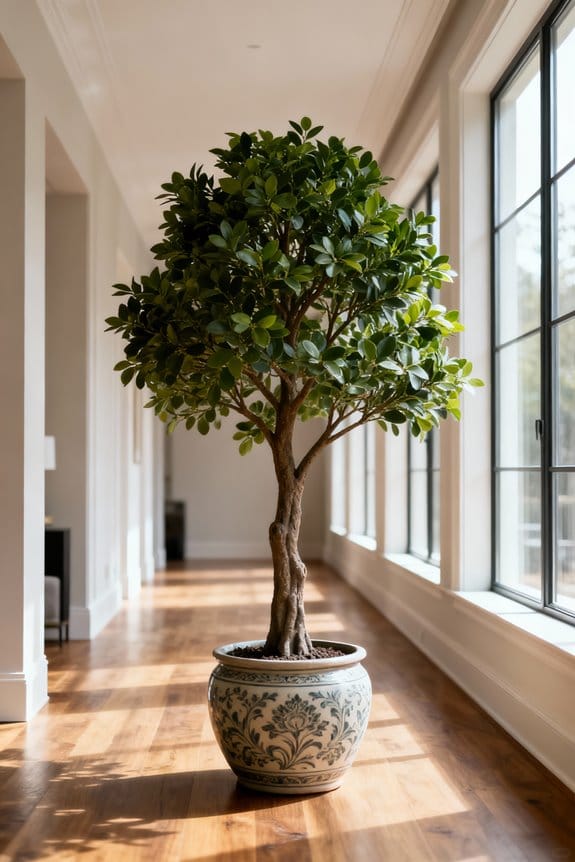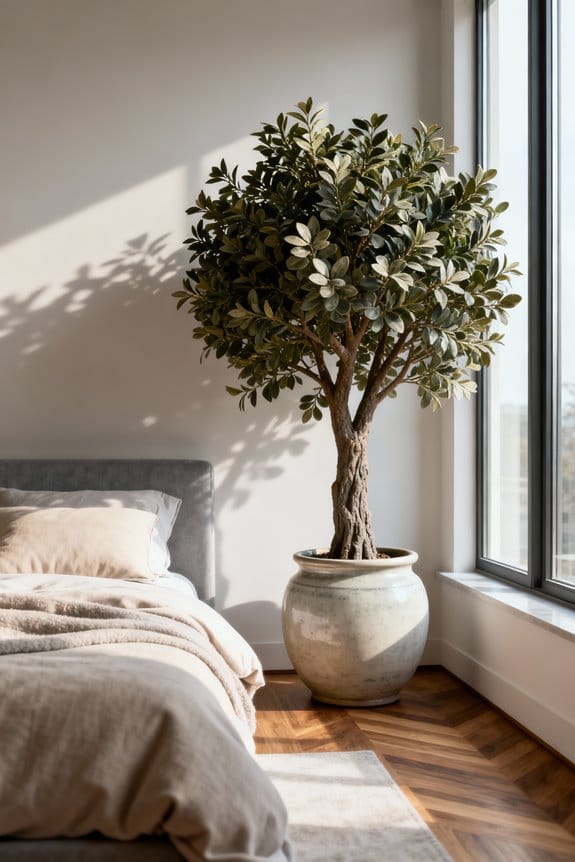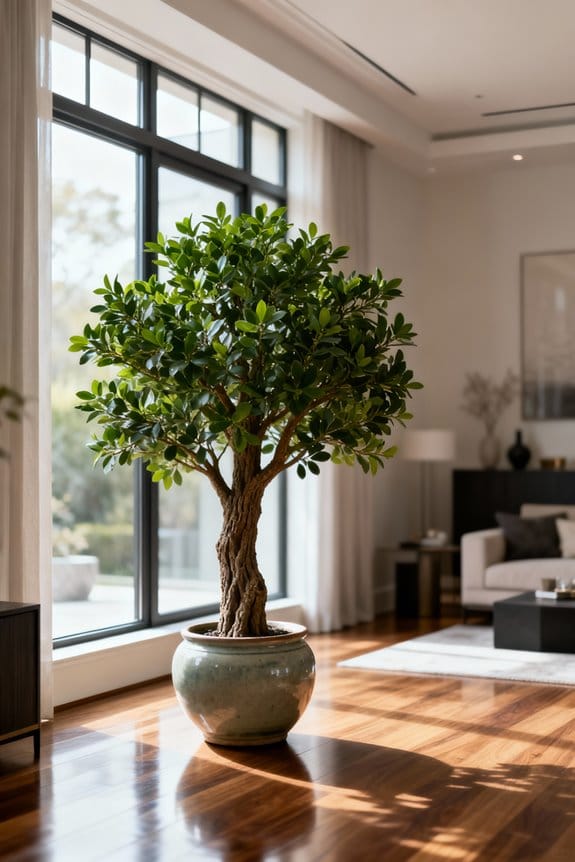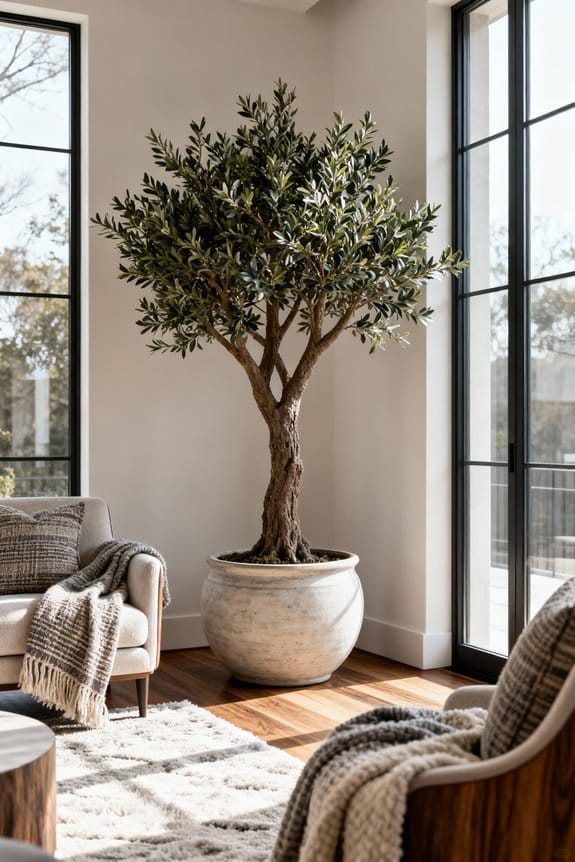
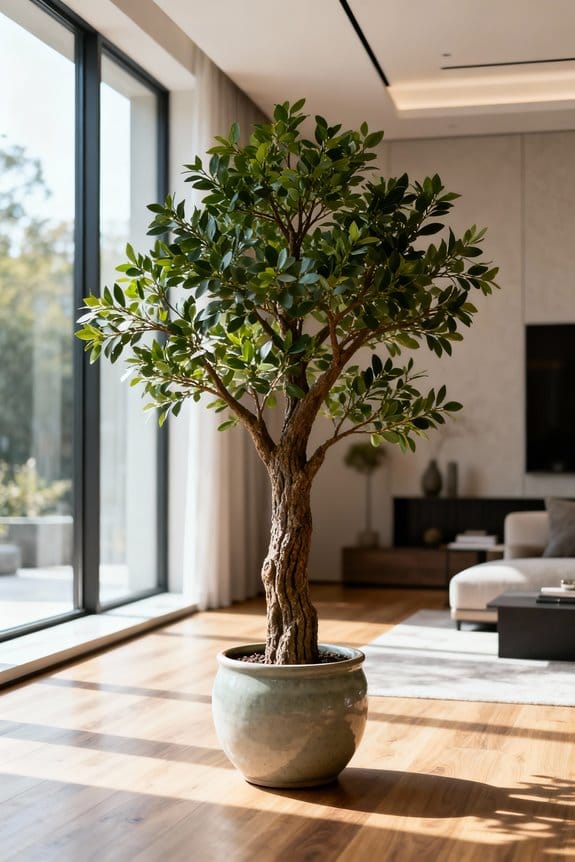

Looking to brighten your home with indoor trees? Start by picking one that fits your space and sunlight—no one wants a giant Fiddle Leaf Fig crashing a tiny corner! Water your tree right: some like weekly drinks, others prefer a dry spell. Keep temps comfy, around 65-75°F, and mist for humidity-loving types. Style with pots you love and mix sizes for a fresh look. Stick around, and you’ll soon be a pro at making your space green and inviting! 🌿😊
Key Takeaways
- Choose indoor trees by space size, lighting preferences, and maintenance needs to ensure healthy growth and fitting decor.
- Position trees in areas with appropriate light: indirect for Fiddle Leaf Fig, direct for Citrus, and medium to low light for Madagascar Dragon Tree.
- Water according to species requirements and soil moisture, using well-draining soil to prevent root rot.
- Maintain room temperature between 65-85°F and humidity with misting or humidifiers for humidity-loving trees.
- Style with varied tree heights and pot designs, placing tall trees as focal points and smaller plants for cozy corners.
Choosing the Right Indoor Tree for Your Space
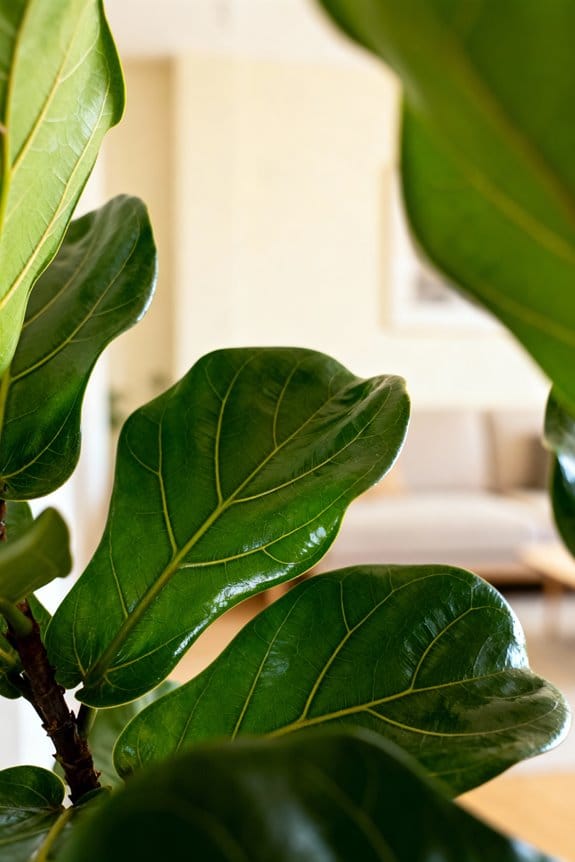
Wondering how to pick the perfect indoor tree for your space? 🌿 It’s not just about grabbing the first pretty plant you see at the store! When you consider adding a tree to your dining room, size really matters. You don’t want a tiny Ming Aralia getting lost or a Madagascar Dragon Tree towering awkwardly. Think about sunlight too—some trees like European Olive Trees love direct sun, which might shine through your dining room windows, while others like Dracaenas prefer softer light. Watering habits are key too; the Bird of Paradise needs a splash every week or two, but Jade Plants are way more chill with water. Remember, most indoor trees prefer cozy temperatures between 65-75°F. Picking the right tree is like choosing a dining companion—it should fit your vibe! For those seeking fuss-free options, consider artificial trees which offer low-maintenance greenery without needing sunlight or watering.
Ideal Lighting and Placement Tips
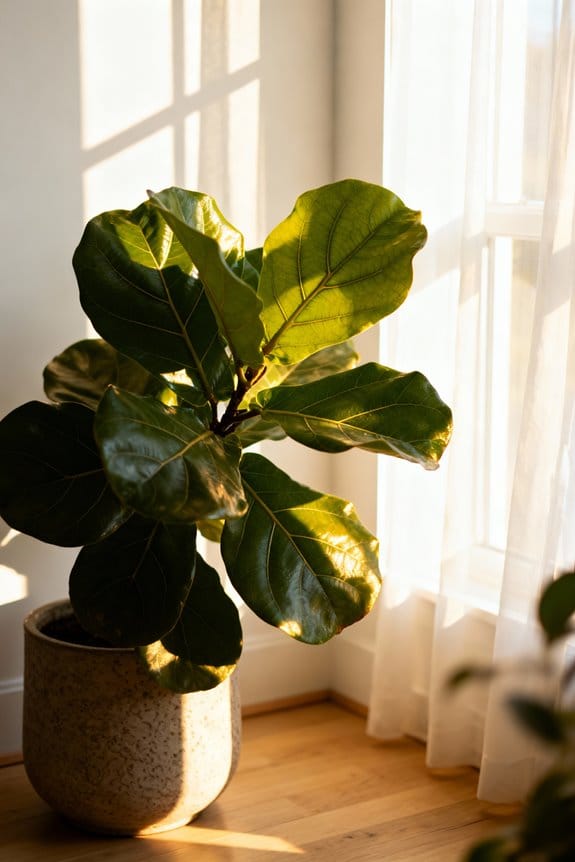
Even if your indoor tree doesn’t demand sunshine all day, lighting still plays a big role in helping it look its best! 🌞 You might be surprised how many trees actually prefer bright, indirect light instead of sitting right next to a blazing window. For example, the Bird of Paradise and Fiddle Leaf Fig thrive in spots where sunlight filters gently. Meanwhile, the Madagascar Dragon Tree and Parlor Palm handle medium to low light, making them great for rooms with fewer windows. Don’t forget, trees like the Citrus Tree love direct sunlight, so place them near the brightest window! Also, watch the room temperature; most indoor trees prefer between 65 and 85 degrees Fahrenheit. A little planning helps your leafy friends shine without turning your room into a jungle gym! Using soft, directional lighting can enhance the natural look of your indoor tree and create a more inviting atmosphere.
Watering and Soil Requirements
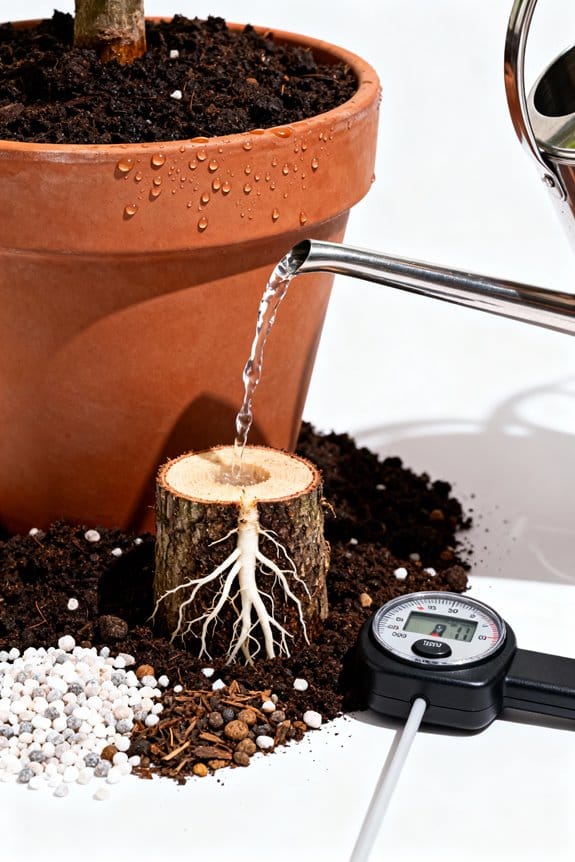
Mastering your indoor tree’s watering routine might feel like decoding a secret message, but it’s not as tricky as it seems! 🌿 Some trees, like the Jade Plant, enjoy a drink every two to three weeks, while others, such as the Fiddle Leaf Fig, prefer their soil to dry out a bit between watering sessions, usually every one to two weeks. Most indoor trees thrive in well-draining soil to avoid root rot—like the Ming Aralia, which likes moist but not soggy soil. Checking the top layer of soil is your best friend here; if it’s dry, it’s watering time! Trees like the Bird of Paradise and Madagascar Dragon Tree actually need their soil to fully dry before the next watering, so don’t overdo it—your tree will thank you! For live plants like the bamboo palm, it’s important to maintain regularly moist soil without letting water stand at the roots to keep them healthy.
Temperature and Humidity Needs
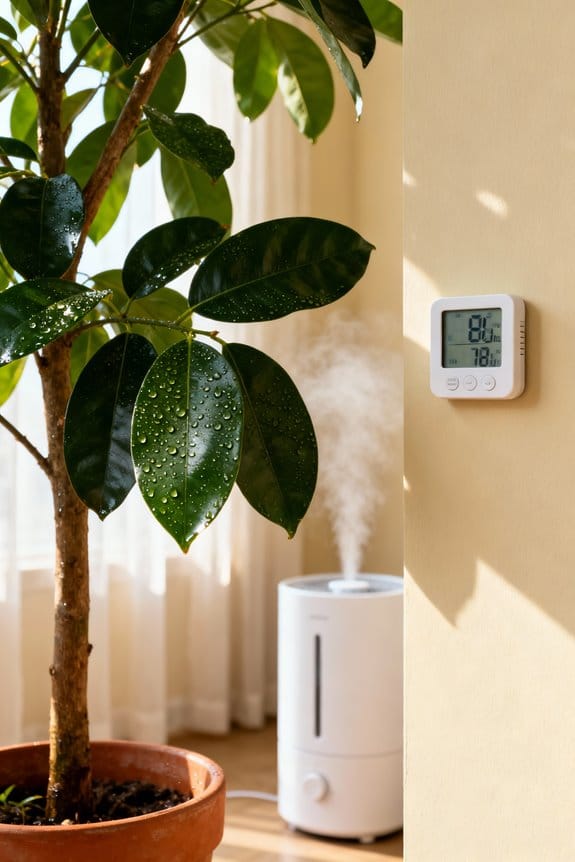
Temperature and humidity play a big role in keeping your indoor trees happy and healthy! 🌡 Most trees feel best when the room stays between 65 to 85 degrees Fahrenheit, but some, like the Rubber Tree, prefer it a bit cozier at 65 to 75 degrees. If your room’s too chilly or too warm, your plant might throw a tiny tantrum—think browning leaves or drooping branches. Humidity is another sneaky factor; trees like the Norfolk Island Pine and Parlor Palm love a moist atmosphere, so a little misting or a nearby humidifier can do wonders. The Fiddle Leaf Fig and Bird of Paradise also appreciate moist soil and steady humidity, or else they can sulk. Don’t worry if you’re not perfect—you’ve got this! Just keep an eye on the temperature and humidity levels to help your indoor trees thrive. For a consistent look without the fuss, consider low-maintenance artificial trees that need only weekly dusting and no special climate conditions.
Styling Your Home With Indoor Trees
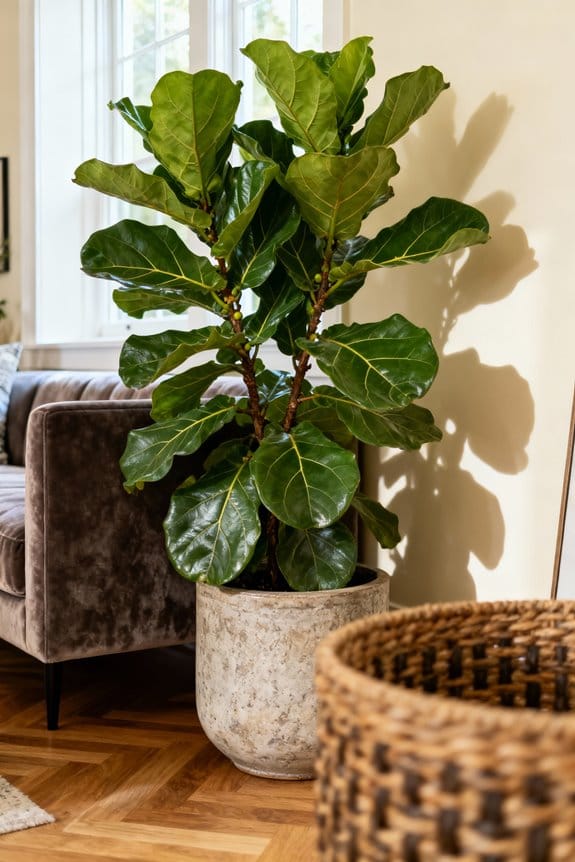
While it might feel tricky at first, styling your home with indoor trees is a fun way to boost your space’s charm! 🌿 You can choose tall beauties like the Fiddle Leaf Fig to add drama, or go for something smaller like a Jade Plant to fill cozy corners. In your living room, placing a tall Rubber Tree or Parlor Palm can create a green focal point that’s both stylish and beneficial, thanks to its air-purifying powers. Don’t forget to pick pots that suit your decor and provide good drainage—because soggy roots are nobody’s friend! Also, mixing different sizes, like a Madagascar Dragon Tree paired with smaller plants, adds depth and interest. Honestly, I once overcrowded my space and learned less is more—so keep it balanced! For an added enchanting touch, consider incorporating fairy lights on faux tree branches to create a cozy and customizable ambiance.
Frequently Asked Questions
What Is the Best Indoor Tree for Beginners?
The Snake Plant emerges as the best indoor tree for beginners due to its resilience and low water needs. Effective tree selection prioritizes adaptability to light and minimal maintenance, qualities exemplified by the Snake Plant.
What Is the Correct Order to Decorate a Tree?
The correct order to decorate a tree follows specific Decoration Techniques: start with lights evenly placed, then add garlands, hang larger ornaments internally, layer smaller ones near branch tips, and finish with a decorative topper as the focal point.
What’s the Hardest Houseplant to Keep Alive?
The hardest houseplant to keep alive is the Fiddle Leaf Fig. Like “walking a tightrope,” its plant survival depends on precise light, moisture, and climate conditions, requiring careful attention to avoid overwatering, pests, and temperature stress.
In What Order Do You Put Things on the Tree?
Tree placement begins with larger ornaments on lower branches to anchor the design, followed by medium ornaments in the middle, smaller ones on top, string lights wound evenly from base to apex, and finally, a distinctive tree topper.