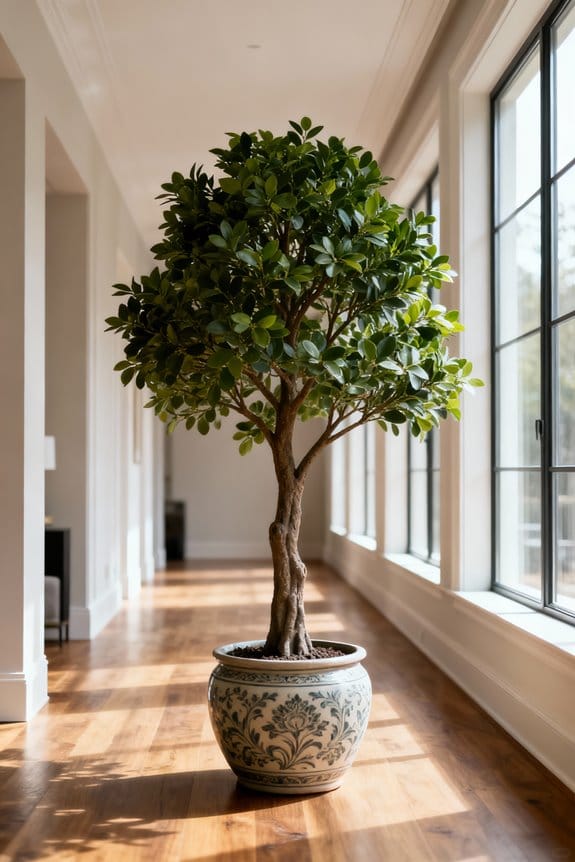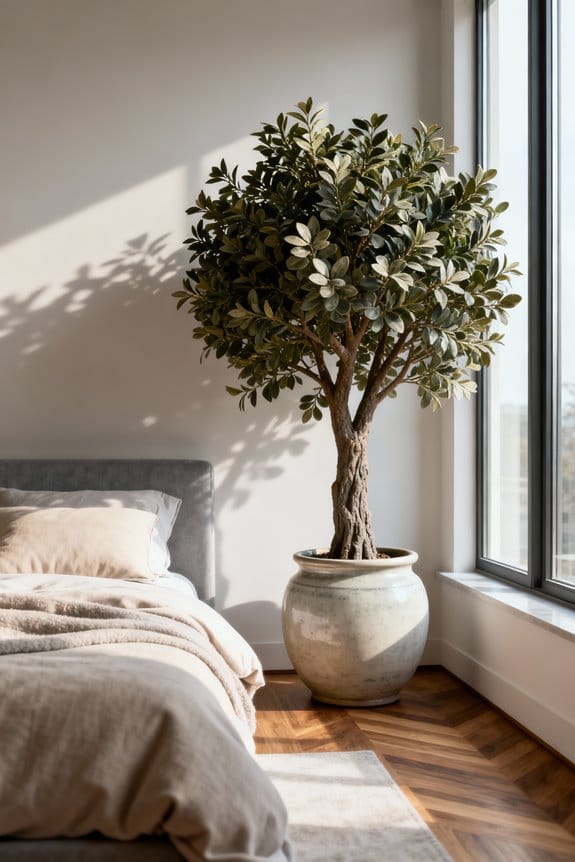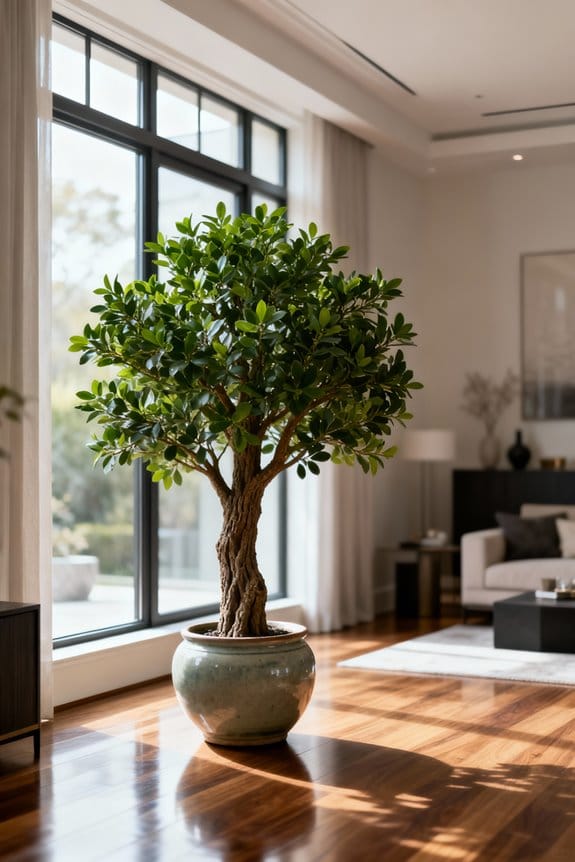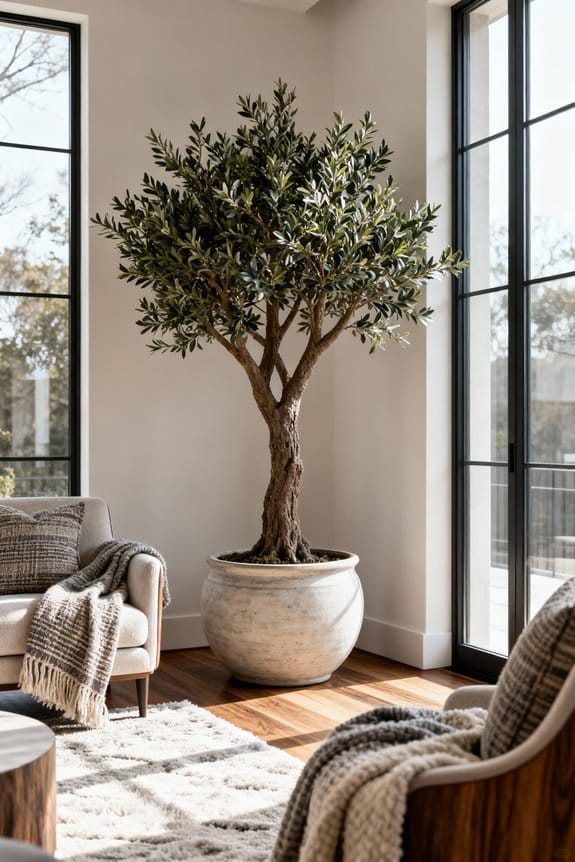
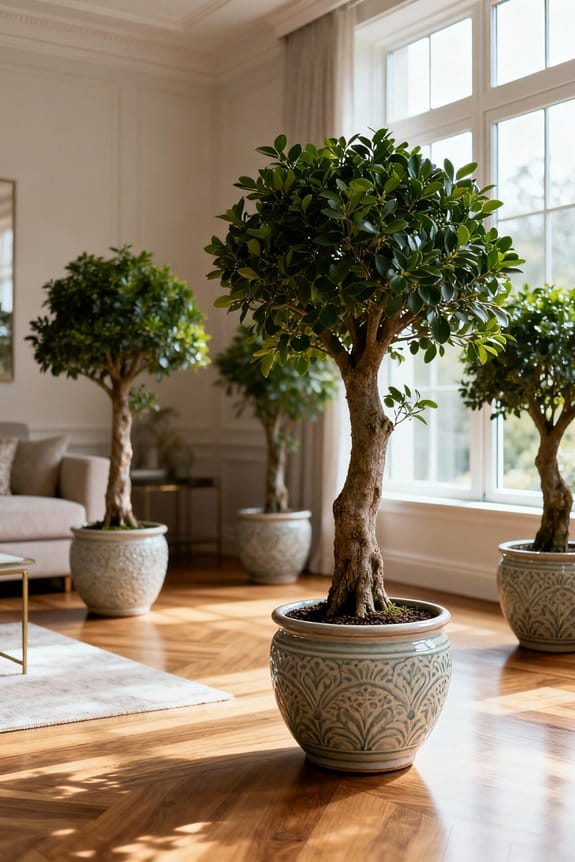

Wondering how many indoor trees are too many? A good rule is one tree per 100 square feet to keep your space comfy and not jungle-like 🌿. If your room’s small, stick to just one medium tree—too many can clutter and stress you out. Also, make sure each tree gets enough light, or they’ll sulk (and so will you!). Need tips on picking the right trees and keeping your room balanced? There’s plenty more to uncover!
Key Takeaways
- One indoor tree per 100 square feet is recommended to avoid overcrowding and maintain comfortable room circulation.
- More than 20% of a room’s volume or floor space covered by trees can create clutter and a cramped feeling.
- Spending over 10 minutes twice a week on watering and pruning may indicate too many trees to manage effectively.
- Difficulty navigating the room or feeling visually overwhelmed signals excessive tree quantity and poor placement balance.
- Downsizing or integrating artificial plants can help reduce maintenance and improve spatial aesthetics without losing greenery benefits.
Factors to Consider When Choosing Indoor Trees
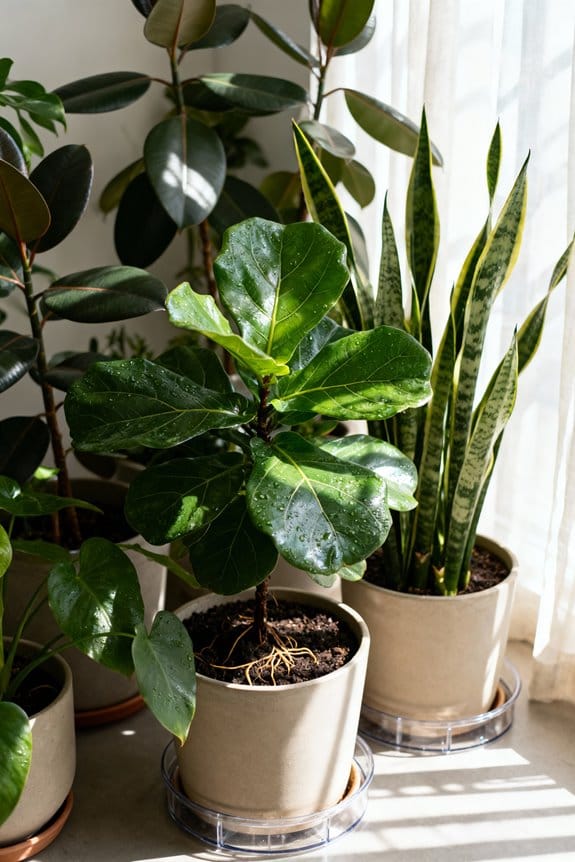
When picking indoor trees for your space, it’s smart to start with the room size—no one wants to feel like they’re in a jungle unless that’s your thing! 🌿 Aim to keep trees from taking up more than 20% of the room’s volume so your space stays calm and inviting. Next, check your light availability because some trees throw tantrums without enough sun. Maintenance requirements also matter—if you’re not plant-savvy, low-upkeep trees are your best friends. Don’t forget your decor aesthetic; choose trees that blend in, not boss around your style! And keep an eye on growth potential—fast growers mean more trimming and moving around. Balancing these factors helps you create a chill vibe without turning your room into a wild rainforest, unless you really want to! Faux juniper and bonsai trees also offer maintenance-free characteristics which make them ideal for busy or novice indoor gardeners.
Optimal Number of Indoor Trees for Different Room Sizes
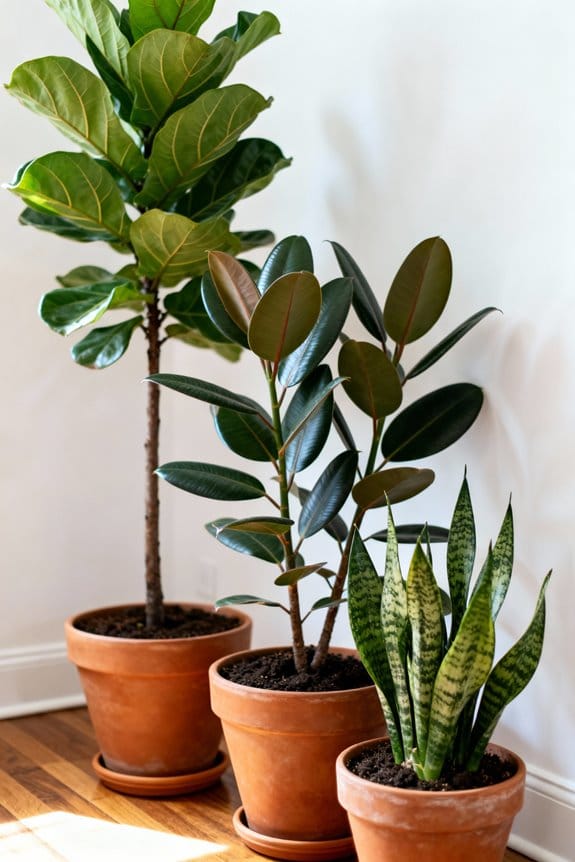
Figuring out how many indoor trees to bring home can feel like a balancing act, but luckily, there’s a simple rule of thumb to keep things fun and fresh! 🌿 Generally, one indoor tree for every 100 square feet of space is a great start. For smaller rooms under 100 square feet, sticking to one medium-sized tree helps avoid overcrowding—because let’s face it, plants need their space too! Larger rooms over 200 square feet can handle two or even three trees while maintaining good air circulation. Remember to leave a clear zone of about 20% free from trees to keep the room feeling comfy and open. If you’re like me and tend to overdo it, pruning helps keep growth manageable and your green buddies happy! Choosing artificial trees with adjustable branches allows you to customize your indoor greenery arrangement without overwhelming the space.
How Lighting Affects Indoor Tree Placement and Quantity
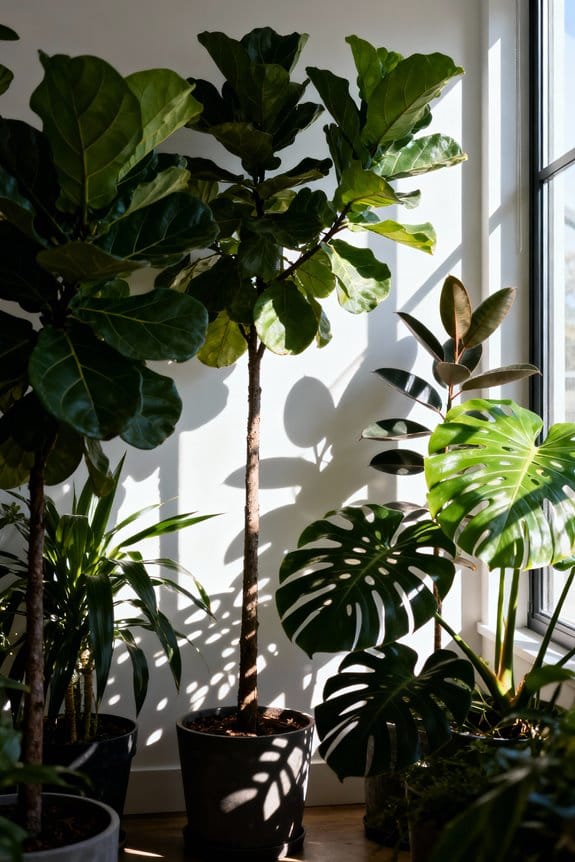
Picking the right number of indoor trees isn’t just about room size—it’s also about how much light they get! 🌞 Most indoor trees need about 6-8 hours of indirect sunlight daily to stay happy and healthy, so the spots you choose for them really matter. If your room has limited natural light, it’s smart to pick fewer or smaller trees to avoid crowding dark corners where plants can get leggy and sad. Don’t forget, using fluorescent or LED grow lights can boost lighting, helping more trees thrive without stealing your spotlight. Thoughtful placement guarantees each tree gets enough light for proper growth and adequate care—it’s like throwing a cozy light party where everyone gets a turn in the sun! Keep an eye on lighting, and your indoor jungle will flourish. 🌿 Additionally, selecting UV-resistant materials in your artificial trees ensures they maintain their vibrant appearance even in sunlit rooms.
Impact of Indoor Trees on Room Aesthetics and Decor
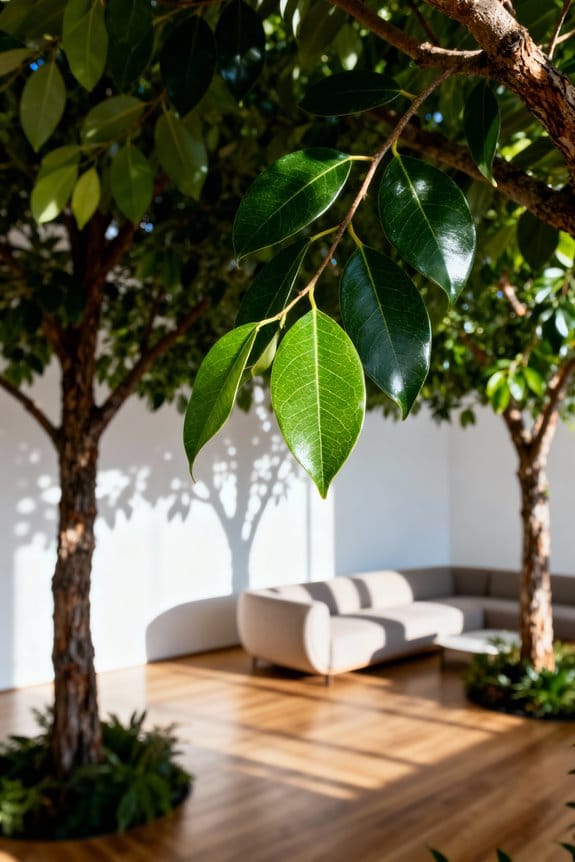
Although indoor trees mainly bring greenery inside, they’re also secret style heroes that can totally change your room’s vibe! 🌳 Adding one or two bigger trees creates cool focal points that make the space feel balanced – kind of like giving your room a little personality without going overboard. Indoor trees help balance visual weight, which improves your room aesthetics and lets your space perception feel larger and more inviting. When you match your indoor trees to your decor theme, they don’t just fill empty spots—they add charm and create a calming environment. Just remember, piling on too many plants can clutter your room and ruin the effect, so keep it simple! Trust me, your room (and your sanity) will thank you for not going jungle-crazy! 😂 For a hassle-free way to enjoy greenery, consider low-maintenance artificial ficus trees that require minimal care and always look fresh.
Balancing Indoor Tree Care and Maintenance Responsibilities
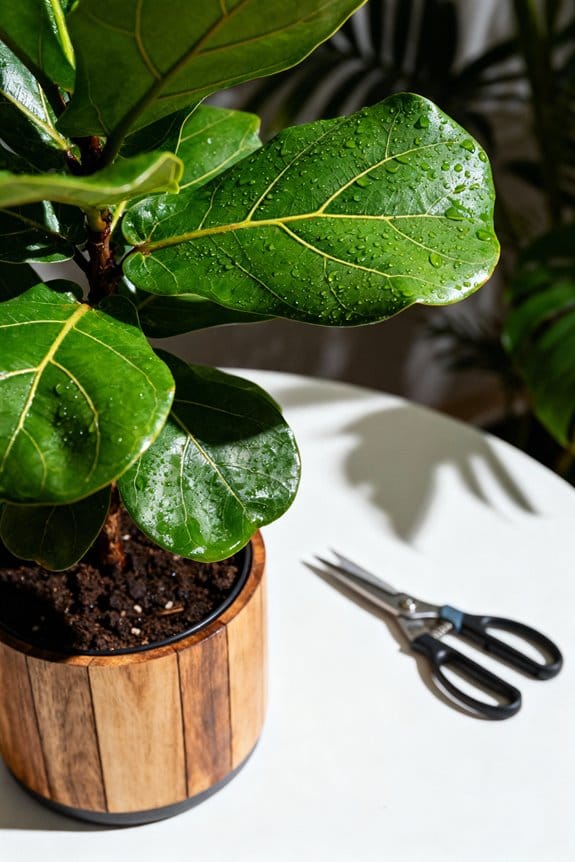
It’s great when indoor trees boost your room’s style, but keeping them happy takes some effort too! 🌿 You’ll want to spend about 20 minutes every couple of weeks trimming and turning your trees so they grow strong and stay pretty. Managing indoor trees means balancing their care requirements with your time and space. Too many trees can cause overcrowding, making it hard for each plant to get enough light and air. Before adding a new tree, think about its space requirements and how much attention you can realistically give. Setting a simple routine helps handle maintenance responsibilities without stress. After all, a little commitment goes a long way, but don’t turn your lovely room into a jungle you can’t keep up with! Considering size and scale ensures your indoor trees fit well without overcrowding the space.
Psychological and Health Benefits of Having Indoor Trees
A handful of indoor trees can work wonders for your mood and stress levels, turning your space into a little oasis of calm! 🌳 Believe it or not, just having these green buddies around can boost your productivity by up to 15%, which sounds like a win, right? Indoor greenery isn’t just eye candy; it improves air quality, giving your brain a fresh boost. The psychological connection you build with your leafy pals helps ease stress and lifts mental health. Honestly, it’s like having tiny therapists who need watering instead of coffee breaks! Keeping a nice balance of trees fosters a calming vibe perfect for stress relief. So, adding indoor trees isn’t just pretty—it’s a smart move for your mental and physical well-being! Plus, choosing realistic artificial trees means you can enjoy these benefits without worrying about maintenance or plant care.
Signs You Might Have Too Many Indoor Trees
While having indoor trees can brighten your space and mood, there’s definitely a point where too many start to cramp your style and sanity! 🌿 If you feel like you’re dodging leaves just to get through your room or spending forever watering and pruning, it might be time for a little tree audit. Overcrowding can clutter your space and make daily life tricky. If maintaining your greenery feels more like a chore than fun, that’s a red flag. Spending over 10 minutes watering twice a week or more than 20 minutes pruning every other week means your care routine might be out of control. Also, if greenery coverage fills more than 20% of your room, you might start feeling overwhelmed or stressed instead of relaxed. Time to rethink the balance! Alternatively, incorporating faux succulent arrangements can add greenery without the upkeep and space issues of live plants.
Tips for Managing and Pruning Indoor Tree Collections
Managing indoor trees can be a bit like juggling cozy green friends—you want enough to feel surrounded by nature, but not so many that trimming feels like a full-time job! 🌿 Regular pruning is key: snipping back overgrown branches keeps your trees healthy and looking sharp, plus it stops them from taking over your space. Setting up a maintenance routine for watering and sunlight helps your indoor trees thrive without turning your room into a jungle. Decorating hacks like placing trees so they complement rather than crowd your space make a big difference. If you want more green buddies, try propagating instead of buying new ones—that way, you keep your collection manageable and your wallet happy. Remember, less can be more when it comes to indoor trees! To avoid stability issues, it’s also wise to consider stand compatibility when placing larger indoor trees.
Selecting Indoor Tree Species Based on Space and Care Requirements
Several indoor tree species can fit nicely into your space, but picking the right ones depends on how much room and care you’re ready to give them! 🌳 Some trees, like ficus or rubber plants, can suddenly grow tall and take over a corner, while smaller varieties such as bonsai or dwarf citrus trees stay more manageable. When choosing indoor trees, think about their mature size so your space’s floor area doesn’t get overwhelmed. Check their light and humidity requirements too—fiddle leaf figs love bright indirect light, while spider plants aren’t that picky. Group trees with similar care routines like snake plants and ZZ plants to make watering less stressful. For a balanced aesthetic, mix tall and short trees to keep things interesting without crowding your room! Additionally, for those seeking greenery with minimal upkeep, faux indoor trees offer realistic looks without the need for watering or pruning.
Frequently Asked Questions
What Is an Acceptable Number of Houseplants to Have?
An acceptable number of houseplants balances plant variety and care requirements, ensuring aesthetic balance and improved air quality without overcrowding. Space considerations and consistent maintenance routines help maintain healthy plants while avoiding overwhelming care responsibilities.
Is It Possible to Have Too Many Indoor Plants?
Like a telegram sent in the era of smartphones, too many indoor plants can overwhelm room dynamics, complicating plant care, pest control, air quality, light requirements, and managing plant variety, ultimately diminishing enjoyment and balance within the space.
Is It Okay to Sleep in a Room With Lots of Plants?
Sleeping in a room with many plants is generally safe, offering sleep benefits through improved air quality. However, proper plant maintenance, satisfying light requirements, and managing humidity levels are essential to guarantee sleep safety and prevent discomfort.
How Many Indoor Plants Does NASA Recommend?
The NASA study recommends one indoor plant per 100 square feet to optimize air purification for space dwellers. This guideline highlights plant benefits in enhancing oxygen levels, supporting indoor gardening, and promoting healthier living environments.