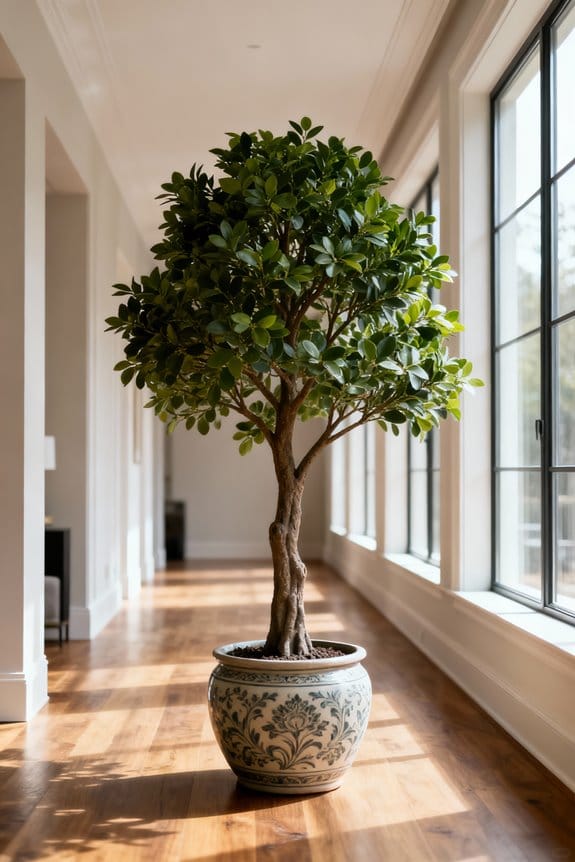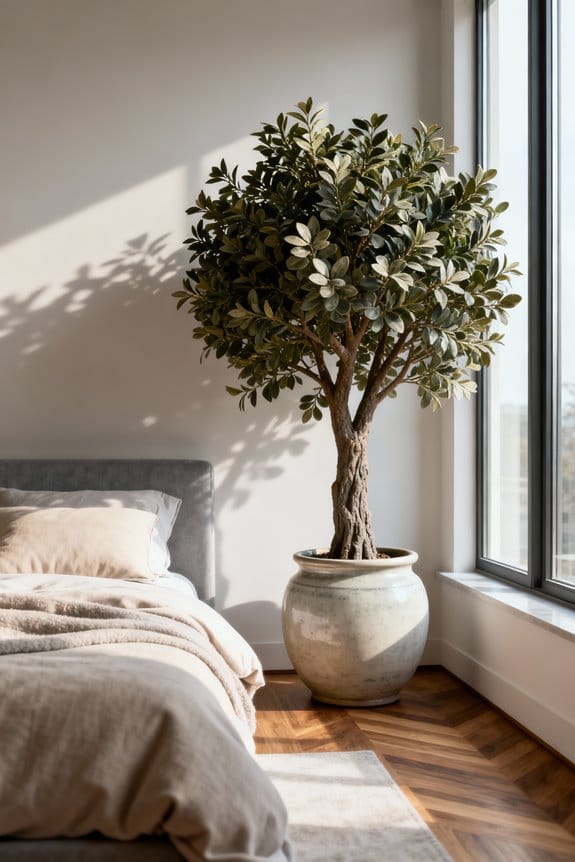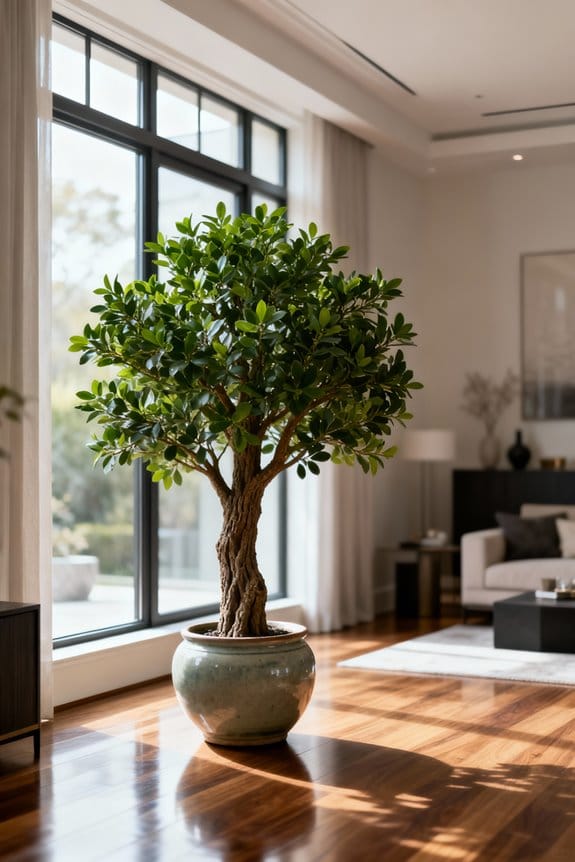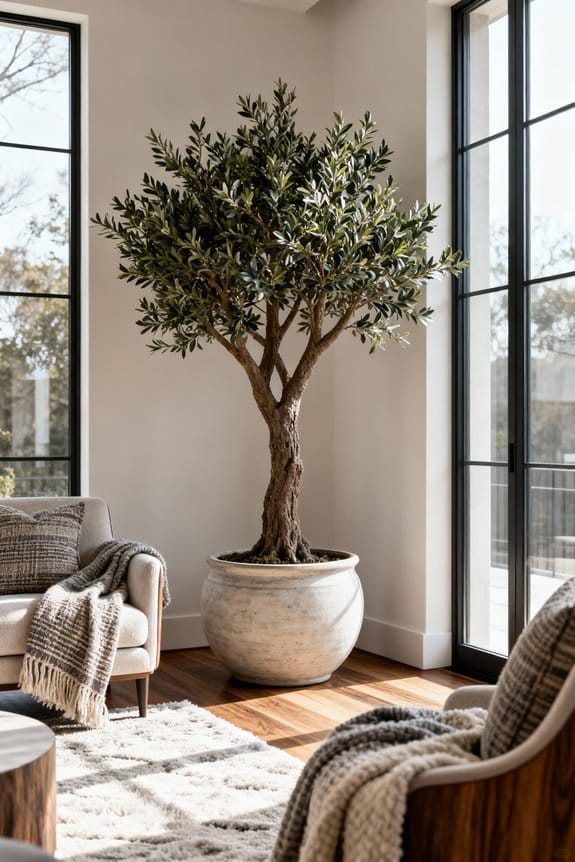
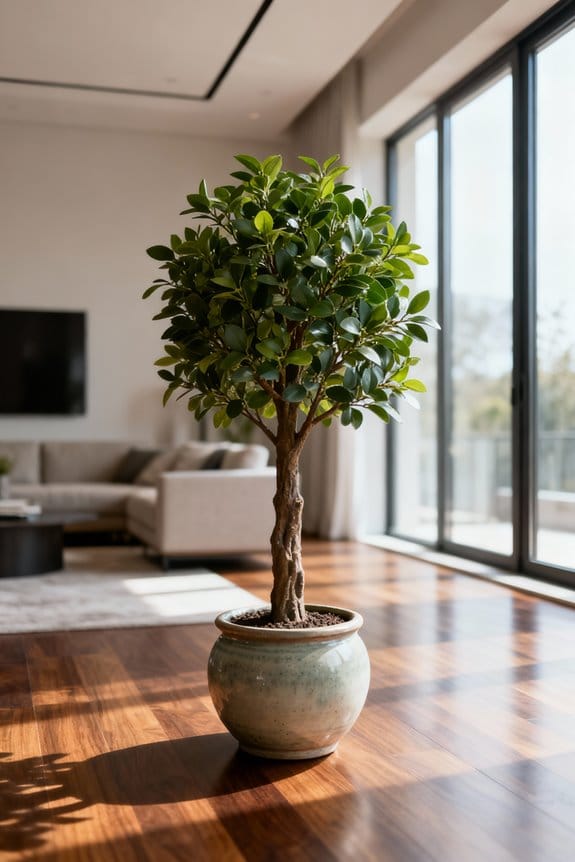

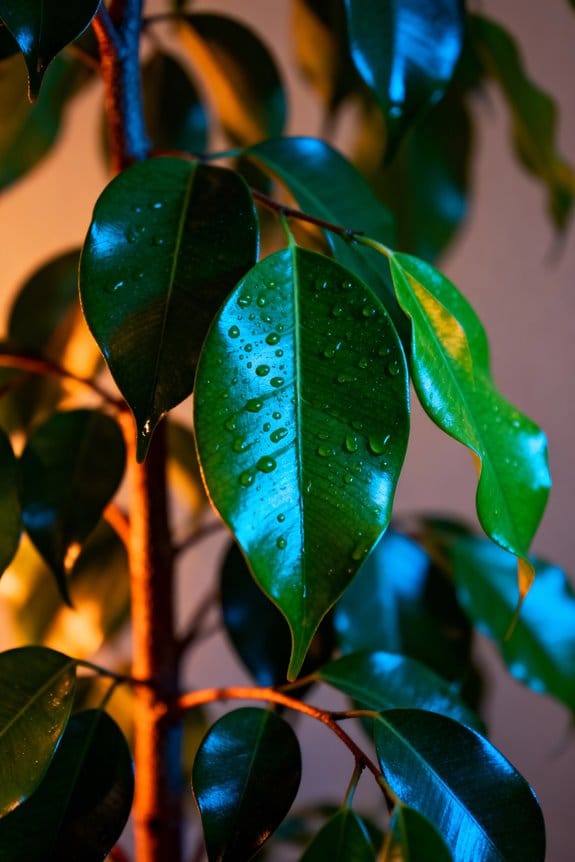
Lighting really changes how your indoor trees look! 🌿 Warm lights (around 2700K) give cozy earthy vibes, while cooler lights can make the greens pop but might dull some colors. Using LED lights with a high CRI (90+) helps show your tree’s true leaf colors—no more mystery hues. You can also play with brightness and timers so your tree looks great day and night without stressing it out. Want to see how to make your tree glow just right?
Key Takeaways
- High CRI lighting (90+) reveals vibrant and true leaf colors, enhancing the natural beauty of indoor trees.
- Warm light (2700K) creates a cozy atmosphere and intensifies earthy tones in tree foliage.
- Proper light intensity ensures leaves display rich details, avoiding dullness and yellowing in dense or large trees.
- Combining warm and cool lights reduces harsh shadows, improving depth and visual appeal of trees.
- Adjustable accent lighting and timers highlight tree features and maintain health by simulating ideal light cycles.
Impact of Light Color on Indoor Tree Appearance
Although most people don’t think much about the color of their indoor lighting, it actually makes a big difference for your indoor trees! 🌳 When choosing lights, looking for a high Color Rendering Index (CRI) above 80 helps your tree’s leaves show off their true, vibrant colors—no more awkward, dull-looking greens. The color temperature of your light affects how cozy or bright your space feels. Warm light around 2700K gives a soft, inviting glow that makes your tree look welcoming and lush—perfect for chill evenings. If you prefer a livelier vibe, cooler lights might do the trick, but don’t underestimate how a warm tone can really bring out that fresh, healthy look in your tree’s leaves. Trust me, your indoor tree will thank you with a little extra charm! Keep in mind that faux weeping fig trees do not require sunlight, which makes the choice of artificial lighting especially important for maintaining their vibrant appearance indoors.
Understanding Color Rendering Index (CRI) for Plant Health
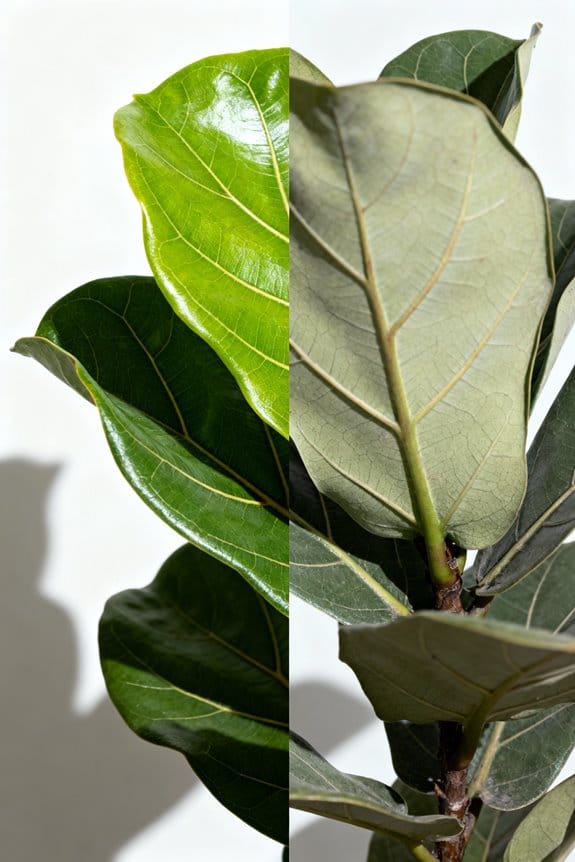
When you’re picking lights for your indoor trees, understanding the Color Rendering Index (CRI) can seriously up your plant care game! 🌟 CRI measures how well a light shows true colors compared to natural sunlight, so knowing this helps you spot if your tree’s leaves are truly healthy—or if they might be hiding a problem. For indoor plant lovers, choosing lights with a CRI of 90 or higher is ideal because it accurately reveals leaf color and any discoloration. LED lights often hit this mark, while fluorescents usually fall short. Using low CRI lights can make your plants’ colors look off and trick you into thinking they’re fine when they’re not. So, picking the right CRI helps you keep your indoor plant happier and healthier—it’s a small change with big benefits! Additionally, selecting trees with lifelike details can enhance the realism when viewed under appropriate lighting.
How Color Temperature (Kelvin) Affects Tree Visuals
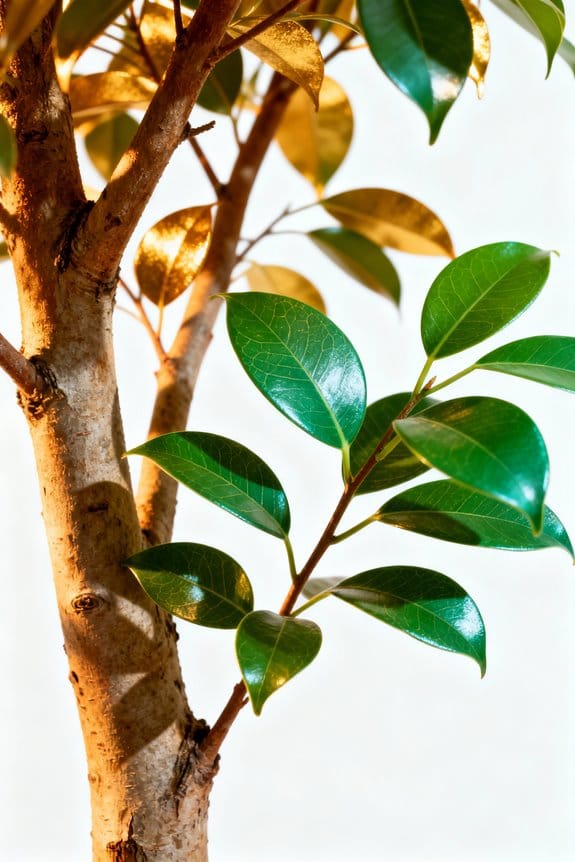
Since lighting sets the mood for your indoor space, knowing how color temperature (measured in Kelvin) affects your tree’s look can be a game changer! 🌳✨ Warmer lights around 2700K give your tree a cozy, earthy vibe—perfect if your room feels like a rustic cabin or you just want that soft glow. This warm white light makes your tree blend beautifully with warm tones and softens its appearance. On the flip side, cooler color temperatures around 5000K bring out vibrant greens and a fresher, more energetic feel—kind of like midday sunlight waking up your tree. Mixing these temperatures can balance your tree’s look and avoid harsh shadows, but if you’re into that snug vibe, warm white is your go-to! Just don’t blame me if you start craving hot cocoa. ☕ Given that many artificial areca palm trees feature UV-resistant materials, choosing lighting that complements their durability can enhance their longevity indoors.
Adjusting Light Intensity for Optimal Tree Display
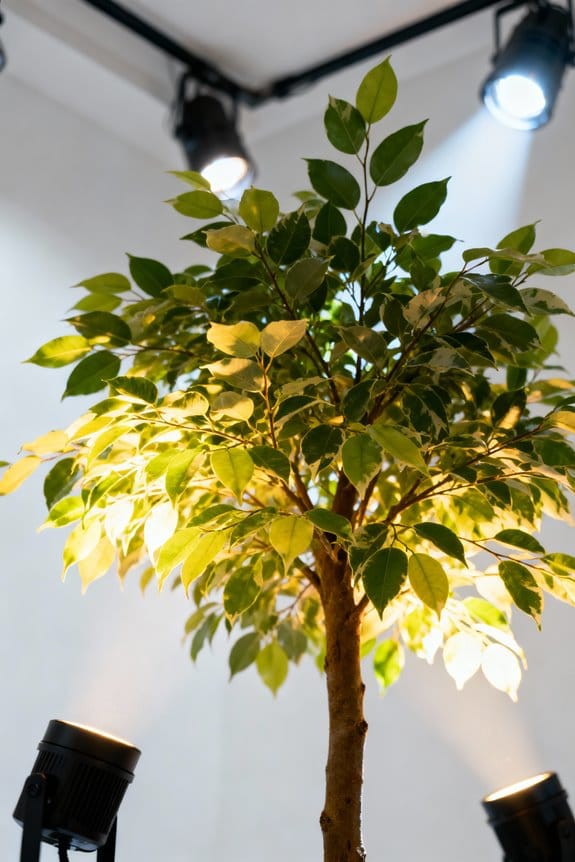
Color temperature definitely sets the stage for your indoor tree’s look, but playing with light intensity can really make those leaves pop! 🌿💡 Getting the brightness just right helps your tree show off its true colors and details—too dim, and it’s like your tree is shy; too bright, and it might look washed out or stressed. Using dimmable LED lights makes adjusting light intensity super easy, letting you find that perfect glow for your tree. Bigger trees or those with thick leaves usually need brighter light to avoid looking leggy or dull, so don’t be afraid to crank it up a notch. Just keep an eye on your tree for signs like yellow leaves—those mean it’s time to tweak your light settings again. Trust me, your leafy friend will thank you! Live rubber plants thrive in low to moderate light, making them ideal for various indoor environments.
Enhancing Tree Ambiance With Photoperiod Settings
How long should your indoor tree soak up light each day? 🌞 It turns out that setting the right photoperiod—the total hours of light your tree gets in a day—can make a big difference in how healthy and happy it looks! Most indoor trees do well with about 12-16 hours of light daily, which mimics natural light patterns they’d enjoy outdoors. Using a timer for your lights helps keep this schedule steady, which your tree’s circadian rhythm will thank you for. Don’t forget good airflow around your tree—it works with proper light to keep leaves vibrant. If your room gets some natural light, that’s a bonus! Just remember, inconsistent lighting can make your tree look sadder than you after too little coffee. So set a schedule and watch your tree thrive! 🌿 Faux lime trees also require minimal care with only occasional dusting needed to keep their leaves looking fresh.
Positioning Light Sources for Dramatic Plant Highlights
Lighting placement can totally change how your indoor tree catches the eye—think of it like giving your leafy friend a spotlight moment! 🌟 Try aiming adjustable spotlights upwards to make cool shadows dance and really show off those leaves. Positioning lighting well turns your plants into natural artwork, adding depth and warmth to the room. You can even weave fairy lights through branches for a whimsical vibe that’s surprisingly easy and fun. Don’t forget to layer light sources; combining ambient lights with focused ones helps your tree pop without looking like a plant in a disco. Placing your tree near a window also helps by mixing natural and artificial lighting, which keeps your plants looking fresh all day and night. It’s all about playing with light to make your plants shine! Using LED-lit artificial trees can further enhance the look while keeping energy consumption low and eco-friendly.
Comparing Warm vs. Cool Lighting Effects on Foliage
Even though it might seem like a small detail, the type of light you choose can totally change how your indoor tree looks and feels! 🌿 Warm lights, usually between 2700K and 3000K, cozy up the room and bring out those deep, earthy tones in the leaves—perfect for chill evenings. On the other hand, cool lighting (think 5000K to 6500K) mimics natural sunlight and makes the greens pop, giving your tree a fresh and lively vibe. If you want your leaves to look soft and inviting, warm lighting is your buddy. But if you’re aiming to spot any browning or spots on your foliage, cooler light helps reveal those little flaws. Mixing them could be fun too—it adds depth and makes your indoor tree feel like it’s basking in daylight! Additionally, choosing the right lighting can enhance the realistic textures of artificial foliage, making your indoor tree even more lifelike and visually appealing.
Utilizing Full-Spectrum Lighting to Mimic Natural Sunlight
Full-spectrum lighting is like giving your indoor tree a sunny day, even when the weather outside is gloomy! 🌞 These lights cover a wide range of colors, closely matching natural sunlight, which helps your tree grow healthy and look vibrant. When you choose full-spectrum lighting with a color temperature between 5000-6500K, you’re really helping your indoor trees with photosynthesis and growth. Plus, these lights have a high Color Rendering Index (CRI), so you see your tree’s true colors without squinting or straining your eyes. Using full-spectrum lighting for longer periods can even keep your tree lively and encourage blooming, especially in rooms without much natural sun. So, if you want your indoor trees to thrive, this lighting option is a smart—and pretty friendly—choice! 🌿 Additionally, selecting artificial trees made from eco-friendly materials can complement the effects of good lighting while minimizing environmental impact.
Safety Considerations When Lighting Indoor Trees
Getting the right glow for your indoor trees is fantastic, but it’s just as important to keep things safe while you’re at it! Safety considerations should always come first when you’re adding light fixtures to your leafy friends. Make sure there’s good airflow around your lights—stuffy air can make bulbs overheat and cause trouble. Also, be careful when misting your trees; water on bulbs is a big no-no, so create a drip loop to keep cords dry. Always pick UL-listed light fixtures to avoid electrical mishaps. Hanging fixtures are a smart choice because they don’t trap heat like surface-mounted lights. And don’t forget, your outlets and fixtures must handle the electricity load safely! Lighting your indoor trees should brighten your room, not your stress levels! 😅🌿 Using energy-efficient LED lights can also minimize heat output, enhancing safety around your indoor trees.
Incorporating Accent Lighting to Elevate Tree Decor
While accent lighting might sound fancy, it’s actually one of the easiest ways to make your indoor tree pop and feel like a million bucks! 😊 You just need some adjustable spotlights or uplights to highlight your tree’s unique shapes and textures. Aim warm-toned bulbs (2700K to 3000K) to keep things cozy and inviting—no one wants their tree looking like a spotlight at a rock concert! Adding fairy lights tangled in the branches can bring a whimsical vibe, turning your tree into a soft glow show. When you place lights smartly on the foliage, it reveals your tree’s vibrant colors and healthy leaves. Plus, setting timers means your tree becomes a subtle but stunning focal point in the evening, earning you major decor brownie points without extra effort!
Combining Artificial and Natural Light for Best Results
Because your indoor tree isn’t just waiting for the sun to show up, mixing natural and artificial light is like giving it a perfect all-day snack! 🌞💡 Placing your tree near a sunny window lets it soak up those vitamins, while adding a few warm-toned bulbs (around 2700K to 3000K) fills in when the sun clocks out. To keep things cozy and bright, consider incorporating adjustable spotlights that highlight your tree’s leaves and add some drama to the room. It’s a bit like giving your tree a spotlight moment—literally! Just remember, balancing light is key because too much can stress your plant, even if it looks great. So mix natural light with warm bulbs and watch your indoor tree thrive while adding charm to your space! Many artificial trees come with UV protection that allows them to maintain their appearance even in brightly lit areas.
Frequently Asked Questions
What Is the Best Indoor Tree for Bright Indirect Light?
The Fiddle Leaf Fig is among the best indoor tree varieties for bright indirect light, meeting specific light requirements. Its large, glossy leaves thrive well, making it a popular choice for enhancing indoor spaces aesthetically.
How Does Lighting Affect Interior Design?
Lighting wields the ultimate power in interior design, turning dull rooms into mood masterpieces. Color temperature dictates if a space whispers cozy secrets or screams sterile. Truly, design ambiance bows to lighting’s dramatic tyranny.
Are Indoor Trees in Style?
Indoor tree trends remain strong, reflecting a growing preference for stylish greenery that enhances biophilic design. These plants are favored for their aesthetic versatility, sustainability, and ability to create calming, natural atmospheres within contemporary interiors.
How to Light Indoor Trees?
Ironically, indoor trees rarely thrive by ignoring lighting. Utilizing artificial lighting mimicking natural light, such as full-spectrum grow lights or adjustable spotlights, guarantees ideal health while enhancing visual appeal—proving indoor flora need more than just decorative placement.