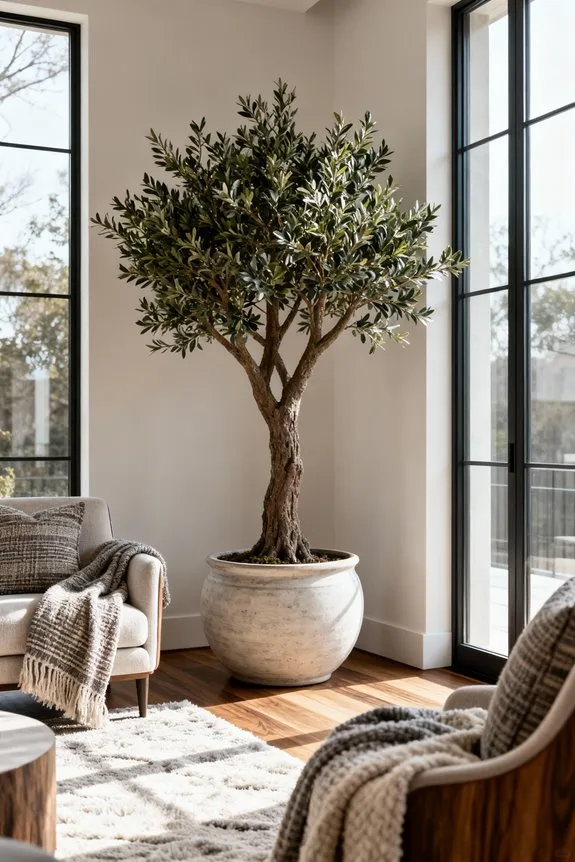
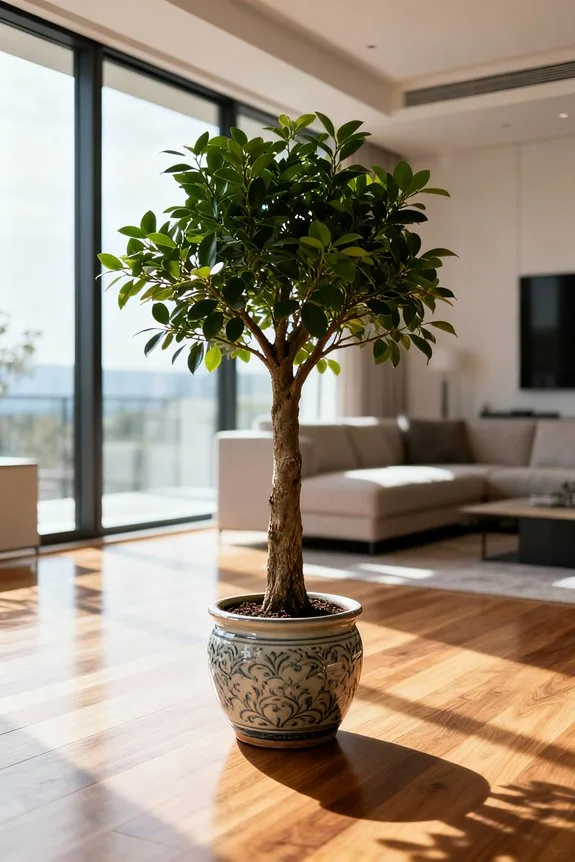

Indoor trees can trick your eyes into thinking a room is bigger by drawing attention upward and breaking up boring walls—kind of like a natural magic trick! 🌿 They soften sharp corners and make ceilings feel taller, which instantly opens up space. Plus, picking tall trees for small rooms or lighter ones to brighten the area helps even more. Just keep them trimmed and healthy so they don’t crowd the space. Want to know how to pick the perfect tree?
Key Takeaways
- Indoor trees draw the eye upward, creating an illusion of taller ceilings and more open space.
- Placing tall trees in corners softens sharp edges and visually expands room dimensions.
- Realistic foliage texture and greenery make spaces feel less cramped and more inviting.
- Mixing tree heights adds depth and dynamism, enhancing perceived room size.
- Indoor trees promote a tranquil vibe, which psychologically enhances the sense of spaciousness.
Visual Impact of Vertical Greenery in Interior Design
When you bring indoor trees into your space, something pretty cool happens—your room starts to look bigger and more open! 🌿 It’s like your eyes naturally follow the height of those leafy giants, which tricks your brain into feeling there’s more room than before. Indoor trees create a strong visual impact in interior design by adding vertical greenery that lifts the whole vibe. They break up big walls or bulky furniture, giving your space a fresh, balanced feel. Plus, these tall plants boost aesthetics while making perceived space feel less cramped. It’s almost like a magic trick for small rooms! So, if you want your place to feel more inviting and lively, adding indoor trees is a simple way to enhance both style and comfort without any major redecorating stress. Choosing indoor trees with realistic leaf texture can make the impact even more striking and authentic.
Psychological Effects of Indoor Trees on Spatial Perception
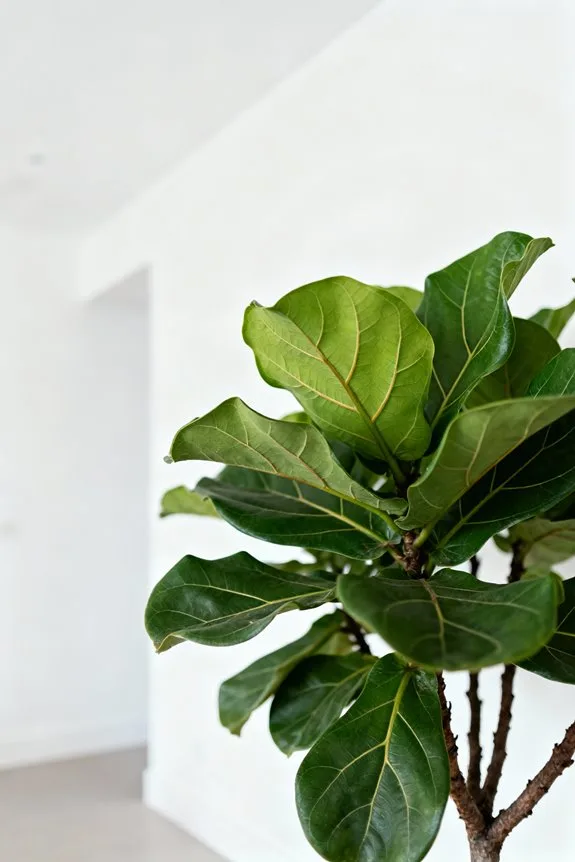
Even though it might sound a bit like plant magic, indoor trees really do affect how you feel about your space! 🌳 They draw your eyes upward, making your ceilings seem taller and your room feel airier—kind of like a natural illusion. These plants don’t just look good; they have real psychological effects, too. When you add indoor trees, they help create a tranquil environment that can reduce stress, making the space feel larger than it actually is. It’s like your mind relaxes, and suddenly, your room feels less cramped. Plus, pretty greenery can really enhance the overall vibe, boosting how open and comfy your room feels. So, if you’re craving a fresh feel, plants might just be your new best friend! Adding multicolor lighting to indoor trees can further enhance the visual appeal and create a festive atmosphere.
Enhancing Room Openness Through Plant Placement
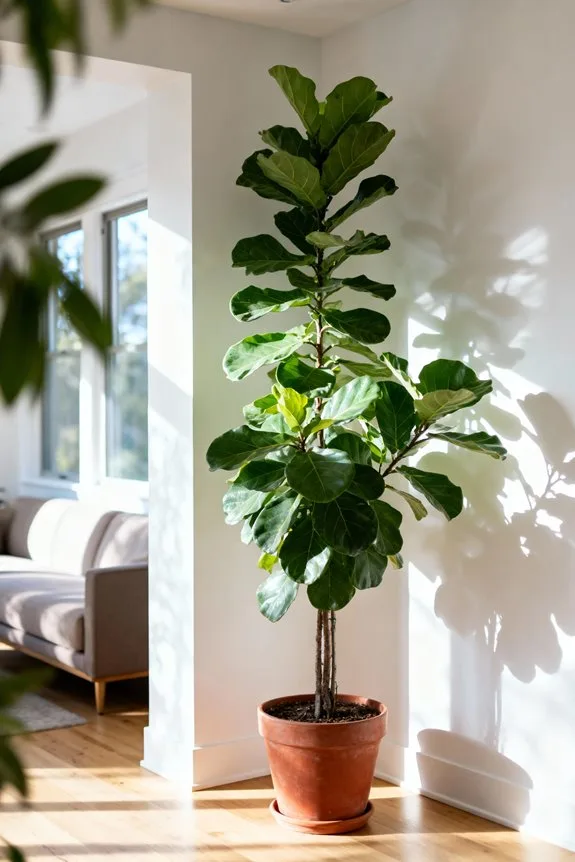
Adding indoor trees is a smart way to make your room feel more open and welcoming! 🌿 By placing a tall tree in a corner or near a wall, you can soften sharp edges and trick your eyes into seeing more depth. This simple trick creates a perception of higher ceilings, making your space feel larger without any magic—just smart design. The benefits of indoor plants don’t stop there; they improve thermal comfort and add a sense of comfort and well-being. The presence of plants makes any room more visually appealing, gently enhancing room openness. So, if your place feels a bit cramped, try adding a leafy friend to boost your room’s vibe—it’s like giving your space a little green hug! Opting for a UV-resistant faux palm can also maintain that fresh, vibrant look year-round without the need for maintenance.
Selecting Indoor Trees to Complement Room Dimensions
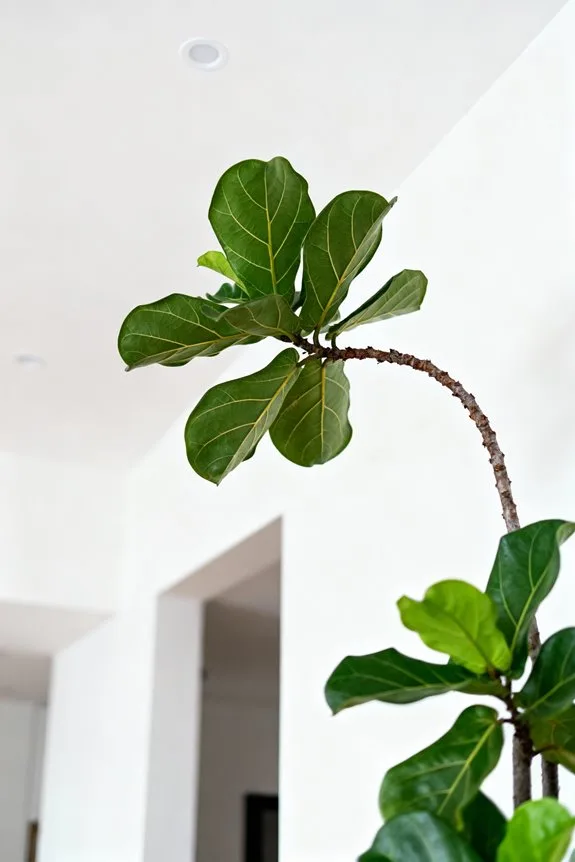
Choosing the right indoor tree can feel a bit like matchmaking—except your new leafy friend doesn’t mind if you’re a little picky! 🌿 For smaller rooms, picking taller trees like Ficus or Dracaena works great because they draw your eyes up and make the ceiling feel higher. If space is super tight, thin, columnar trees like Spiral Juniper fit nicely without overcrowding. Want to soften those harsh room edges? A bushier canopy like Schefflera adds visual softness and makes your space feel more inviting. Lighter foliage, such as the Areca Palm’s, reflects more light, brightening and enlarging the room. Mixing indoor trees with varying heights adds depth and keeps things dynamic, so your space never feels flat or boring. Selecting indoor trees thoughtfully truly helps enhance room dimensions! Choosing trees with compact heights (5-7 ft) and narrow silhouettes is especially beneficial for maximizing space in apartments or smaller rooms.
Maintaining Indoor Trees for Long-Term Aesthetic Benefits
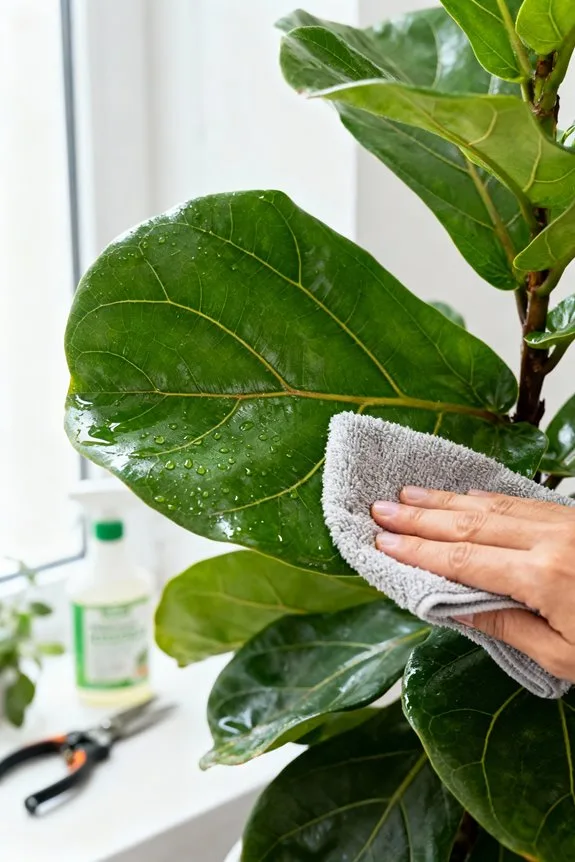
Although picking the perfect indoor tree is half the fun, keeping it looking fresh and fabulous takes a bit of effort—think of it like a mini gardening hobby with some serious style points! 🌿 You’ll want to prune regularly to keep your tree from taking over the room (because no one wants a jungle indoors, right?). Regular pruning helps maintain symmetry and boosts air quality by promoting healthy growth. Don’t forget to use appropriate fertilizers and stick to a watering schedule to keep that lush foliage thriving and enhance indoor beauty. Rotating your tree occasionally prevents it from leaning toward the light, making sure it stays balanced. If you ever feel overwhelmed, professional plant care can save the day and keep your green buddy looking sharp long-term! For those opting for artificial options, minimal maintenance means you only need occasional dusting to maintain that fresh look.
Frequently Asked Questions
Can Indoor Trees Improve Air Quality in Addition to Room Aesthetics?
Indoor trees can improve air quality, with NASA noting a 25% reduction in indoor pollutants through air purification. Beyond aesthetic enhancement, they boost indoor biodiversity, offer health benefits, and support psychological effects, especially essential in urban living environments.
Do Indoor Trees Affect Humidity Levels Inside a Home?
Indoor trees affect indoor humidity by releasing moisture through plant transpiration and tree evaporation, increasing moisture levels. This natural process improves indoor climate, offering humidity benefits alongside air purification, contributing to healthier living environments.
What Lighting Conditions Are Best for Indoor Trees to Thrive?
Like a painter’s canvas, indoor trees flourish best under natural sunlight complemented by artificial lighting. Balancing light duration and color spectrum while monitoring humidity requirements, temperature effects, and seasonal changes guarantees their lush, vibrant growth indoors.
Are Certain Indoor Tree Species Better for Small Apartments?
Certain indoor tree species, especially dwarf varieties, are ideal for small apartments due to space efficiency, low light tolerance, minimal maintenance needs, aesthetic appeal, air-purifying qualities, and pet safety, balancing functionality with compact design.
How Often Should Indoor Trees Be Repotted to Maintain Health?
Repotting frequency varies by growth rate; typically every 1-2 years. Monitoring root growth, soil health, and pot size prevents plant stress. Seasonal timing, preferably spring, optimizes recovery and supports healthy development for indoor trees.