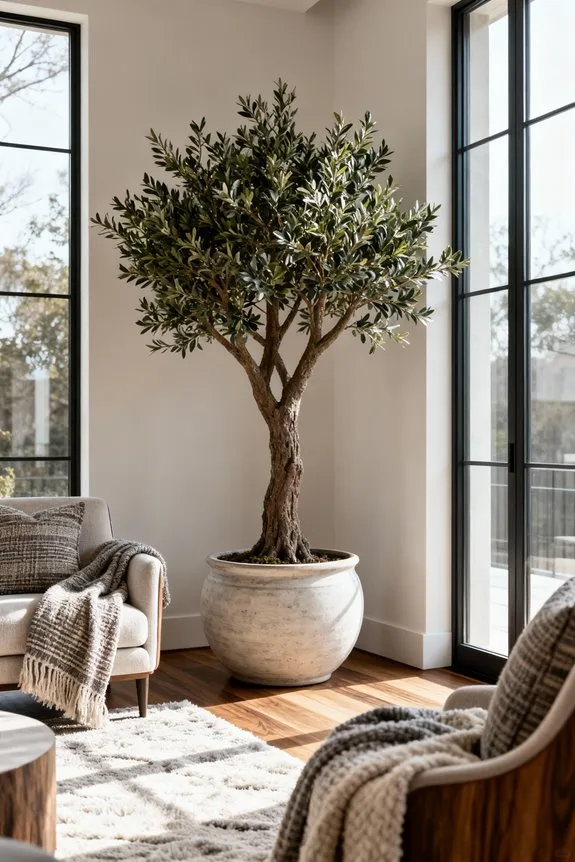


Indoor trees are pretty great at carving out cozy zones in open-plan homes! 🌿 They create natural boundaries without blocking light, which helps make different areas feel distinct but still connected. Plus, they absorb noise and boost the vibe with fresh greenery, making your space calmer and more inviting. You can mix tall and short trees to add visual interest while keeping things comfy and private. Keep plants near seating areas to encourage chill hangouts. If you want a bit more on how to pick and place these green buddies, there’s plenty to explore!
Key Takeaways
- Indoor trees act as natural dividers, visually separating different functional areas without obstructing light.
- Tall plants provide privacy by blocking sightlines during activities like dining or socializing.
- Trees absorb sound, reducing noise and creating quieter, more intimate zones.
- Grouping various plant heights adds depth and defines distinct spaces within open layouts.
- Strategically placed trees enhance biophilic design, promoting relaxation and clear spatial organization.
Benefits of Zoning in Open-Plan Homes
Even though open-plan homes feel spacious, they can sometimes make it tricky to find a cozy spot to focus or relax. That’s where zoning comes in! By using indoor trees, like palms or fiddle-leaf figs, you create visual divisions that help carve out distinct areas without slapping up walls. This not only boosts your privacy but also absorbs sound, making your home feel calmer—perfect if you’re juggling work calls or just craving quiet time. Plus, these green buddies fit right into biophilic design, which connects us with nature and improves well-being. So, adding trees isn’t just about looks; it’s about making your space better for relaxation and productivity too! Trusted options like artificial magnolia trees offer year-round greenery without maintenance. Trust me, your future self will thank you for these simple upgrades!
Choosing the Right Indoor Trees for Your Space
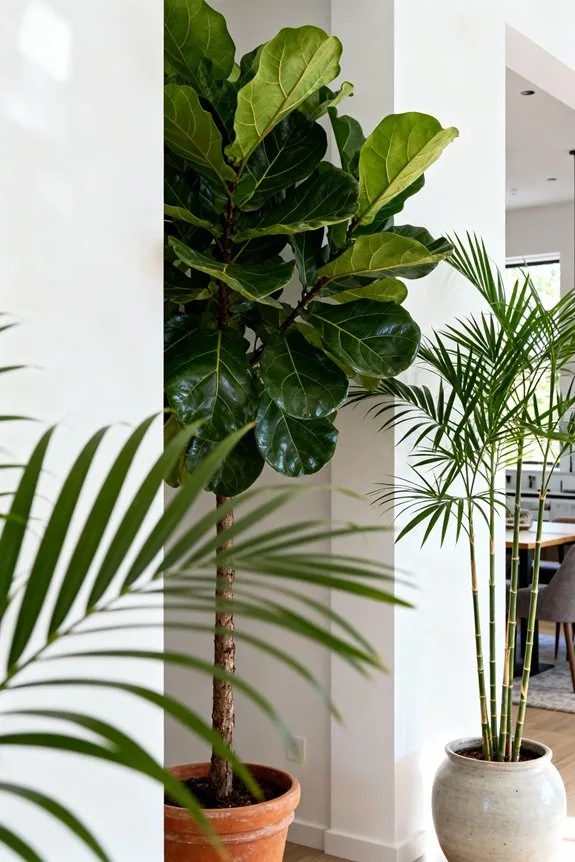
Now that you know how indoor trees can divide and soften an open-plan space, the next step is picking the right ones for your home! To create zones that feel natural, consider tall indoor trees like the Fiddle Leaf Fig—it’s great for making visual screens that add privacy without feeling crowded. If you’re like me and can’t keep plants alive, low-maintenance ones like the Rubber Plant or Corn Plant are your best friends. They thrive in different light and still help define spaces. Don’t forget the Monstera for a pop of leafy fun that adds depth and style! Plus, plants like the Snake Plant can clean air pollutants, making your space healthier and cozier. Choosing wisely means your zones will look great and feel just right! 😊 Artificial trees with adjustable branches can be shaped to perfectly fit your space and design preferences.
Placement Strategies for Defining Different Zones

A few well-placed indoor trees can work wonders when you want to carve out different zones in an open-plan home! Tall indoor plants, like Fiddle Leaf Figs, make great natural dividers that create distinct zones and visual boundaries between your functional areas. Placing these indoor trees near seating spots or doorways not only enhances separation but also boosts indoor air quality—kind of like a silent, leafy air freshener! Using placement strategies that mix tall trees with shorter plants adds depth and keeps a cohesive aesthetic without feeling like a jungle. Plus, these trees act as sound absorbers, reducing noise to make spaces calmer. If your place ever feels too open or noisy, just try shifting your planting spots—you might surprise yourself with how much it changes the vibe! 🌿 Many realistic options come with UV-resistant leaves that maintain their vibrant look even in shaded indoor areas.
How Indoor Trees Enhance Privacy and Intimacy
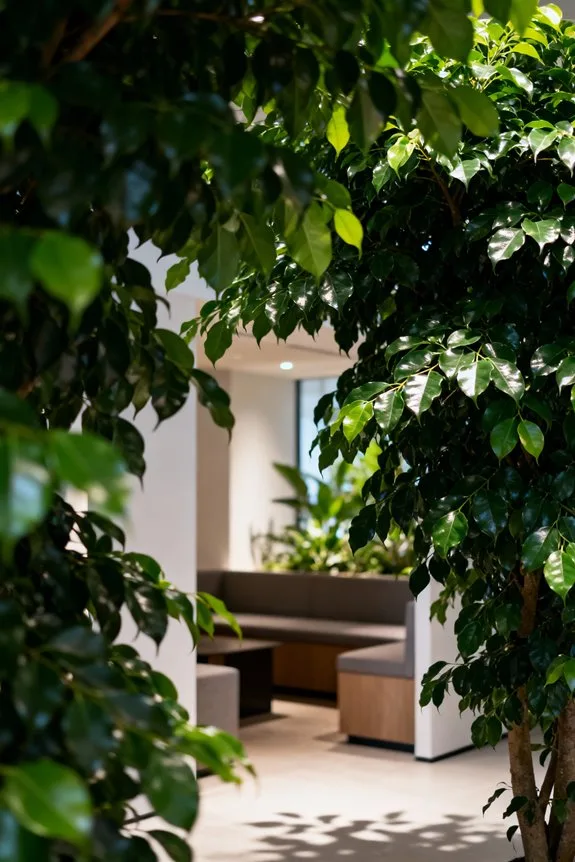
When you’re arranging indoor trees to mark different zones, they can also do a sneaky little double job—boosting privacy and making spaces feel cozier! 🌿 Placing tall trees like Fiddle Leaf Figs or Dracaena near your couch or dining table blocks sightlines so you don’t feel like everyone’s eyeballing your snack choices. These natural dividers act as visual barriers, creating privacy without closing off open-plan homes. Plus, indoor trees help cut down on noise distraction, making functional areas feel more intimate during chats or chill time. Thanks to the biophilia effect, their greenery not only adds aesthetic appeal but also calms your space. So, next time you’re thinking about zones, remember—indoor trees quietly boost privacy and intimacy, making your open home feel just right!
Combining Indoor Trees With Other Natural Elements
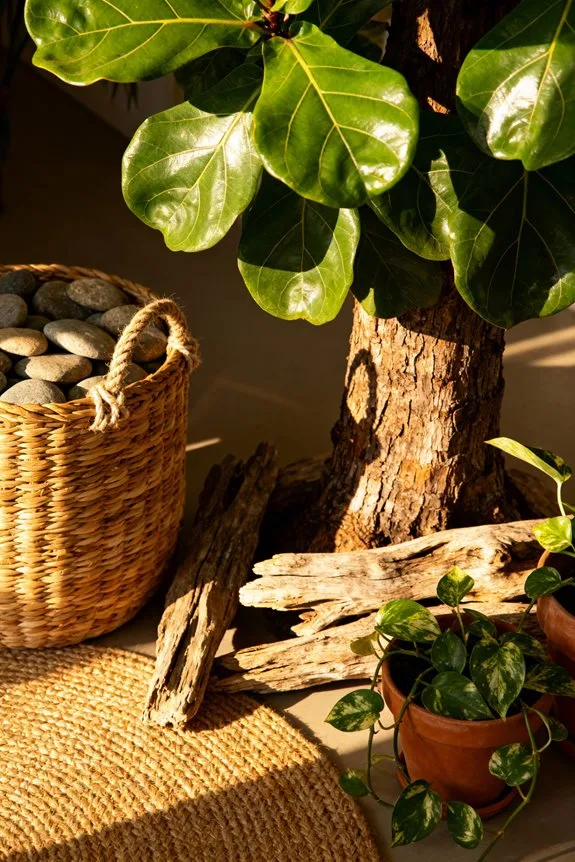
Plenty of times, mixing indoor trees with other natural elements like wood or stone decor totally ups your open-plan home’s vibe! 🌿 It’s like giving your space a nature hug without turning it into a jungle—trust me, I learned this the hard way! Indoor trees paired with wooden accents or stone details add texture and keep the space feel warm and inviting. You can create different zones by arranging varying tree heights alongside smaller plants, which adds visual interest without blocking openness. Using planter boxes with climbing greenery can build a living wall, boosting privacy and softening noise levels in open-plan homes. These natural elements work together to break up space, adding both style and function, making your home feel cozy yet connected with nature! Additionally, choosing high-quality synthetic materials for your indoor trees ensures they maintain their authentic look and last visually appealing for years.
Maintenance Tips for Indoor Trees in Open Living Areas
Keeping indoor trees happy in your open-plan space takes a bit more than just good looks! 🌿 Believe me, I once forgot to water my fiddle-leaf fig properly, and it was not pretty. For healthy growth, choose the right spot based on your tree’s light needs—sun-loving ones near windows and shade-tolerant types in dimmer corners. Rotate your trees every few weeks for even light exposure to avoid leaning. Don’t forget to prune and clean leaves regularly; it helps improve airflow and keeps your trees looking sharp in those separation zones. Also, maintain humidity levels around 40-60% by misting or using a humidifier, especially for tropical trees. Choosing artificial trees with fire-resistant materials can also enhance safety in indoor zones. These simple maintenance tips will keep your indoor trees thriving and your open-plan homes fresh and inviting!
Styling Tips to Integrate Indoor Trees With Interior Design
Although styling indoor trees might seem tricky at first, it’s actually a fun way to bring your open-plan home to life! 🌿 Imagine using that tall fiddle-leaf fig or dracaena to gently mark where your living room ends and your dining space begins—no awkward walls needed. Start by pairing indoor trees with your furniture arrangements to create clear visual boundaries between distinct zones. Layering plants at different heights around sofas or tables adds depth and interest, making spaces feel cozy yet open. Pay attention to lighting conditions; pick trees that thrive where you place them to keep everything healthy and vibrant. Finally, mix pot styles and colors for a cohesive design that ties your interior design together without looking like a jungle exploded—trust me, you want style, not chaos! Choosing maintenance-free faux trees can be especially practical for maintaining style without the hassle.
Creative Indoor Tree Arrangements for Functional Spaces
When it comes to arranging indoor trees in your open-plan home, you can turn those leafy pals into natural room dividers that actually look great! 🌿 Instead of building awkward walls, try placing taller trees like fiddle-leaf figs or dracaena between your living, dining, and work areas to softly block sightlines and carve out cozy nooks. Mixing large indoor trees with smaller plants at different heights helps create zones while adding depth and visual interest to your decor. Using planter boxes as living walls brings both privacy and a calm, natural vibe to functional spaces. Bonus: the seasonal foliage changes keep your indoor scenery fresh all year. Who knew trees could be so handy? Just watch out for falling leaves—they’re sneaky little decorators! For low-maintenance options that stay vibrant year-round, consider adding artificial dracaena trees to your space for an easy-care solution.
Frequently Asked Questions
How to Create Zones in Open Plan Living?
Zones in open-plan living are created through zone definition using furniture arrangement, color themes, and light variation. Visual separation, texture contrast, activity differentiation, privacy solutions, and cohesive decor styles complement floor plans to establish distinct, functional areas efficiently.
What Are the Benefits of Indoor Plants?
Indoor plants symbolize living sculptures, offering health benefits through humidity control and noise absorption. They enhance aesthetic appeal, reduce stress, boost creativity, improve focus, and support emotional well-being, making indoor gardening a powerful tool for increased productivity.
Do Indoor Trees Purify Air?
Indoor trees greatly improve air quality by reducing pollution, increasing oxygen production, and regulating moisture levels. They offer health benefits including stress relief, while enhancing aesthetic appeal and natural decor, contributing to a vibrant, healthier atmosphere indoors.
Do Indoor Plants Help the Environment?
Indoor plants contribute positively to the environment by enhancing air quality, supporting indoor biodiversity, and promoting ecological balance. Strategic plant selection within green spaces aids sustainability practices, reduces carbon footprint, and advances energy efficiency in urban gardening initiatives.