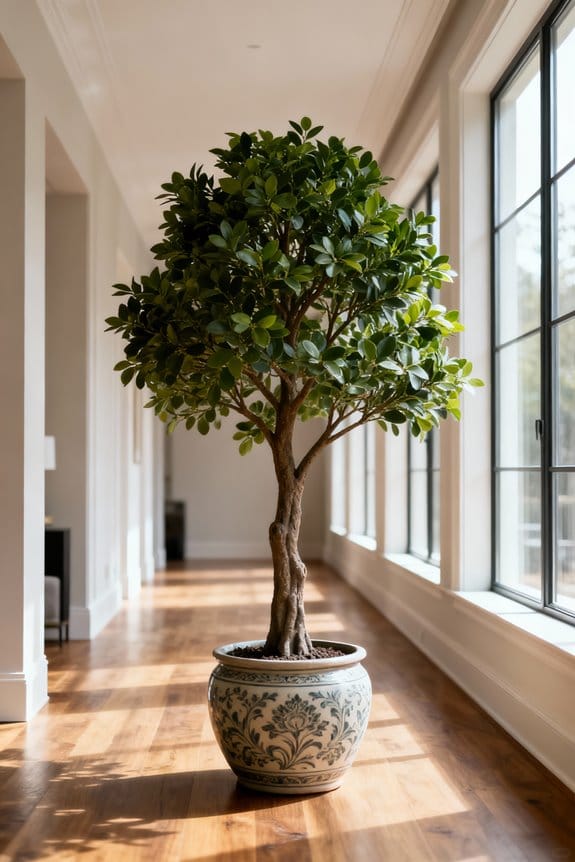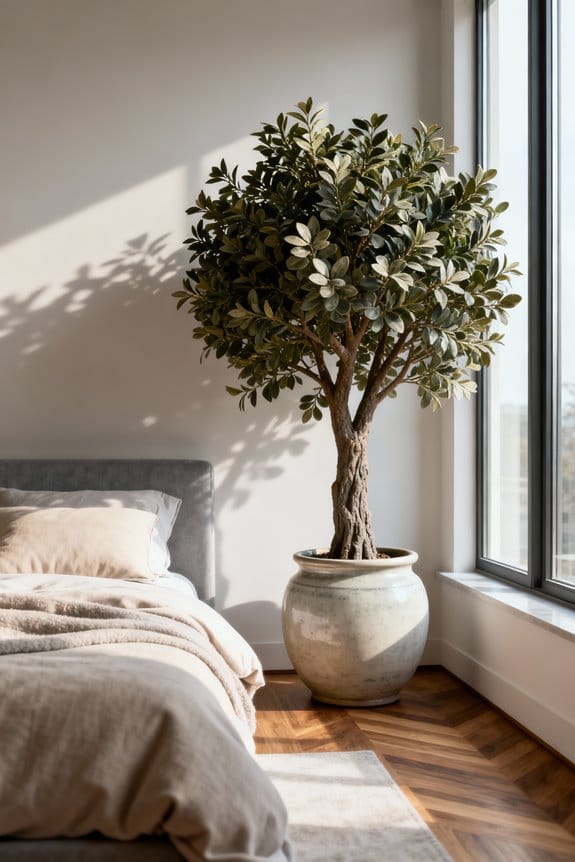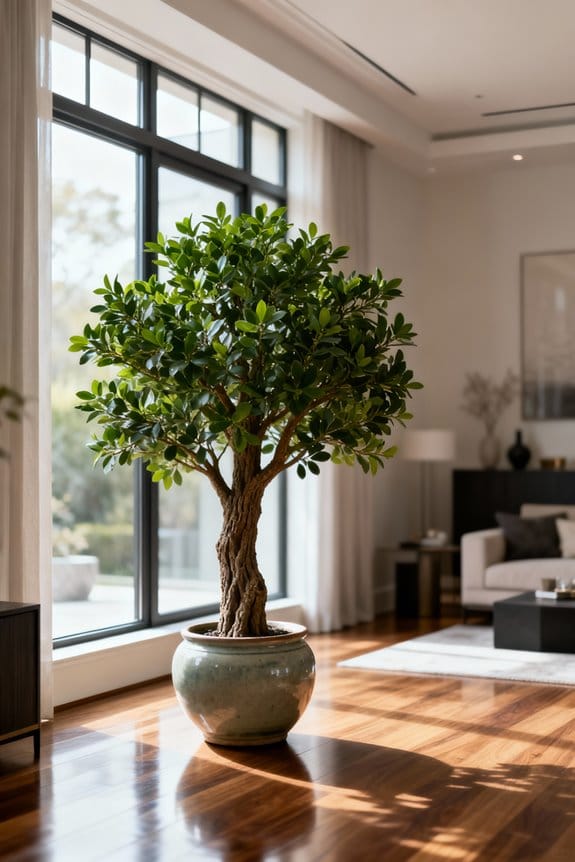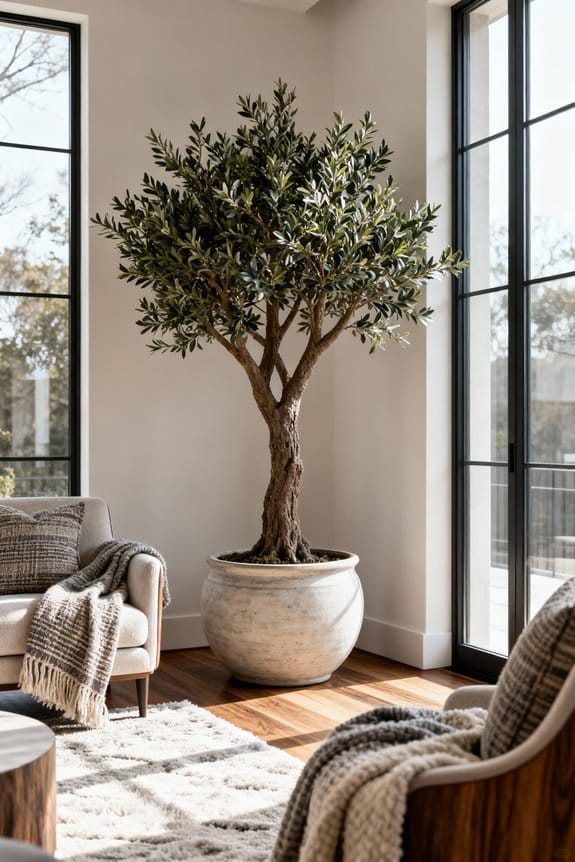
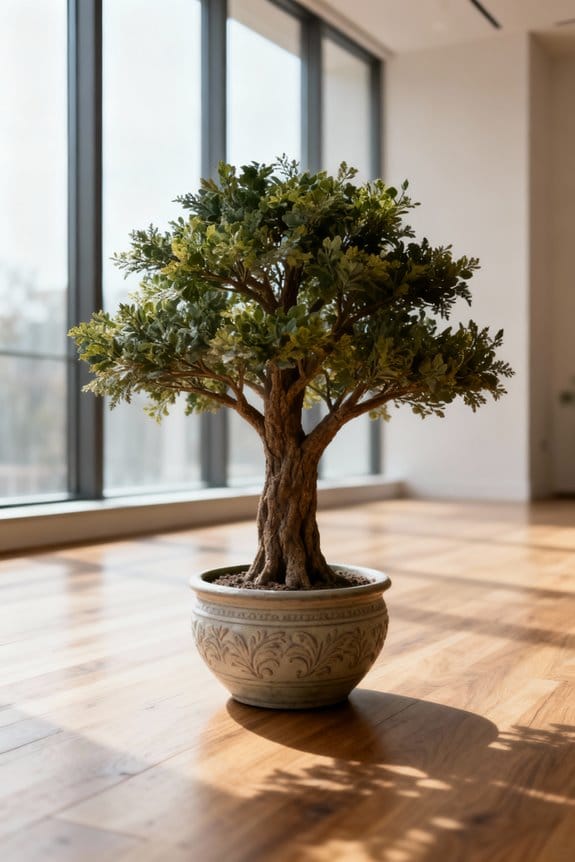

Faux trees can really help tame that annoying echo in your room by scattering sound waves and soaking up noise—no green thumb needed! Their bushy leaves and irregular shapes break up sound better than plain walls, especially when placed in corners or grouped tightly. Plus, they don’t need watering or sunlight, so they’re fuss-free friends for quieter spaces. If you want cool tips on where to put them and why leaf texture matters, keep going!
Key Takeaways
- Faux trees scatter sound waves with their irregular shapes and bushy textures, reducing echoes in echoey rooms.
- Rough, textured leaves and larger surface areas of faux trees enhance sound absorption and minimize noise reflection.
- Placing faux trees strategically in corners and along walls maximizes sound absorption and acoustic comfort.
- Layering and clustering faux trees of varied sizes increase density and improve overall sound attenuation.
- Faux trees offer low-maintenance, customizable soundproofing benefits without needing sunlight or watering, unlike real plants.
Understanding Sound Reflection in Indoor Spaces
Even though it might seem a little complicated at first, understanding how sound bounces around your indoor space can make a big difference in comfort! Sound reflection happens when those noisy waves hit hard surfaces like walls or windows and bounce right back, creating echoes and extra noise. This can make your room feel stressful, especially if you’re trying to chat or focus. But here’s the cool part: adding soft things like faux plants can soak up some of that sound energy. They’re not just pretty; they bring real acoustic benefits by cutting down reflections and calming the space 🪴! So, by thinking about where you place these faux plants, you’re actually helping your ears relax and your room feel way cozier. Who knew comfort could grow on trees? Faux olive trees, with their adjustable branches and realistic textures, are especially great for enhancing indoor aesthetics while contributing to reduced sound reflection.
How Faux Trees Disrupt Sound Waves
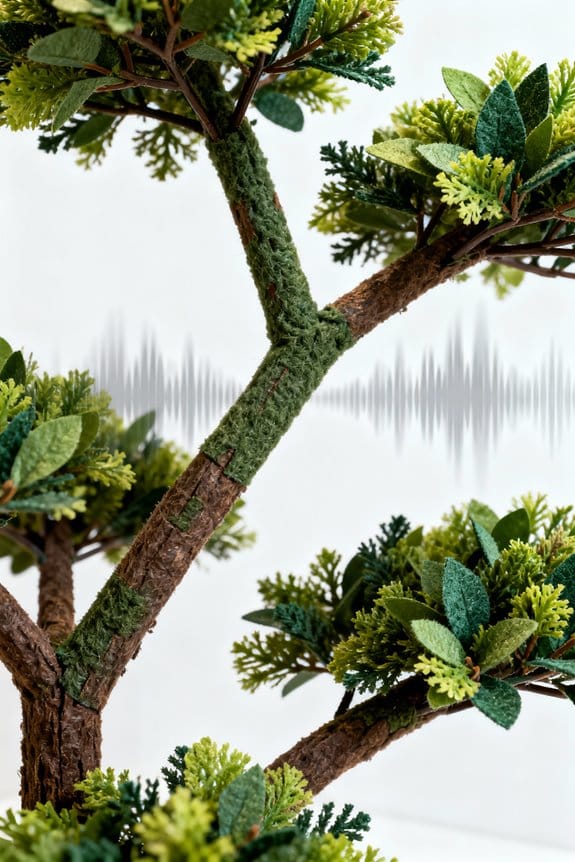
Imagine sound waves as little energetic bouncers at a party — they love to bounce off hard, flat surfaces like walls and floors, making your room echo louder than you’d like. Faux trees are like those unexpected guests who really know how to disrupt sound waves! With their bushy, irregular shapes, these trees scatter sound energy instead of letting it bounce back directly. This means less echo and better acoustic comfort in your space. Placing faux trees in corners and along walls works wonders—they soak up sound and create a softer vibe. Plus, the denser your faux tree setup, the quieter your room feels. So, if echoes bug you, adding faux trees might be an easy, stylish fix—no green thumb needed! 🌿😊 Artificial trees with dense tips and lifelike branches help reduce sound reflection by breaking up the surfaces that cause echoes.
The Importance of Leaf Texture and Surface Area
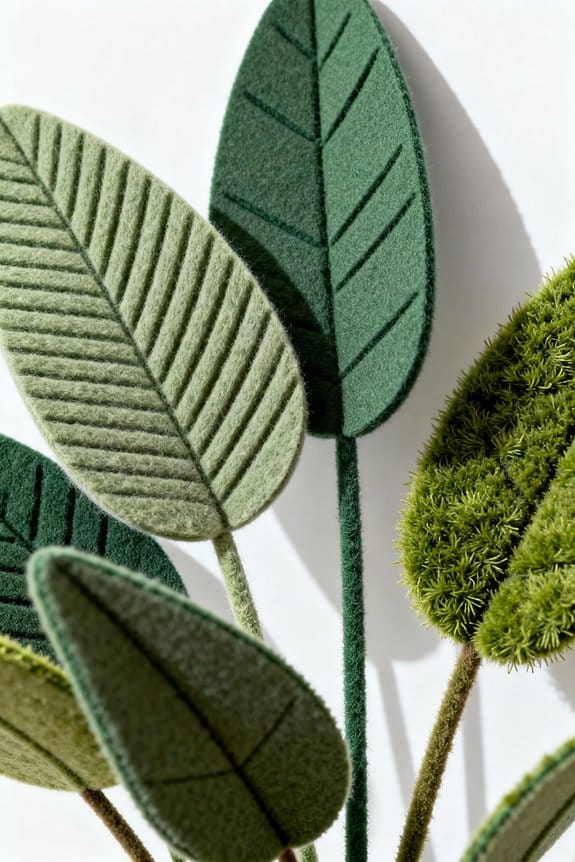
If you thought a faux tree’s shape was the main trick to quieter rooms, wait until you look closer at its leaves! 🍃 The secret lies in leaf texture and surface area. Rough, uneven leaf textures work better because they scatter sound waves, helping your room soak up noise instead of bouncing it around like an irritating echo. Plus, larger leaves offer more surface area, which means they can catch more sound and reduce echoes even more. So, if you’re hunting for faux trees to improve your space, go for ones with lots of different leaf shapes and textures—they’ll do the trick at sound absorption. Trust me, paying attention to these leafy details can make your echoey room feel way cozier and quieter! Artificial trees with silk or high-quality polyester foliage provide the best combination of realistic texture and surface area to enhance acoustic comfort.
Layering Faux Trees for Enhanced Acoustic Benefits
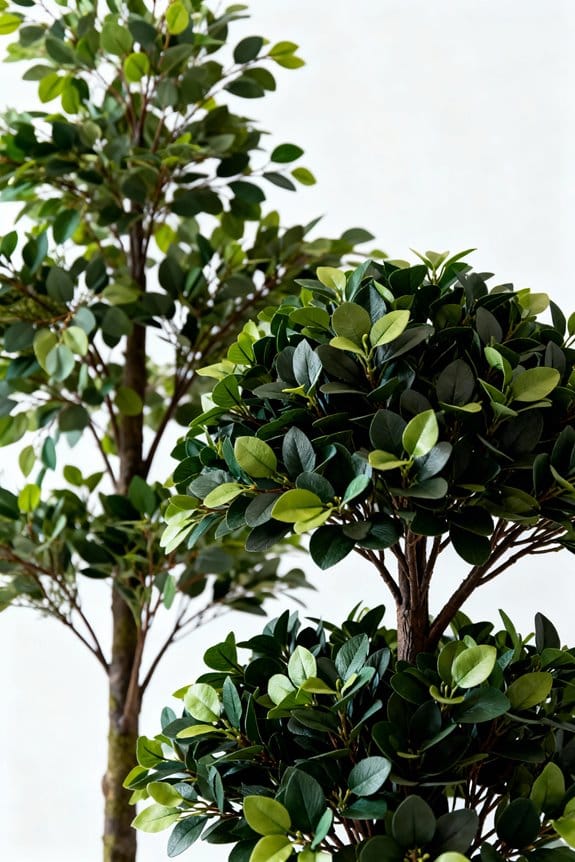
One of the best ways to boost your room’s sound control is by layering faux trees—think of it like creating a mini forest indoors! 🌳🌿 When you place different sizes and shapes of these trees together, they don’t just look cool; they break up sound waves before they bounce back at you. Layering faux trees creates multiple sound barriers that trap echoes, helping your room feel calmer and quieter. Mixing tall and bushy trees mimics nature, scattering noise so it doesn’t seem so sharp. If you put clusters in corners or along walls, they catch concentrated sound waves and considerably reduce background noise. Trust me, your ears will thank you! Plus, this little trick boosts your acoustic comfort and adds fresh vibes—without watering anything. Easy win, right? Additionally, choosing trees with weighted, cement or heavy pots ensures stability in busy spaces while enhancing acoustic benefits.
Optimizing Plant Density to Control Noise Levels

Building on the idea of layering faux trees, the next step is getting the density just right for noise control. You’d be surprised how closely packed artificial plants can make a space feel calmer! When you cluster them tightly, they block and scatter more sound waves, which can really reduce noise levels—sometimes by up to 30%! Think of it like a cozy forest that traps echoes. Plus, mixing different heights makes them work like sound ninjas, targeting all sorts of noises. Acoustic comfort improves big time, making conversations easier without shouting 😅. So, don’t just throw a few fake trees here and there—packing them in well is where the magic happens! Just remember, balance is key; too dense, and it might look like a jungle in your living room! 🌿 Adding a variety of different trunk styles and leaf densities can enhance this effect while maintaining aesthetic appeal.
Ideal Placement for Faux Trees in Echoey Rooms
Placing faux trees cleverly around your echoey room can do wonders for cutting down noise and making your space feel way cozier! 😊 Start by tucking faux trees into corners and along walls where sound usually bounces the most. Big faux trees with broad leaves are great at absorbing sound and blocking sharp reflections from hard surfaces like glass or tile. Try grouping a few faux trees in clusters to disrupt the path of those pesky sound waves, scattering them before they bounce back. Mixing tall and small trees also helps absorb different sound pitches, so your room doesn’t feel like a concert hall after all. Plus, placing faux trees to separate noisy work zones can really calm down the chaos—bonus points if you find a spot that makes you smile too! Also, choosing trees with high-quality materials ensures both aesthetic appeal and durability, so your space stays stylish while improving acoustic comfort.
Comparing Artificial and Real Plants for Sound Absorption
How do fake plants stack up against real ones when it comes to cutting down noise in your room? 🌿 It turns out they do a pretty solid job! Artificial indoor plants, especially the big, bushy types, scatter sound waves just like real plants do. They don’t need sunlight or watering, so they keep their sound absorption powers steady—no wilting drama here! Real plants absorb sound with their leaves and soil, but artificial ones mimic this effect with dense foliage that redirects noise. If you want a low-maintenance way to tame echoes, artificial plants offer a reliable and stylish solution. So, while real plants are lovely, faux trees might just be your best bet for consistent sound absorption with zero fuss—kind of like a friend who listens without talking back! Additionally, choosing artificial trees with thick leaves and adjustable branches can enhance their ability to diffuse sound effectively.
Faux Trees Versus Traditional Soundproofing Materials
So, if you liked the idea of using faux plants to soften noise, you might be curious how these leafy friends stack up against the usual soundproofing stuff like foam panels or heavy curtains. 🌳 Unlike those boring, flat materials, faux trees bring a bit of style and life to your space while quietly blocking and scattering sound waves with their thick branches and leaves. These trees require zero maintenance and can last way longer than traditional soundproofing materials. Plus, their bushy shape offers more surface area to mess with sound waves, helping reduce echoes better. You can even place faux trees to target certain noise frequencies! Best part? No drilling or remodeling needed. So yeah, they’re kind of the sneaky charmers in the world of soundproofing! Their adjustable branches allow you to customize the tree’s shape to maximize acoustic benefits in your room.
Visual Appeal and Acoustic Functionality Combined
While it might sound a bit surprising, adding faux trees to your room doesn’t just brighten the space—it actually makes it sound better too! 🌿 These leafy wonders have lots of surfaces that break up sound waves, helping to cut down on echoes and loud noises. Faux trees offer a clever mix of visual appeal and acoustic functionality, working like natural sound diffusers. When you place them smartly around your room, they scatter sound in all directions, making your space feel calmer and conversations clearer. Plus, mixing different types and sizes creates a pleasant look without you needing to be a design pro! If your room is echoey, faux trees are an easy, low-maintenance way to soften noise and spruce up your space—bonus points for being budget-friendly, too! Choosing lightweight, fade-resistant materials with dust-proof leaves adds an easy-care benefit to this stylish and functional decor choice.
Practical Tips for Integrating Faux Trees in Office Spaces
Bringing faux trees into your office isn’t just about making things look nice—these green pals can seriously help with noise too! 🌳 Placing them in corners or along walls catches those noisy echoes bouncing around, making conversations easier and the whole space feel calmer. To boost acoustic comfort, try grouping faux trees of different heights together; this mix helps trap sound waves at various levels, lowering noise levels effectively. Also, don’t be shy about clustering faux trees—adding dense foliage really softens the sound environment, especially in open offices. Plus, the greenery adds a bit of calm to your day—kind of like a mini nature break at work! So, next time you rethink office decor, consider faux trees. Your ears (and team) will thank you! Additionally, selecting faux trees with adjustable, bendable branches allows you to optimize their placement and maximize their acoustic benefits.
Case Studies: Faux Trees Improving Acoustic Comfort
Even if you’re not a science whiz, the proof is in the placement! 📚 When faux trees are set up just right, they can reduce background noise by about 30%, making your office feel less like a noisy cafeteria and more like a peaceful oasis. Case studies show that in retail spots, faux trees boosted customer comfort by 25% by cutting down on echo and distractions. Open workspaces saw a 20% drop in sound bouncing around, helping coworkers chat without shouting. Even conference rooms got a 15% boost in speech clarity thanks to the leafy layers of faux trees scattering sound waves. If you’ve ever wished for a quieter, calmer space, faux trees might just be your new best friend in acoustic comfort! 🌿
Maintenance-Free Sound Absorption With Faux Trees
Lots of people love the idea of quieter spaces but dread the care real plants need—watering, trimming, and all that fuss. Here’s where faux trees shine! They bring sound absorption benefits without any chores. You don’t need to worry about sunlight or forgotten watering schedules. Plus, these faux trees have large leaves that help break up sound waves, cutting down on echo and boosting acoustic comfort. Think of them as quiet superheroes that also look great in your room! By placing a few well-sized faux trees in echoey spots, you can create natural sound barriers that work silently. If you want a fuss-free way to soften sounds and keep your space looking fresh, faux trees are a smart pick—with zero guilt or muddy pots! 🌿😄
Frequently Asked Questions
Do Fake Plants Absorb Sound?
Fake plants absorb sound by disrupting indoor noise through their dense foliage, serving as decorative acoustics and effective soundproofing materials. Their varied shapes and surfaces scatter sound waves, reducing echo and enhancing acoustic comfort in interior spaces.
How to Stop Rooms From Echoing?
To stop rooms from echoing, room design should prioritize sound dampening through strategic material selection. Incorporating textured surfaces, varied faux trees, and dense plant arrangements scatters sound waves, reducing harsh reflections and enhancing acoustic comfort effectively.
Do Plants Reduce Echo in a Room?
Plants reduce echo in a room through strategic plant placement that enhances sound absorption. Their foliage texture disrupts sound waves, improving indoor acoustics by scattering and dampening reverberations, making environments quieter and more acoustically comfortable.
What Tree Absorbs the Most Sound?
Among sound absorbing materials, broad-leafed tree species like ficus and monstera excel in indoor acoustic enhancement. Comparative studies highlight their large surface area and layered structures as superior for reducing echo in echoey environments.