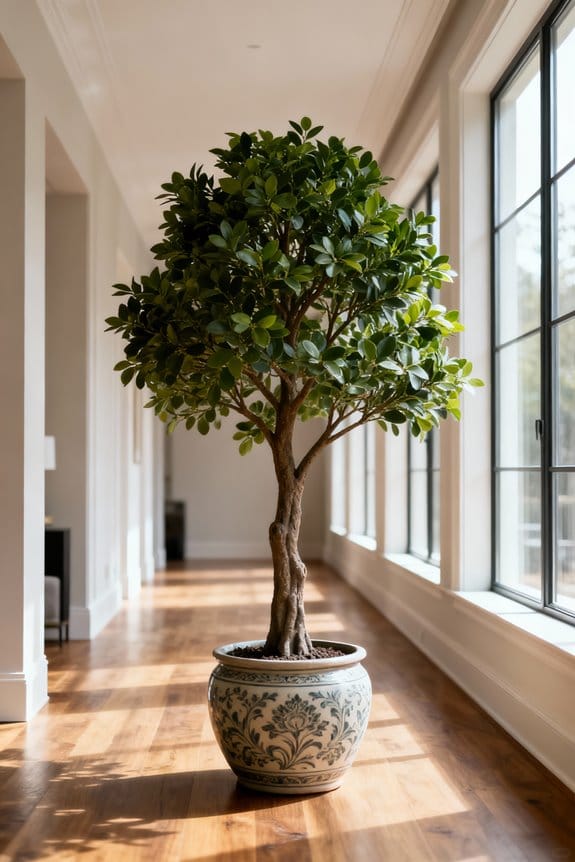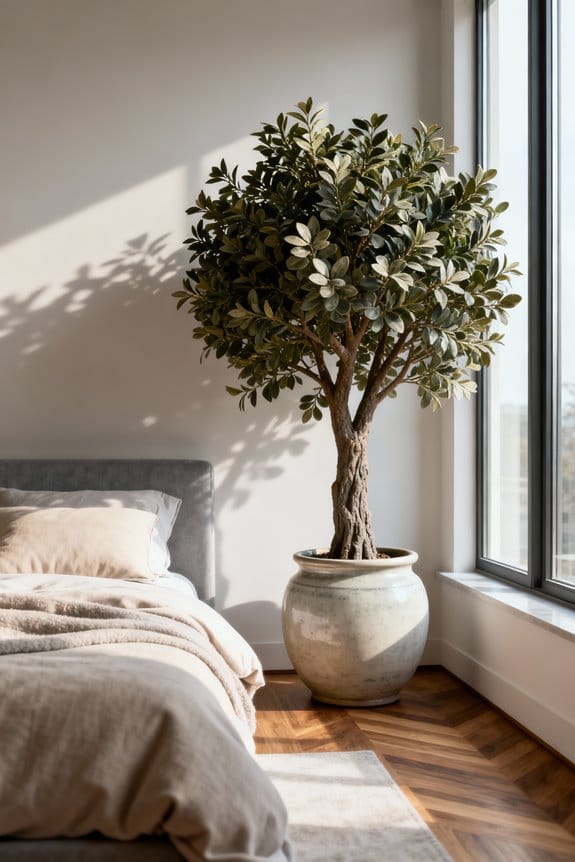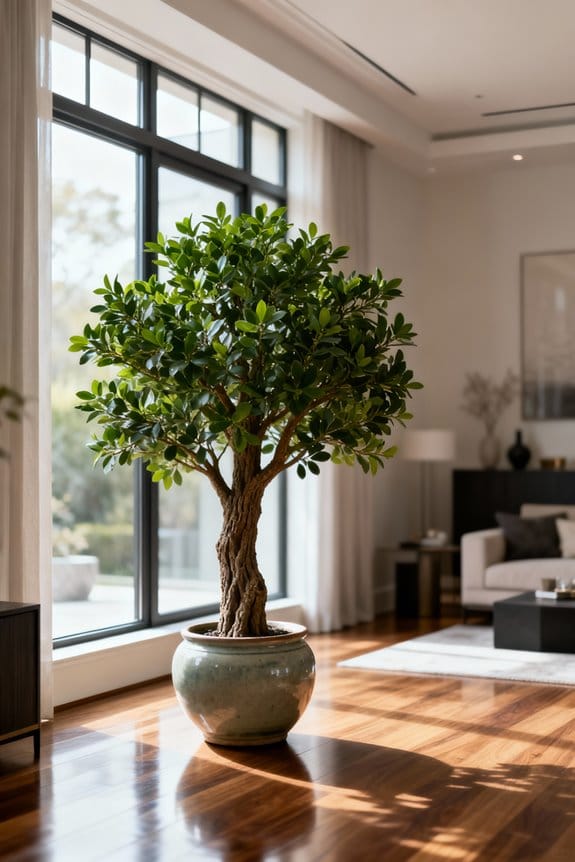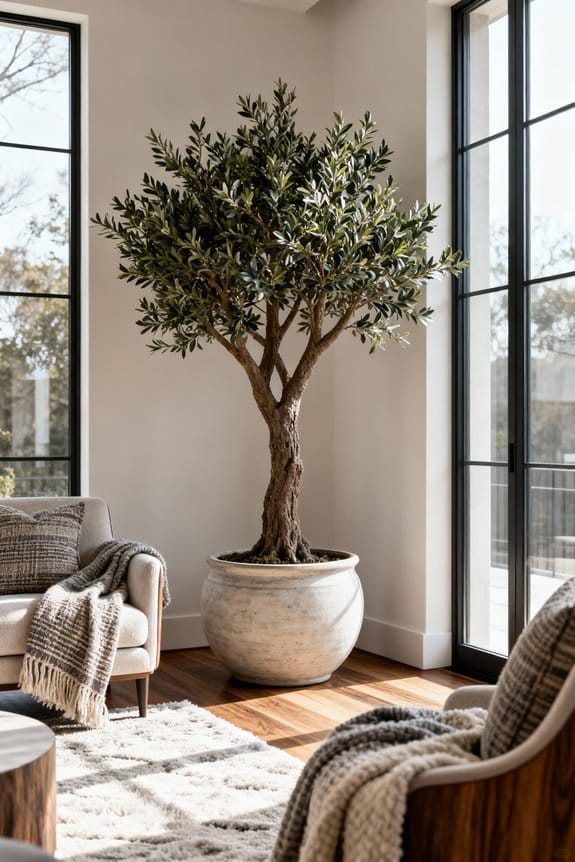
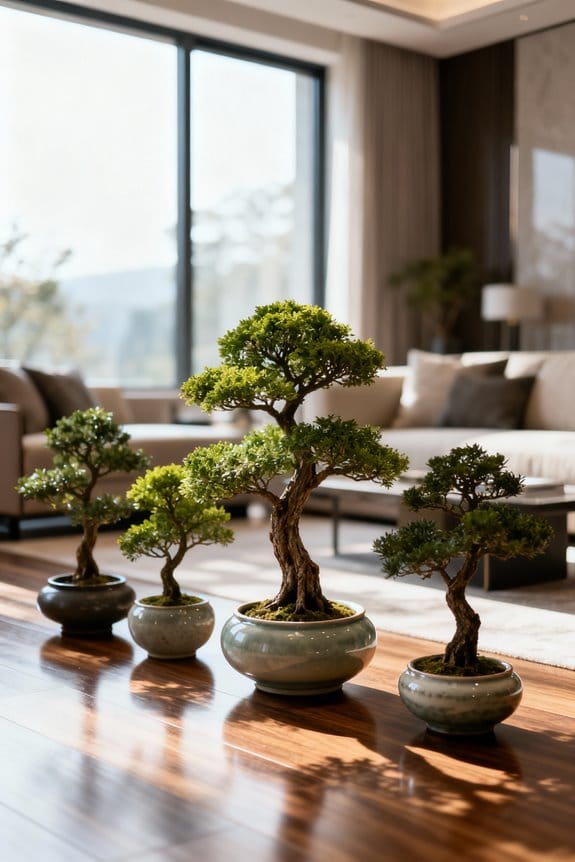

Using multiple small trees instead of one big tree is a smart move for your garden! They take up less space, add splashy color year-round, and attract cool wildlife—plus, you avoid the drama if a storm hits. 🌳✨ Just space them about 6-10 feet apart to keep roots happy and mix species for extra charm and bug buddies. They also let you frame your yard’s best views, making your space feel bigger. Stick with this, and your garden’s about to get even more interesting!
Key Takeaways
- Plant small trees 6 to 10 feet apart to avoid overcrowding and allow healthy root growth.
- Group small trees with varied heights and forms to create depth, visual layers, and seasonal interest.
- Use multiple small trees to maximize space, provide diverse habitats, and improve biodiversity in small gardens.
- Choose species that bloom or change color seasonally for year-round garden color and wildlife attraction.
- Arrange small trees to frame views, add structure, and provide balanced shade without overwhelming the space.
Benefits of Using Small Trees in Garden Design
When it comes to your garden’s charm, small trees steal the show more often than you might think! 🌳 These little wonders, topping out at around 12 to 30 feet, pack a punch by adding height and color all year long—even in the dullest winter months. If you plant trees in groups, your garden gets a layered look that feels dynamic, not flat. Small trees fit nicely into landscape design, offering texture and shades that change with the seasons. Plus, unlike those big giants, small trees won’t threaten your fence or roof during storms. They’re safer and help clean your air while shading your home, which might even lower your energy bills! So, using small trees isn’t just smart—it’s like having little garden superheroes on your side! Additionally, choosing artificial small trees can provide year-round beauty with minimal maintenance needs.
Understanding the Characteristics of Small Trees
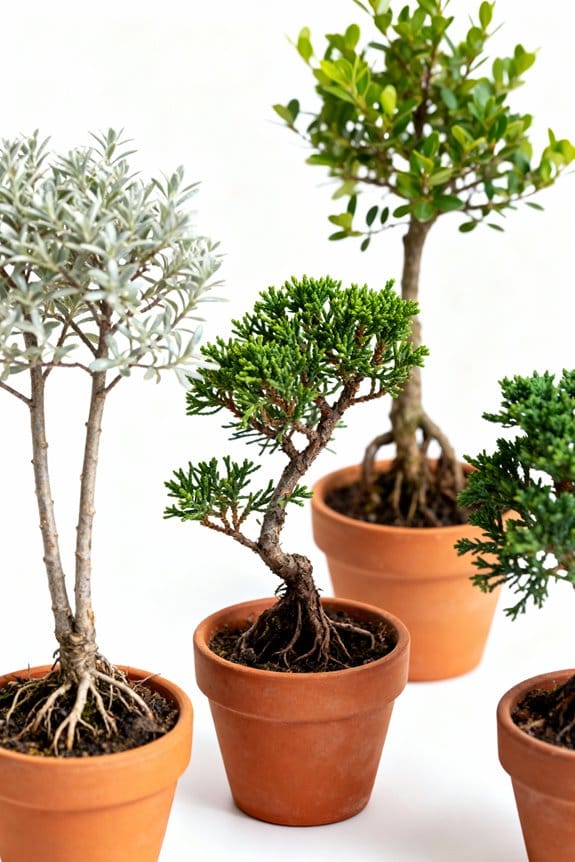
Choosing the right small tree for your garden can feel like a mini adventure—except without the risk of getting lost! 🌳 These trees usually grow between 12 and 30 feet tall, which makes them perfect if you want some greenery without it turning into a jungle overnight. Small trees work wonderfully as accent trees, standing out just enough to grab attention without stealing the whole show. They add visual interest all year round, especially when winter tries to make everything look dull. Plus, placing them thoughtfully helps balance your garden’s design, adding texture and color that frame views or buildings nicely. Small trees also bring in wildlife and fresh air, making your outdoor space lively and healthy. So, a few well-placed small trees can transform your yard without overwhelming it! Additionally, for indoor decor or low-maintenance options, consider artificial bonsai trees that provide realistic greenery without the upkeep.
Comparing Single Large Trees to Multiple Small Trees
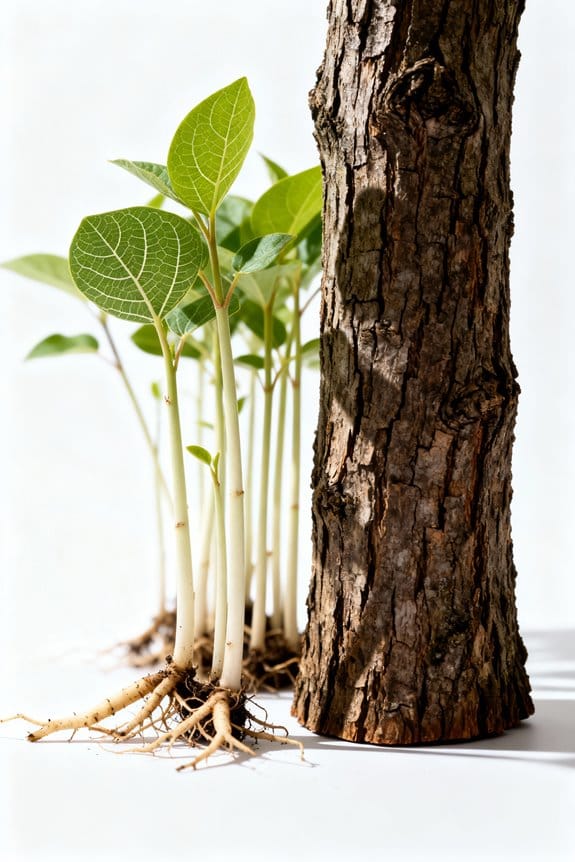
You might wonder if planting one big tree or several small ones is better for your yard—kind of like debating between one giant pizza or several personal-sized slices! 🍕 Small trees, usually between 12 and 30 feet, give you the chance to mix up species, which is great for keeping your garden healthy and lively. Unlike large trees that can block views or sunlight, multiple small trees keep things light and airy while framing your home nicely. Plus, a tree provides shade and air quality benefits, but using several small trees covers more ground and handles stormwater runoff better. Small trees also pose less risk during storms and let roots share space more fairly. So, multiple small trees might just be the smarter, safer way to grow! For added greenery with minimal effort, consider integrating artificial plants which offer ultra-realistic, low-maintenance options.
Planning Groupings for Visual Impact
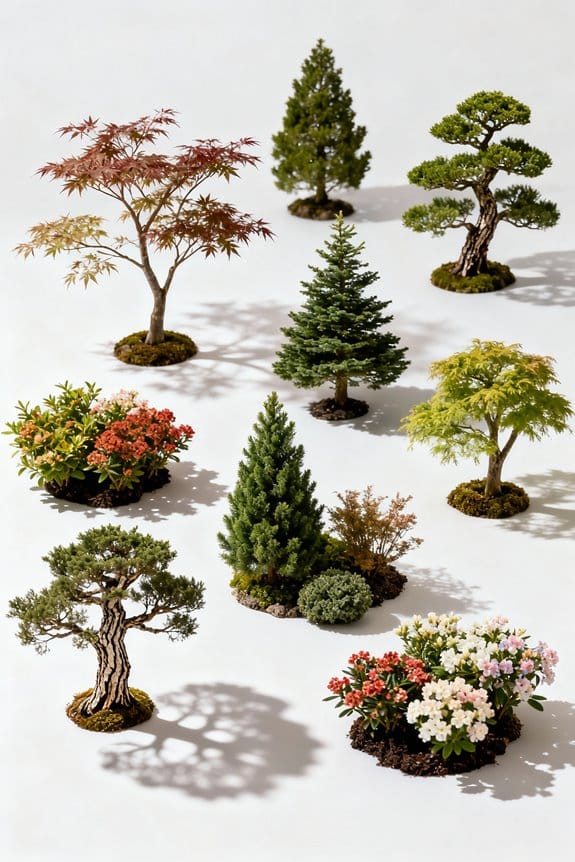
Groupings of small trees can really transform your yard into something special—it’s like creating a natural art piece! 🎨 Placing trees in staggered spots keeps things balanced and interesting without making your garden look like a crowded mess. When you plan your groupings, think about each tree’s mature size and spacing requirements—give them room to breathe so they don’t turn into a tangled jungle. This careful spacing not only supports healthier growth but also amps up the visual interest with layers of color and texture. Remember, mixing different heights and forms in a staggered pattern creates depth and keeps your landscape lively through the seasons. It’s kind of like arranging friends at a party to avoid awkward silences, but for trees! Using silk leaves on your artificial trees can further enhance realism and bring a natural feel to your grouping.
Selecting Complementary Species for Diversity
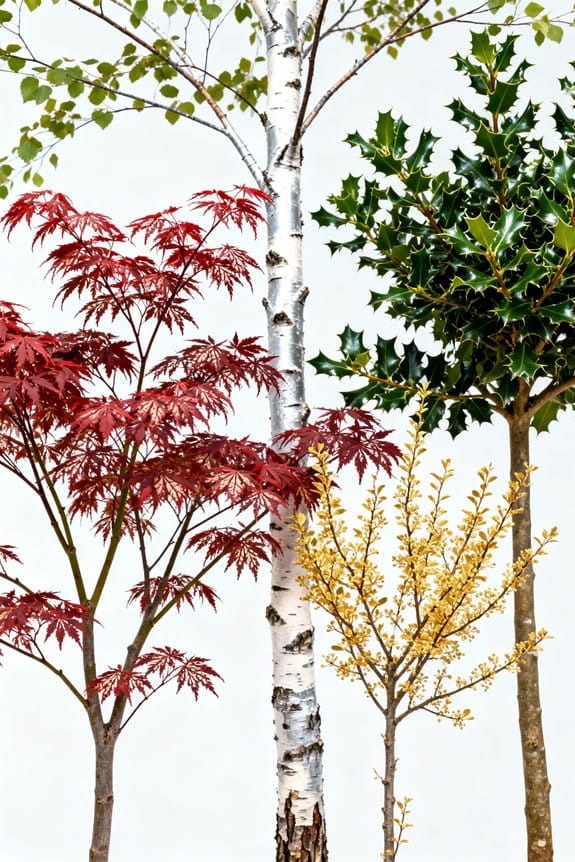
Even though picking out trees might sound like a boring chore, selecting small species that complement each other can totally elevate your yard’s style and keep things interesting all year long! 🌳✨ Think about mixing evergreens like the Green Columnar Juniper with colorful deciduous friends such as the Japanese Maple—this combo keeps your garden lively whether it’s winter or fall. When choosing complementary species, aim for small trees that grow to similar sizes (about 12 to 30 feet tall) so they don’t compete too much. Try pairing varieties like the Little Gem Dwarf Southern Magnolia and JeanGenie™ Colorado Spruce for seasonal diversity and similar soil needs. Adding fine-textured trees like the Little Ollie® Olive creates layers that add depth and charm. Picking the right species means more diversity and less stress—win-win!
Optimal Spacing and Arrangement Techniques
A handful of small trees spaced properly can make a huge difference in your yard’s look and feel! 🌿 When planting, try to keep each tree about 6 to 10 feet apart—this gives them room to grow without fighting for water, sunlight, or your attention. For ideal spacing, think about how big each tree will get later—that way, you avoid a crowded mess. Arranging small trees in clusters or alternating species can add cool visual layers and keep your yard feeling fresh, not like a jungle gym. Plus, planting them to frame your favorite window or patio can sneak in some much-needed shade and even a bit of wind protection. Don’t stress if you’re not a pro—just play around and see what your trees like best! 🌳 Stability is important, so consider planting trees with reinforced structures to ensure they thrive in high-traffic or windy areas.
Creating Seasonal Interest With Small Trees
When you choose small trees that shine during different seasons, your yard stays interesting all year long! 🌸🍂 For example, pick ones like Japanese maples that light up in fall or flowering dogwoods that bloom in spring—this way, you get a natural calendar of colors and flowers. Adding evergreens like the Little Gem Dwarf Southern Magnolia keeps your garden lively even in winter. Don’t forget trees that produce berries or fruit, like crabapples, which attract birds and add more visual interest. Mixing small trees with different textures and heights gives your space depth, making every season feel fresh. It’s like your yard is throwing a mini party all year—just without the stress of entertaining guests! Your eyes will thank you for the seasonal foliage variety. For a hassle-free option indoors or in covered spaces, consider adding low-maintenance artificial citrus trees that provide year-round greenery without upkeep.
Maintenance Considerations for Multiple Trees
Taking care of multiple small trees close together is a bit like juggling—keep an eye on each one to avoid any mix-ups! 🌳✂ You’ll want to give them enough spacing, usually between 6 to 10 feet, so they don’t crowd each other out. Proper maintenance means regular pruning and watching for pests, which helps keep every tree happy and healthy. Don’t forget root management! When roots get too cozy, they compete for water and nutrients, so checking and possibly separating them helps prevent stress. Also, watering and mulching each tree individually supports their growing needs better than a one-size-fits-all approach. It might feel like a handful at first, but with these easy steps, your small trees can flourish side by side—and you won’t need a green thumb, just some care and attention! Additionally, choosing trees with adjustable branches can simplify shaping and maintenance when managing multiple plants.
Enhancing Biodiversity With Diverse Plantings
Keeping several small trees healthy side by side takes a bit of effort, but guess what? You’re actually doing a big favor for biodiversity! 🌳 Small trees create lots of different habitats that attract birds, insects, and helpful critters you might not otherwise see. Instead of one big tree, varying your small trees means fewer pests and diseases—because not all trees fall prey at once. Plus, these little guys form layers with different heights, giving homes to all sorts of species. Want better flowers and fruit? Small trees help pollinators move around more easily, boosting production naturally. Toss in some seasonal color changes, and your garden’s not just pretty but also a mini wildlife hotspot. It’s like hosting a party with diverse guests—way more fun and a win for nature! 🌿 Choosing compact heights for your trees maximizes space and ensures they thrive even in apartments or smaller yards.
Techniques for Connecting or Merging Tree Canopies
Although it might seem a bit tricky, connecting or merging tree canopies can create some really cool effects in your garden! 🌿 Imagine gently braiding or binding the trunks of small trees early on, before they get too stiff—this helps their canopies grow together naturally through a process called inosculation. You can use soft wire or twine to keep the trunks close, making sure their cambiums touch to encourage fusion. Scraping the bark where they meet can speed this up, but be careful not to go overboard! Position your trees well from the start, and check in regularly to adjust bindings and shape the canopy as it forms. It takes patience, but the unique canopy you get is totally worth the care and a little vine-like tree wrestling! For indoor settings, consider the stability and low maintenance of artificial ficus trees as an alternative to natural canopies to reduce care efforts.
Addressing Challenges of Root Competition
Merging tree canopies is fun and all, but watch out below ground—roots love to throw a crowded party that can stress your trees! 🌱 When you plant multiple small trees close together, their roots quickly spread and start competing for water and nutrients, like squabbling siblings fighting over the last slice of pizza. To avoid this chaotic root competition, give your trees some breathing room by spacing them 6 to 10 feet apart. This simple trick helps keep your trees healthier and happier. Keep an eye on tree health by watering regularly and pruning wisely—this helps reduce stress and fend off pests. Remember, happy roots mean happy trees, so spacing isn’t just an option; it’s your secret weapon for thriving greenery! Using artificial tree centerpieces with adjustable branches can also inspire creative arrangement ideas for your garden layout.
Small Trees for Functional and Aesthetic Purposes
When you choose to plant multiple small trees instead of one big giant, you’re actually giving your yard a serious upgrade! 🌳 Small trees, growing up to about 12 to 30 feet, are like the perfect sidekicks—they add color, texture, and charm all year round without hogging all the space. These small trees would enhance both the livability and value of your outdoor space by providing shade, improving air quality, and cutting energy costs. Plus, they create lovely framing for your home and garden design, making everything look balanced and inviting. Using several small trees lets you avoid crowding and root fights (trust me, nobody wants that). It’s a smart way to boost your yard’s appeal and function without overwhelming it!
Frequently Asked Questions
What Is the 10 20 30 Rule for Tree Planting?
The 10-20-30 rule advises planting at least 10 species, with no more than 20% from one species and 30% from one genus. Proper tree spacing, planting location, and root considerations are essential to maintain biodiversity and ecosystem balance.
Which Is the Most Common Mistake Made in Tree Planting?
The most common mistake in tree planting is improper tree spacing, leading to overcrowding. Additionally, errors in planting depth and neglecting soil quality compromise root development and overall tree health, increasing susceptibility to stress and diseases.
How to Decorate With Multiple Trees?
“Variety is the spice of life.” Decorating with multiple trees involves diverse tree arrangements, enhancing seasonal themes through coordinated colors and textures, and adding unique ornaments to individual branches, creating a vibrant, personalized, and harmonious festive display.
How to Join Two Trees Together?
To join two trees together, tree grafting techniques or tree merging methods like inosculation are employed. These approaches enhance companion planting benefits by combining strengths, optimizing resource sharing, and fostering resilient, interconnected growth in closely planted trees.