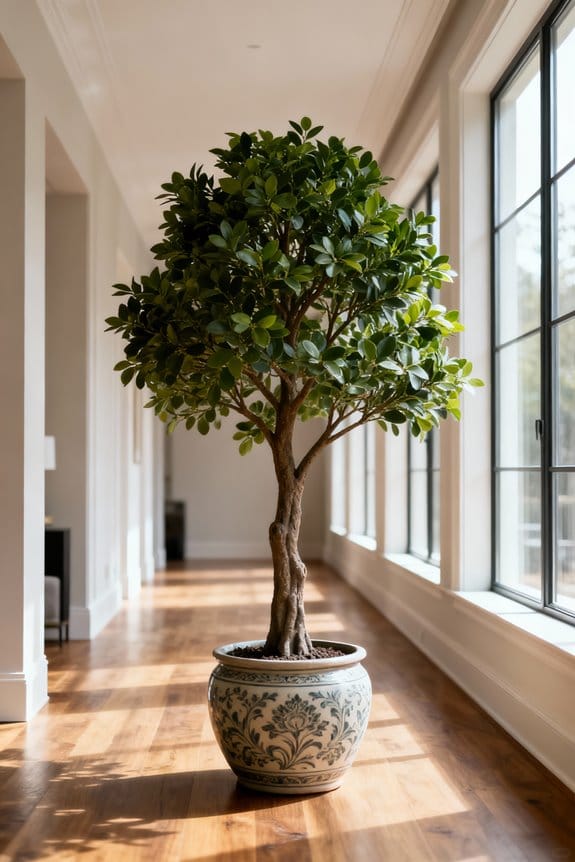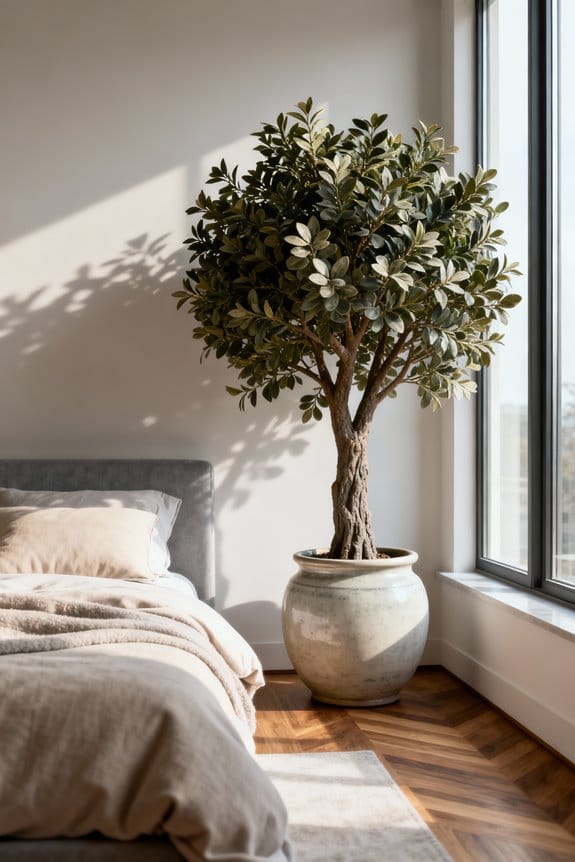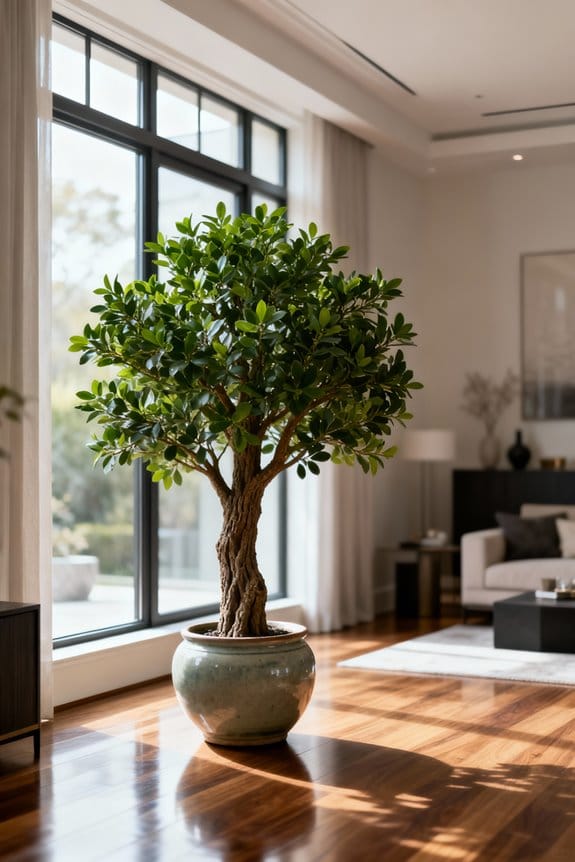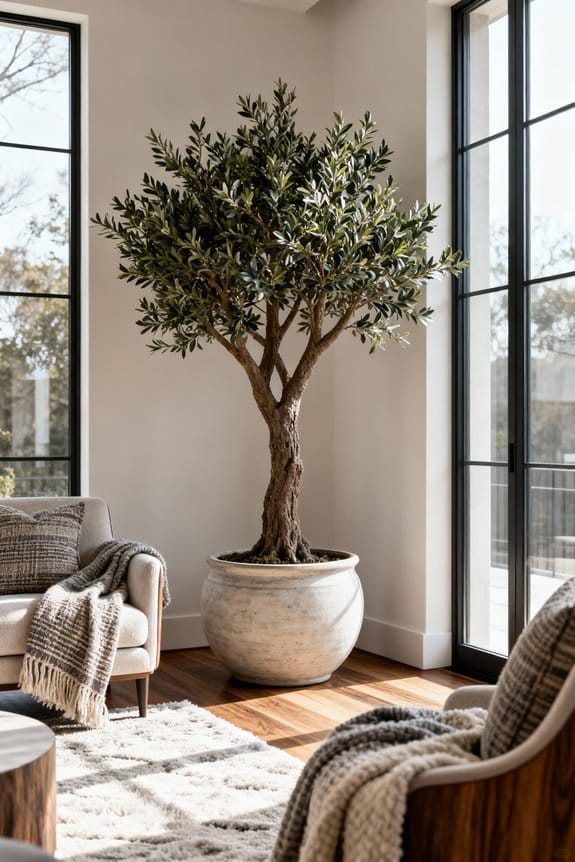
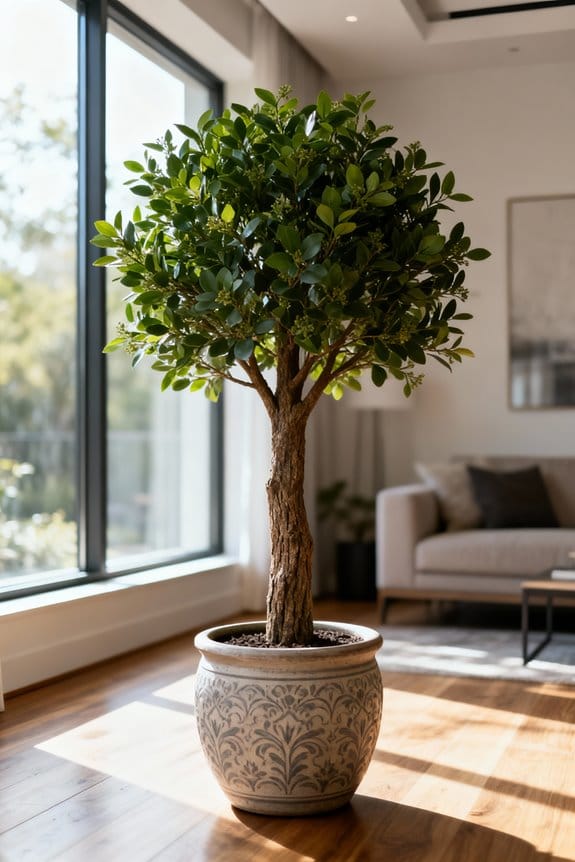

Choosing the right size indoor tree starts with measuring your ceiling height—most rooms are 8-9 feet tall, so pick a tree around 6-6.5 feet to avoid feeling like you’re under a jungle canopy! 🙃 Don’t forget to leave 6-12 inches of space above for safety and style. Tape out the tree’s base to see if it fits without cluttering your space. Find a sturdy base to keep it from wobbling—because who wants a crashing tree? If you want tricks for cozy corners and cool styles, there’s more useful stuff ahead!
Key Takeaways
- Measure ceiling height and subtract tree topper height to determine the maximum tree height for your room.
- Ensure the tree’s base fits within available floor space, allowing 6-12 inches clearance around for stability and safety.
- Choose a tree size that complements room scale—6 to 6.5 feet for standard ceilings; smaller trees work better in tight spaces.
- Prioritize trees with weighted, solid bases and fire-retardant materials to enhance stability and indoor safety.
- Select adjustable or customizable trees with bendable branches for flexible shaping and height adjustments to fit your space perfectly.
Assessing Your Room Dimensions
How do you start picking the perfect indoor tree size? First, measure your room’s ceiling height—that’s key to finding the right size 🌳. Most modern homes have ceilings around 9 feet, but older ones might be closer to 8, so double-check! Next, look at the floor space where you want the tree. Add about 6 to 12 inches around it so the tree won’t feel squished or like it’s crowding every space. Trees under 6 feet work well in smaller spots, while 6 to 6.5 feet fits standard rooms better. A little trick? Use painter’s tape to map out the tree’s footprint and height on the floor and walls—it’s like trying before you buy, but without the awkward returns! Also, consider UV-resistant materials in the tree’s construction to ensure long-lasting durability and color retention indoors.
Identifying the Tree’s Purpose in Your Space
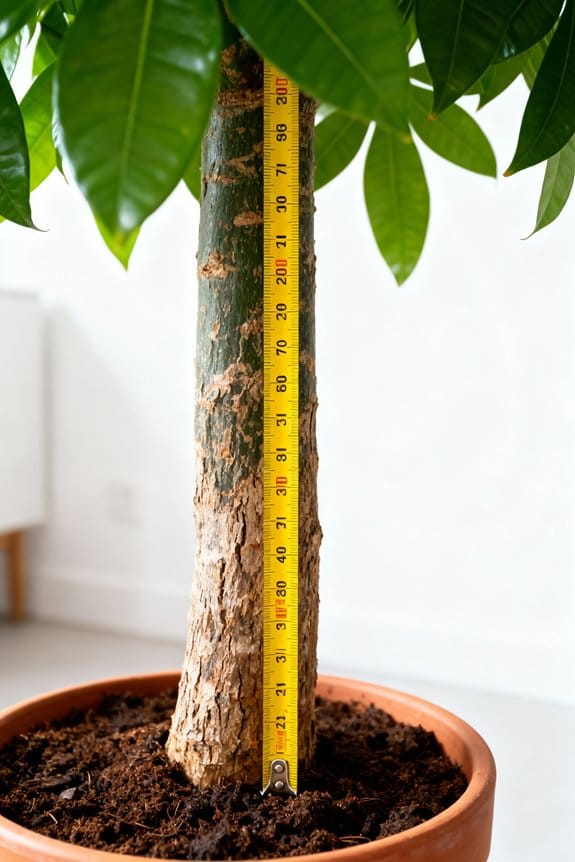
Why does knowing your indoor tree’s purpose matter? Well, it helps you decide if your tree should stand out as the room’s focal point or quietly complement the decor. 🌿 If you want your tree near a cozy reading chair or the sofa, choosing a larger size can make it pop – like the star of your living room! But if you’re working with a smaller space, a modest tree fits better without feeling squished. Also, think about how the tree looks from different spots – standing or sitting – so everyone gets a good view. Finally, make sure the tree’s size works with your room’s furniture and accessories; no one likes a tree that’s trying too hard or playing hide-and-seek! Additionally, selecting trees with adjustable branches can help you better tailor their shape and size to your room’s unique layout.
Measuring Ceiling Height Accurately
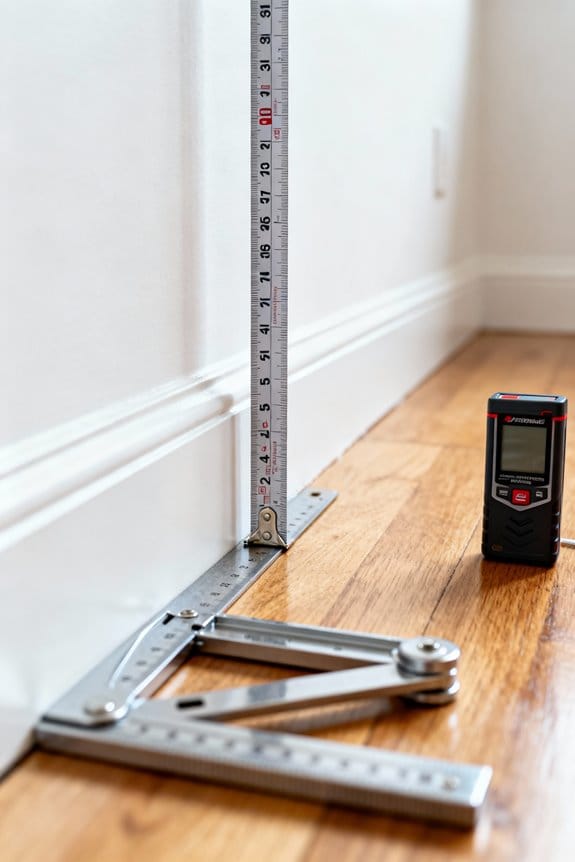
Even though measuring your ceiling height sounds like a snoozy task, getting it right can save you from tree-sized drama later on! 🎄 Grab a measuring tape (yes, the same one you use for furniture), then measure from the floor straight up to the highest point of your ceiling or any overhead fixtures. If your room feels like a cozy cave or a modern loft, knowing the exact ceiling height helps. Using a ladder makes this easier—no stretching on your tiptoes. Don’t forget to subtract any height you want to leave for a tree topper; this gives you the maximum permissible tree height. If you’re unsure where your tree will go, try taping out its base on the floor. It’s like a sneak peek of your festive setup! For added longevity and to avoid fading, consider choosing UV-resistant foliage when selecting your indoor tree.
Determining the Ideal Tree Height
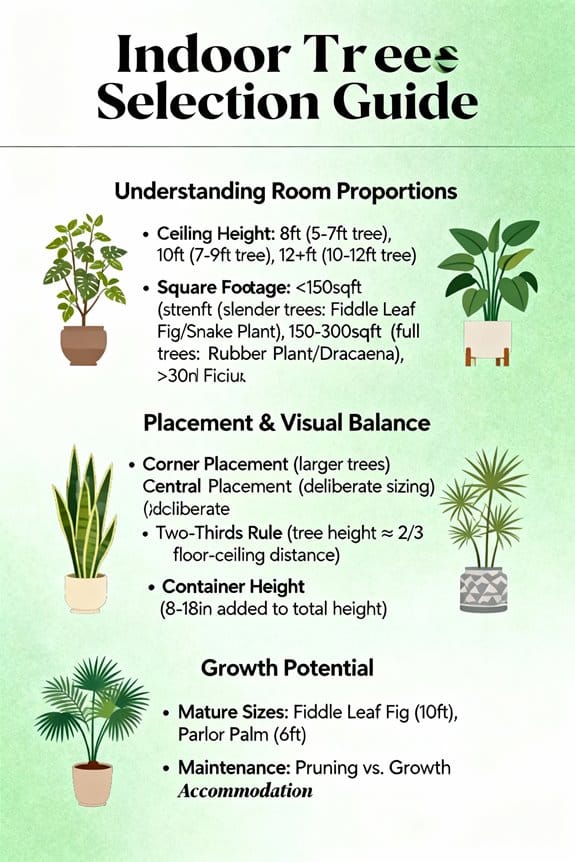
Wondering what height your indoor tree should be to fit perfectly without looking like it’s trying to touch the clouds? 🎄 It’s all about measuring your ceiling first and then subtracting about 6 to 12 inches to leave some breathing room for a tree topper—and trust me, nobody wants their star smooshed against the ceiling! When choosing the perfect tree height, rooms with 8 to 9-foot ceilings work well with trees around 6 to 6.5 feet tall. Smaller spaces? Pick trees under 6 feet to keep things cozy, not cramped. Don’t forget to contemplate your tree topper—it adds height and personality! Pro tip: use painter’s tape to mark your future tree’s height on the wall and imagine how it fits among your furniture. Easy peasy! 🎉 Selecting a tree within the ideal size range ensures stability and safety in busy spaces like clinics.
Calculating Available Floor and Surface Width
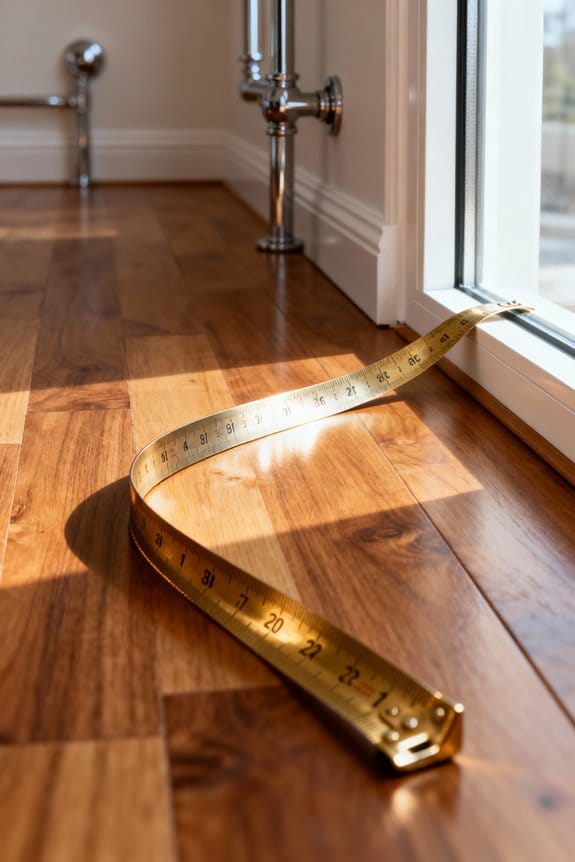
Although height is the headline, the width of your tree really steals the show when it comes to fitting your space just right! 🌳 Grab a tape measure and check how much floor or tabletop space you have—don’t forget to leave at least six inches around the tree so it’s not squished or hard to get around. To get the ideal fit, measure the available floor space carefully, subtracting any nearby furniture or decor that could crowd the area. If you’re placing your tree on a table or shelf, measure that surface width as well. Remember, the base width matters just as much as height to avoid a tree that looks like it’s trying to take over the room! Taking these steps helps you pick a tree that fits your space comfortably and looks great. Also, consider the available sizes range from mini to tall to find the perfect tree for your placement needs.
Selecting Tree Shapes That Complement Your Space
When choosing the shape of your indoor tree, keep in mind that size isn’t the only thing that matters—shape plays a big role too! 🌿 Slim trees work great in tight spots like hallways where space is limited, while fuller trees become beautiful showstoppers in larger rooms. Before you pick, measure the width of your space carefully and add at least six inches so the tree doesn’t feel squished. Think about how the tree shapes will sit with your furniture and walls—it’s like introducing new friends; you want them to get along with your interior design! Slim, pencil trees fit narrow areas without blocking walkways, while full trees add lush vibes and become natural focal points. Choosing the right shape really brings your room to life without crowding it! Additionally, consider the tree’s weighted base for stability, especially in areas with foot traffic.
Matching Tree Style to Your Interior Decor
Style is the real MVP when picking an indoor tree that fits your room’s vibe! 🌟 You don’t want your new green buddy clashing with your furniture or looking like it wandered off the wrong Pinterest board. Whether you go for artificial trees or real ones, matching the tree style to your interior decor is key to enhancing the overall look. If your space is modern, a lush fiddle leaf fig can fit perfectly, but a minimalist olive tree works better in a traditional room. Think about size, too—a big, fluffy tree might overwhelm a small room, while a slim tree adds charm without crowding. Bonus tip: choose trees with bendable branches so you can tweak their shape to blend in seamlessly! Many artificial trees feature weighted bases for enhanced stability, making them a practical choice for various room sizes.
Considering Lighting Conditions for Placement
How much light does your space actually get each day? 🌞 It’s a question that can save you from turning your new indoor tree into a sad little houseplant that’s begging for sunlight. When you choose the right spot, consider natural light carefully. For example, a fiddle leaf fig loves bright, indirect light near south-facing windows, so it grows tall and happy! If your room has smaller or shaded windows, pick trees that tolerate lower light instead. Keep in mind, natural light changes with the seasons, so you might need to move your tree around a bit to keep it thriving. Even artificial trees look better near light sources, making your space feel alive. Lighting really matters, so don’t overlook this step! 😊 Selecting trees with UV-resistant finishes can help maintain their appearance even in sunny locations.
Evaluating Safety and Stability Needs
Even if an indoor tree looks amazing, it can quickly become a disaster without the right safety and stability! 🌳 Especially if you have kids or pets, a tall tree needs a sturdy base so it won’t tip over like a wobbly Jenga tower. When choosing your tree, especially artificial Christmas trees, make sure the base is solid and heavy enough to hold it steady. For shorter trees, think about where you place them—avoid spots where people might trip over branches or stands. Also, check your tree’s height and width against the room and furniture layout to keep paths clear and safe. Remember, a tree should add charm without turning your living space into an obstacle course. Safety and stability first—style comes second, but don’t worry, you can have both! 🎄 Many high-quality artificial trees feature fire-retardant materials that enhance indoor safety.
Options for Adjustable and Customizable Trees
Wondering if a tree can really fit perfectly in your tricky space? Adjustable and customizable Artificial Trees might just be the answer! These trees often come with bendable branches, so you can tweak their shape and height to suit your room’s exact needs—no magic, just some nifty flexibility. Some models even have removable parts or extension options, letting you go from under 6 feet to over 6.5 feet, depending on your ceiling height. You can also pick how full you want your tree to look, whether that’s a slim profile for tight spots or a lush tree for maximum wow-factor. Plus, many come with weighted bases to keep things steady, which is great if you have curious pets or kiddos around. Who knew a tree could be so adaptable? 🌿 Choosing trees made from high-quality polyester ensures a realistic texture and long-lasting durability indoors.
Tips for Positioning and Enhancing Room Harmony
Where’s the best spot to place your indoor tree so it feels just right? First, think about your tree’s size—it should have about 6 to 12 inches of space from the ceiling to avoid looking like it’s trying to escape! 🙂 Larger trees make great focal points in open spaces, while smaller ones fit nicely in corners, adding charm without cramping your room. Don’t forget visibility: check how the tree looks when you’re sitting and standing to make sure it doesn’t block your view or walkways. Give it enough space to breathe around your furniture, so it doesn’t feel like a jungle gym! Finally, natural light helps your tree shine and keeps the room feeling balanced. Trust me, a bit of thoughtful positioning goes a long way! 🌿
Frequently Asked Questions
What Size Tree for a Bedroom?
The ideal tree size for a bedroom depends on room dimensions, typically 5 to 6 feet for standard 8-foot ceilings. Selecting a suitable tree species enhances aesthetic appeal while ensuring it complements available space and decor.
How Tall Should My Indoor Tree Be?
Like a silent giant, indoor tree height considerations depend on room dimensions impact and light availability factors. Typically, a tree should be 6 to 6.5 feet tall, leaving space above, balancing scale and illumination harmoniously.
What Is the Best Indoor Tree for Beginners?
The best indoor tree for beginners is the Money Tree due to its easy care and low maintenance. Beginner tips highlight its adaptability and manageable size with pruning, making it an ideal starting choice for new indoor gardeners.
How Do I Choose the Right Size Tree?
Selecting the right tree size demands near architectural precision; tree placement tips, indoor light requirements, and space consideration factors are paramount. One misstep can dwarf or devour a room, disrupting harmony and visual balance entirely.