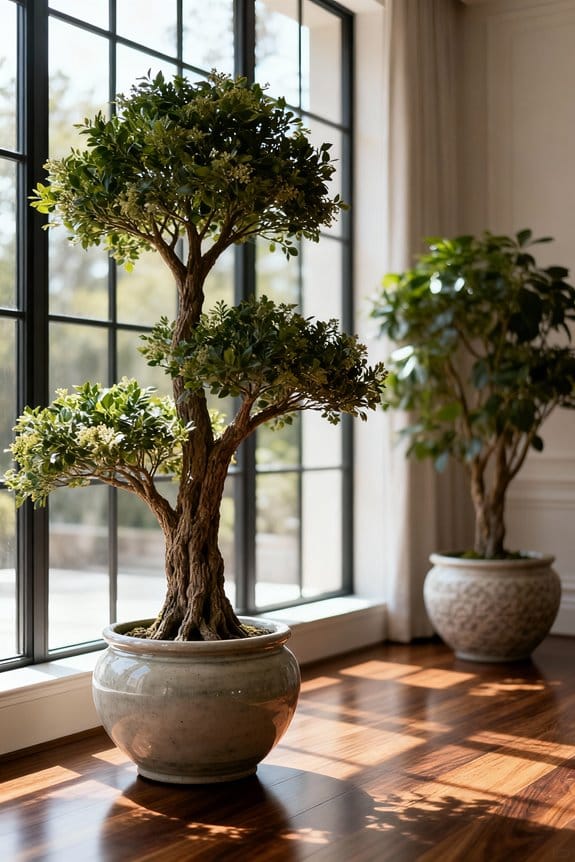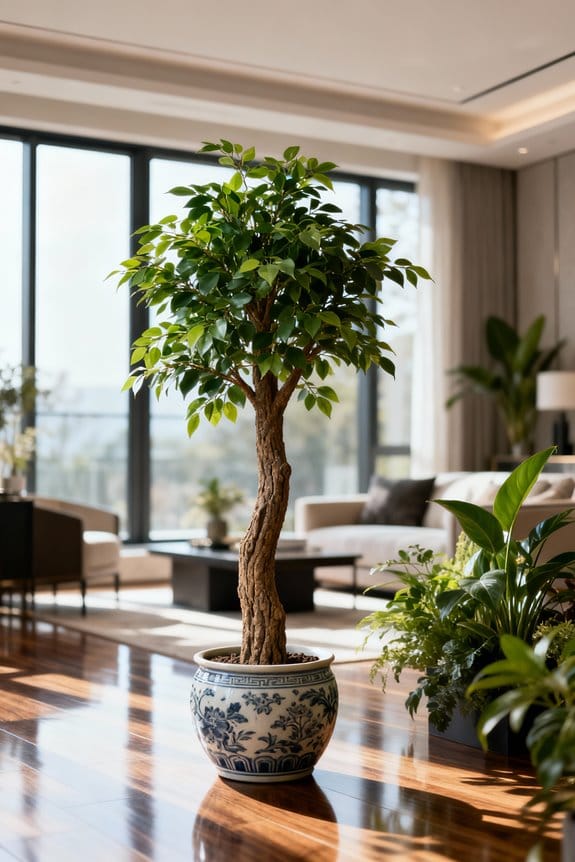
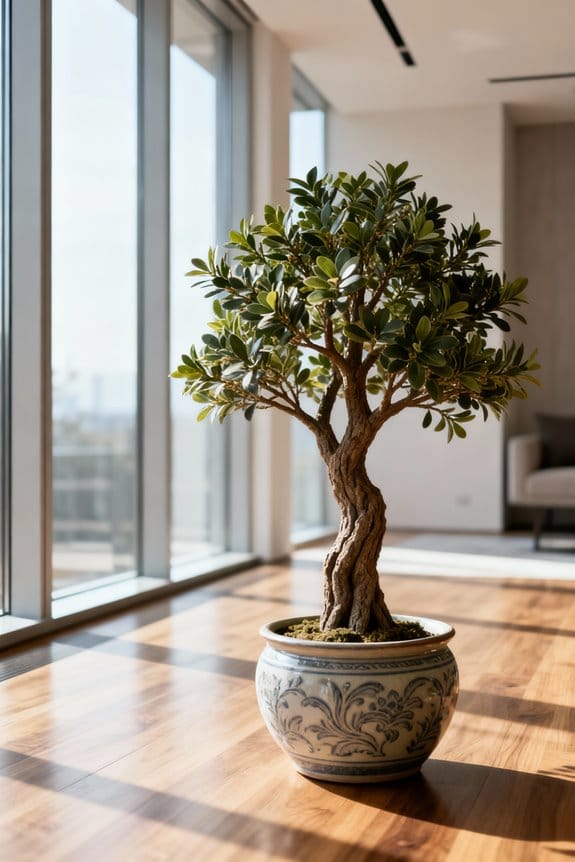

When picking faux indoor trees, materials matter more than you might think! 🌿 Leaves often use soft PE plastic for a real look, while cheaper PVC might fade faster. Trunks can be PE, fiberglass, or even real wood, though wood risks pests—yikes! Choose pots wisely too: ceramic feels classy but can be heavy, while resin is light and durable. UV-resistant plastics keep colors fresh, and fire-retardant options boost safety. Want to know how to spot the best combos for your space? Keep exploring!
Key Takeaways
- Polyethylene (PE) leaves offer realistic texture, durability, and UV resistance for long-lasting faux trees.
- Trunks use materials like PE plastic, PU plastic, real wood, or fiberglass for strength and natural appearance.
- Pot options include ceramic, cement, fiberglass, and resin, balancing aesthetics, weight, and durability.
- Fire-retardant and UV-resistant materials enhance indoor safety and prevent fading in sunlight-exposed areas.
- Avoid silk or rayon leaves and low-quality plastics, as they fade quickly and degrade, compromising look and sturdiness.
Common Materials in Faux Indoor Trees
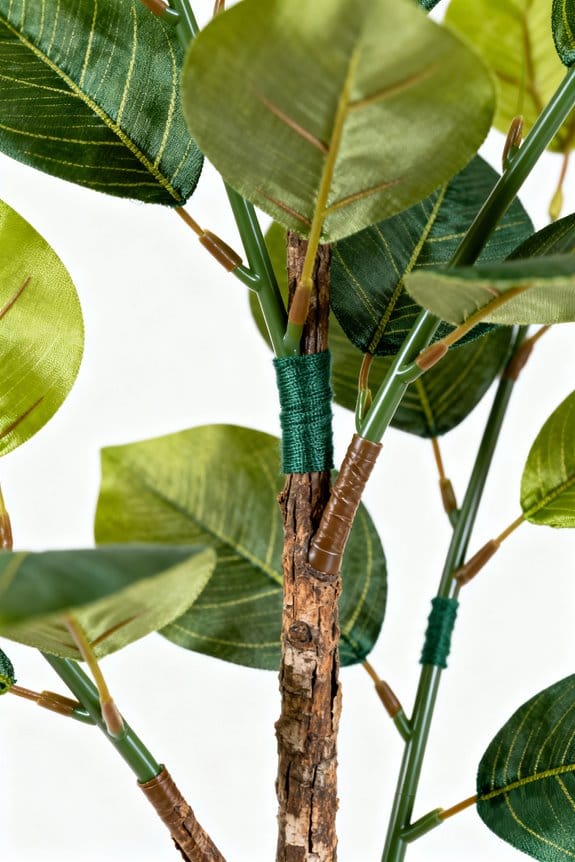
Materials matter a lot when picking a faux indoor tree, and knowing the basics can make your choice way easier! 🌿 Most fake trees use Polyethylene (PE) because it feels soft and looks super real, so your guests might even do a double-take. Polyethylene gives faux plants a realistic texture that’s hard to beat, making your space look naturally green without the fuss. You’ll also find some options made with Polyvinyl Chloride (PVC), which is stronger and cheaper but doesn’t always nail that life-like vibe as well as PE. If you want a high-quality artificial tree that’s soft to the touch and looks fresh all year, PE is usually the safer bet. Picking the right material means one less thing to worry about—unless you want your cat to try tasting it! Additionally, many high-quality artificial trees feature hand-assembled leaves to enhance their realistic appearance.
Characteristics of Plastic Components
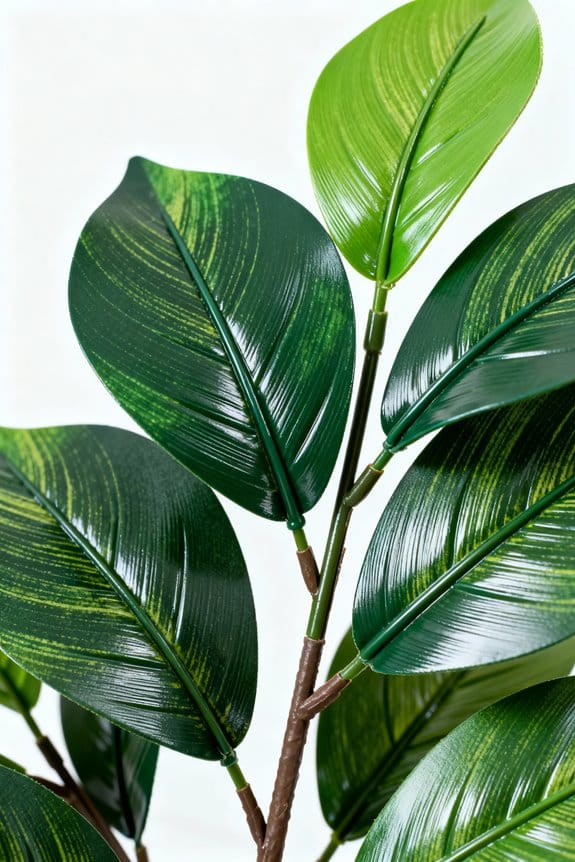
When you’re choosing a faux tree, you’re not just picking a leafy decoration—you’re getting a bunch of tiny plastic parts working together to look real! 🌿 Most of these pieces are made from types of polyethylene, like high-density (HDPE) or low-density (LDPE), which help the leaves feel soft but tough enough to last. These plastic plants offer great durability and keep their realistic texture over time, so your fake tree won’t suddenly look like it survived a dance party gone wrong. Plus, many use fire-retardant plastics, which is a smart safety feature if you want to avoid any indoor mishaps. The plastic also means you don’t need to water or fuss over it, making your life easier without sacrificing style! Many artificial trees incorporate flame-retardant PVC to combine safety with a lifelike appearance, enhancing their overall durability and look.
Fabric and Silk Alternatives for Leaves
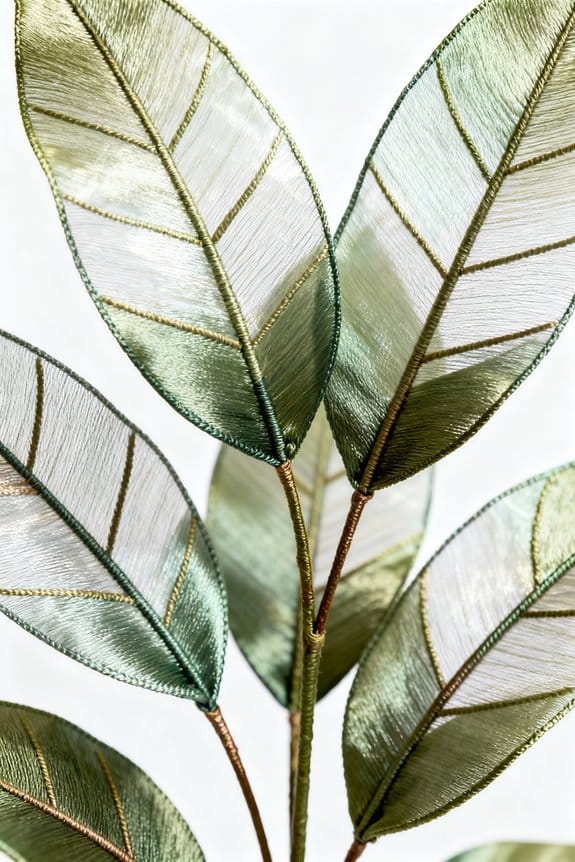
Picking the right fabric for your faux leaves can make all the difference between looking fake and feeling like you’ve got a little piece of nature inside! 🌿 Silk leaves, often made from rayon, are a popular choice because they’re super soft and look pretty realistic. But heads up, they can fade in sunlight and might be a bit flammable—so handle with care! Polyester fabric is a more durable alternative, keeping your foliage vibrant for longer without much fuss. If you need even more toughness, rubberized fabric blends the feel of real leaves with easier upkeep, perfect for busy spots. So, whether you choose silky softness or sturdy rubberized leaves, picking the right fabric can really elevate your indoor tree game! Many high-quality faux indoor trees feature UV-resistant leaves to help prevent fading and extend their lifespan indoors.
Exploring Trunk Materials and Their Properties
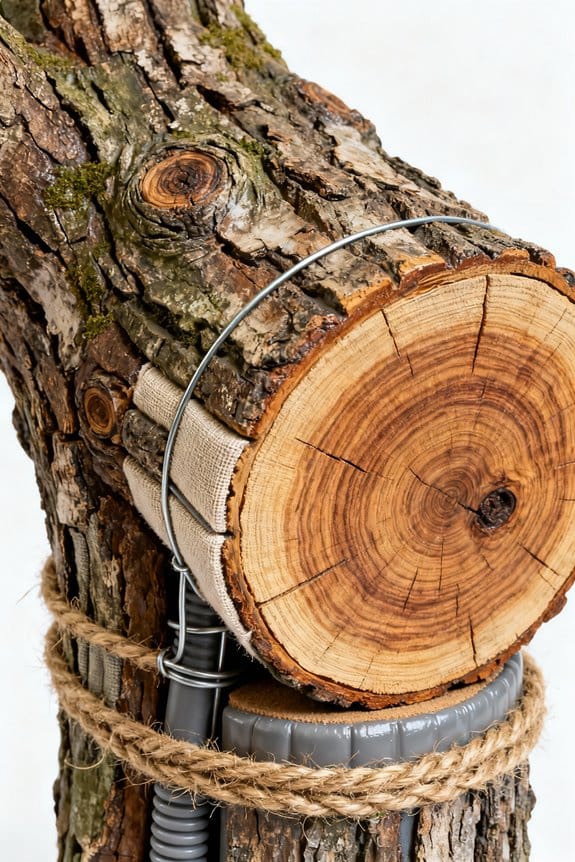
The trunk is basically the backbone of your faux indoor tree, and choosing the right one can make or break your leafy vibe! 🌳 You’ve got options like PE plastic, which is tough and a little flexible—perfect if you want something that looks real but can handle a few bumps. PU plastic offers a more lifelike look, though it’s not as sturdy, so be gentle! Real wood trunks bring authenticity but beware—they can attract mold and pests, so they need extra care. Fiberglass trunks are lightweight and strong, making them a durable choice, although they might cost you more. Picking the right trunk materials affects how stable and natural your tree feels, so it’s worth thinking through your space and lifestyle before deciding. Don’t worry; finding the perfect trunk is easier than assembling IKEA furniture! Many artificial trees also include metal trunk structures for added durability and stability in restaurant settings.
Various Pot Materials and Their Benefits
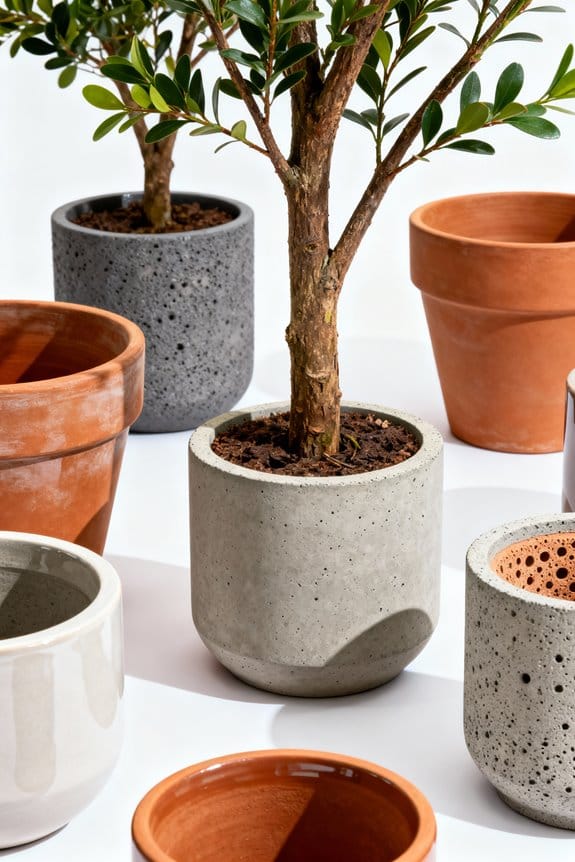
Trunks give your faux tree its strong, sturdy vibe, but without the right pot, it might just wobble like a jelly on a plate! 😅 Choosing the right pot isn’t just about looks—it’s about balancing style, weight, and durability to keep your tree happy and stable. Pot materials like ceramic pots bring a classy look, though they’re heavy and can break if dropped. Cement pots are solid and great for bigger trees, but your arms might complain when moving them! Fiberglass pots feel light and modern, plus they won’t crack easily. Resin pots are durable and can mimic natural textures, making them both tough and stylish. So, picking the right pot helps your tree stay grounded without turning your room into a juggling act! Planters with built-in drainage holes and rubber plugs also help maintain moisture control, ensuring durability and ease of maintenance.
Filling Materials Used for Stability and Aesthetics
When it comes to filling materials for your faux tree’s pot, stability and looks go hand in hand! 😊 You want something that keeps your tree steady without making it feel like you’re hauling a dumbbell around your living room. Common filling materials like foam and cement do the trick—they hold your tree firm and control weight so it’s not a workout. To boost visual appeal, adding realistic soil by painting the base black or using black mud helps conceal the bottom nicely. For extra charm, artificial moss offers a neat, low-maintenance way to mimic nature without fading like real moss might. Tossing in some rocks also helps with stability while making the base look natural. These simple touches make your faux tree feel right at home! Additionally, many faux olive trees come with weighted planters to ensure both stability and style without extra effort.
Branch and Stem Construction Techniques
Lots of folks don’t realize just how much goes into making a faux tree’s branches and stems look real and hold up well! 😂 You’ll find materials like plastic mixed with iron or steel wire to keep things bendy but sturdy, which means your tree can survive a few accidental bumps without turning into a sad, floppy mess. This clever branch construction blends flexible and durable parts, so branches don’t snap or droop easily. The stem material matters, too; PE plastic often gives a more lifelike appearance than stiffer PVC. High-quality artificial trees use varied textures and colors on branches to mimic nature closely. Sometimes, artisans even hand-wrap or mold branches for extra detail. So, your faux tree looks good and lasts long—pretty neat, right? Choosing a sturdy cement pot or planter is also essential for ensuring your faux tree stays stable and safe indoors, especially around children and pets, as noted in the planter style and material considerations.
Use of Fruits and Flowers in Artificial Trees
Adding fruits and flowers to artificial trees really boosts their charm and makes them pop! 🍎🌸 These little extras, usually made from plastic, foam, or silk-like polyester, bring color and life without any fuss. Synthetic fruits and artificial flowers enhance your tree’s look with vibrant colors and a realistic texture that’s surprisingly close to the real deal. Plus, they’re practically care-free—no watering or wilting here! These decorative uses let you switch up seasonal styles without much hassle. Just a heads-up: the best faux blooms often use polyester for a safer, less flammable feel, while UV-treated colors keep those bright hues from fading, even under bright lights. So, if your thumb’s a bit brown, adding these extras is an easy way to keep your trees lively and fun! Additionally, using UV-resistant foliage ensures these decorative elements maintain their vibrancy even in bright or sunny areas.
Durability and UV Resistance in Faux Trees
Faux trees can really brighten up a room, especially when they keep looking fresh year after year! 🌿 If you’ve ever bought a fake plant that faded or looked sad after a few months, you know the struggle. The durability of faux trees often depends on the materials used. High-density polyethylene (HDPE) shines here because it offers excellent UV resistance, so colors stay vibrant even in sunlight. Some synthetic plants include UV-stabilized coatings, which help prevent fading and extend their life—perfect if your space gets a lot of sun. On the other hand, cheaper materials like polyvinyl chloride (PVC) might not hold up as well, risking dullness and damage over time. So, choosing faux trees made with quality, UV-resistant materials saves you from that “yikes, it’s faded” moment! Additionally, weighted bases or durable pot materials enhance the overall longevity and stability of artificial trees, preventing tipping and extending their use indoors. This feature is especially important for larger artificial trees used in farmhouse pots.
Safety Considerations in Material Selection
When picking materials for your indoor faux tree, safety should definitely be on your radar! 🌳 You don’t want a beautiful plant that suddenly turns into a fire hazard or sneaks in harmful chemicals—yikes, right? That’s why choosing fire-retardant synthetic fibers is a smart move because some materials, like rayon in silk plants, can catch fire easily. Look for durable plastics like polyethylene (PE) and polyurethane (PU) for tree trunks—they stay safer than real wood and look real too. Plus, non-toxic fabrics free from harmful chemicals keep your space safe, especially if kids or pets hang around. Always check that the faux tree meets safety standards—think of it like a seatbelt for your décor: better safe than sorry! Many artificial rubber trees also feature flame-retardant properties that enhance overall safety.
Tips for Selecting the Right Materials for Your Space
Picking materials that fit your space perfectly can feel like a mini adventure in interior decorating! 🌿 You want leaves and branches that look real but won’t fall apart when you accidentally brush past them—trust me, that’s happened more than once in my house! When choosing artificial plants, go for materials like HDPE leaves for a realistic look that lasts. For trunks, PE or PU plastics are light and flexible, while fiberglass adds strength if that extra durability is key. Stability is a must, so pick pots with weighted bases, especially in busy indoor spots. Reinforced wire branches help keep everything upright without being stiff. Finally, avoid silk or rayon leaves—they fade fast and can be flammable. Opt for UV-treated plastics to keep your plants looking fresh and safe!
Frequently Asked Questions
What Is the Best Material for an Artificial Tree?
The best artificial foliage combines high-density polyethylene for durability and realistic appearance. Durability comparison favors HDPE, balancing environmental impact and low maintenance. Proper care extends life, making it ideal for both commercial and residential use.
What Are the Synthetic Materials in Artificial Trees?
Synthetic materials in artificial trees primarily include PVC and polyethylene, noted for realistic tree textures and longevity. A synthetic foliage comparison highlights PVC’s durability and flexibility, though environmental impact analysis raises concerns about its non-biodegradability.
Which Is Better Polyvinyl Chloride or Polyethylene Christmas Tree?
“Beauty is in the eye of the beholder.” Between indoor tree materials, polyethylene offers superior realism and lower flammability. PVC boasts durability and affordability but sacrifices appearance. Durability comparison, pricing differences, maintenance needs, and environmental impact also influence choice.
What to Know Before Buying an Artificial Christmas Tree?
When buying an artificial Christmas tree, one should consider tree height options, assembly ease, natural appearance, available storage solutions, and compatibility with seasonal decorations to guarantee convenience, aesthetic appeal, and practical use during the holiday season.