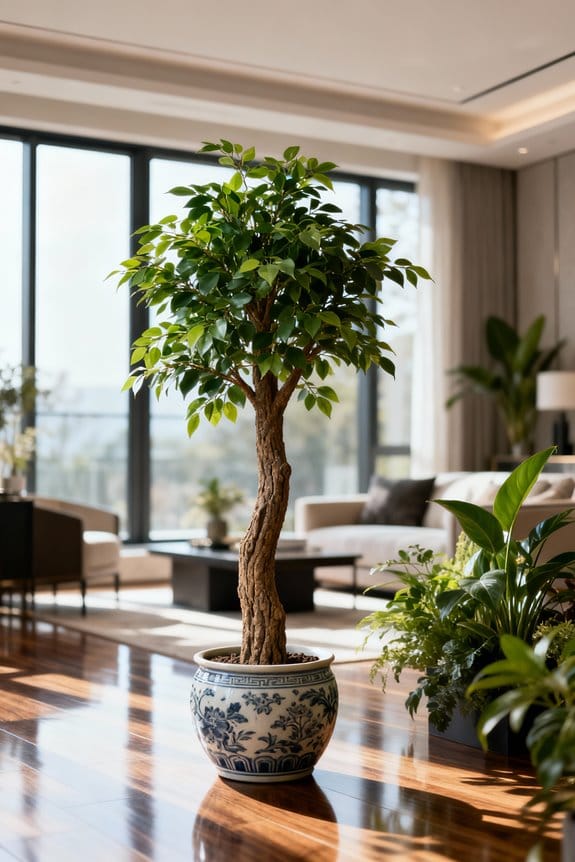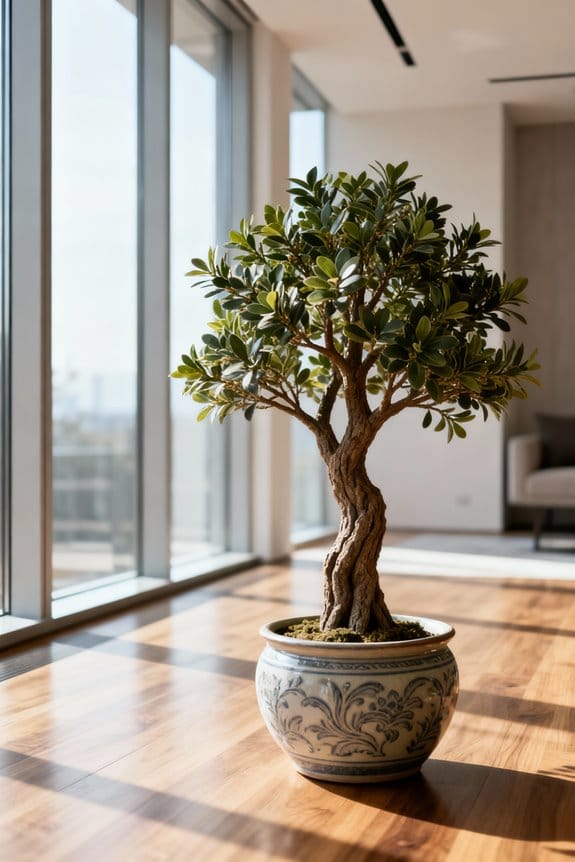
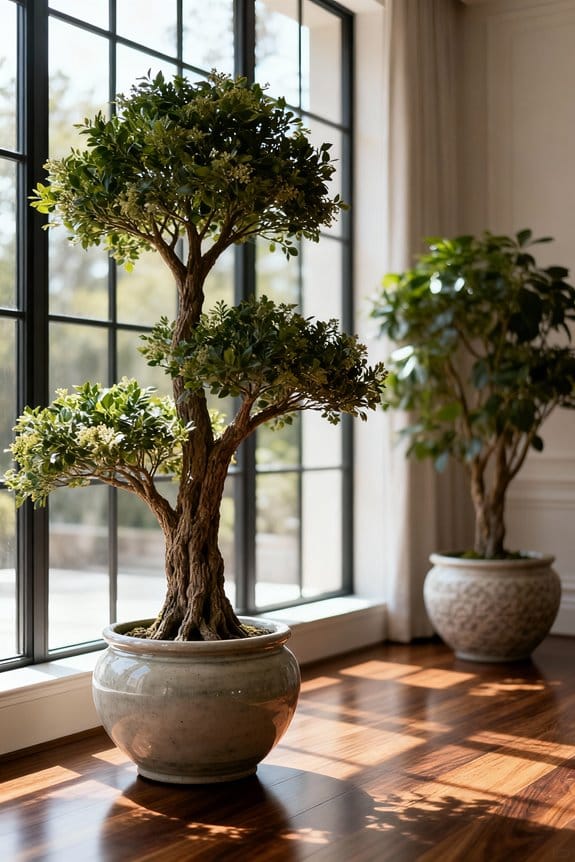

Thinking about real vs. faux indoor trees? Real trees boost air quality and bring fresh scents but need watering, light, and some patience—kind of like having a low-key green buddy! 🌿 Faux trees are easy, no-mess, and good if allergies bug you, but their carbon footprint is bigger, and they often end up in landfills. Both have perks, depending on your vibe. Stick around to get the scoop on which fits your space best!
Key Takeaways
- Real trees improve air quality, boost humidity, and provide natural scent, enhancing indoor environment and well-being.
- Faux trees require no maintenance, thrive in low light, and are allergy-friendly, offering convenience and durability.
- Real trees need regular care, watering, pruning, and sufficient sunlight, which may not suit busy lifestyles.
- Faux trees have a lower immediate maintenance burden but often contribute to landfill waste as recycling is challenging.
- Choosing depends on preference for authentic sensory experience and sustainability versus ease and long-term cost-effectiveness.
Environmental Impact Comparison
When it comes to choosing between faux and real indoor trees, the environmental impact is definitely worth thinking about! 🌿 Real trees are like tiny superheroes for your air—they filter out yucky toxins and give you fresh oxygen, which feels pretty great when you’re stuck inside. Unlike artificial Christmas trees, which are mostly made from PVC and have a bigger carbon footprint thanks to manufacturing and shipping, real Christmas tree farms often practice sustainability. These farms help preserve ecosystems by storing carbon and supporting habitat restoration. Plus, when you’re done with a real tree, you can recycle or compost it, which gives back to nature. Artificial trees, on the other hand, usually end up in landfills because recycling them isn’t easy. So, real trees win on air quality and being eco-friendly! However, faux trees offer maintenance-free greenery, requiring no water or sunlight, which can reduce environmental impact in terms of resource consumption.
Advantages of Real Indoor Trees
Although some might overlook them, real indoor trees can do more than just brighten up a room—they actually work hard behind the scenes to make your air cleaner and your space cozier! 🌱 You might notice that having a live tree around boosts the humidity, which is great if your skin or nose is feeling dry during those long winter months. Real indoor trees improve air quality by filtering toxins and pumping out fresh oxygen—kind of like your own natural air purifier. Plus, their natural scent and visual appeal add a sensory richness that fake trees just can’t match. Taking care of these green friends also encourages mindfulness and emotional well-being. Bonus: buying real indoor trees helps support local agriculture and community sustainability, so you’re doing good in more ways than one! However, unlike artificial trees which require no upkeep, real trees generally need regular watering, pruning, and suitable light conditions to thrive, making maintenance and care a significant consideration.
Advantages of Faux Indoor Trees
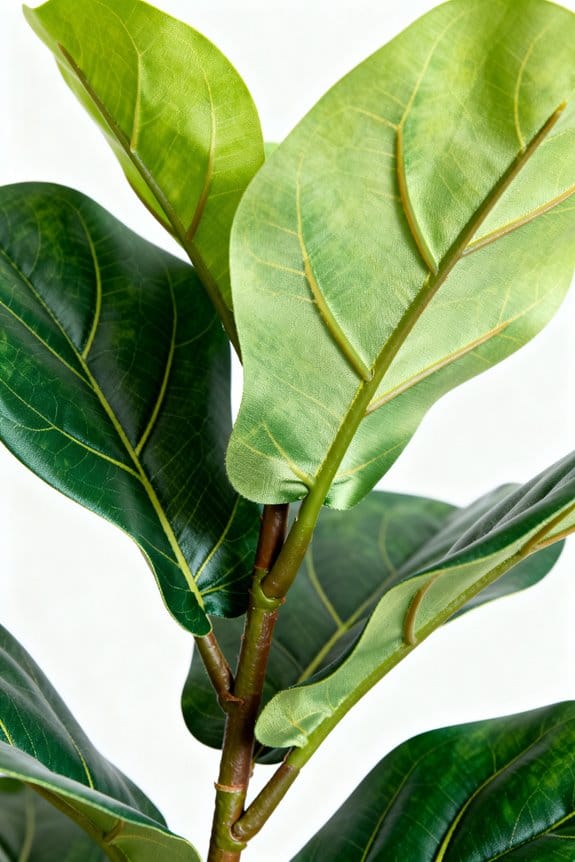
Faux trees’ biggest win is their super low maintenance, which is perfect if you’re juggling a busy life or have a notorious black thumb like me! 🌿 You don’t need to worry about watering, trimming, or watching for pests—these trees happily stay lush and green no matter what. The advantages of faux indoor trees go beyond ease; they thrive in low lighting where real plants might droop, so your space looks fresh year-round. They’re allergy-friendly too, producing zero pollen or sap, which is great if you or visitors are sensitive. Made from high-quality materials, these faux trees can look impressively real. Economically, they might cost more upfront, but they’re smart investments that save you from constant replacement and upkeep over time! Many faux trees also come with sturdy planters that ensure stability and safety, especially in homes with children and pets.
Challenges of Maintaining Real Indoor Trees
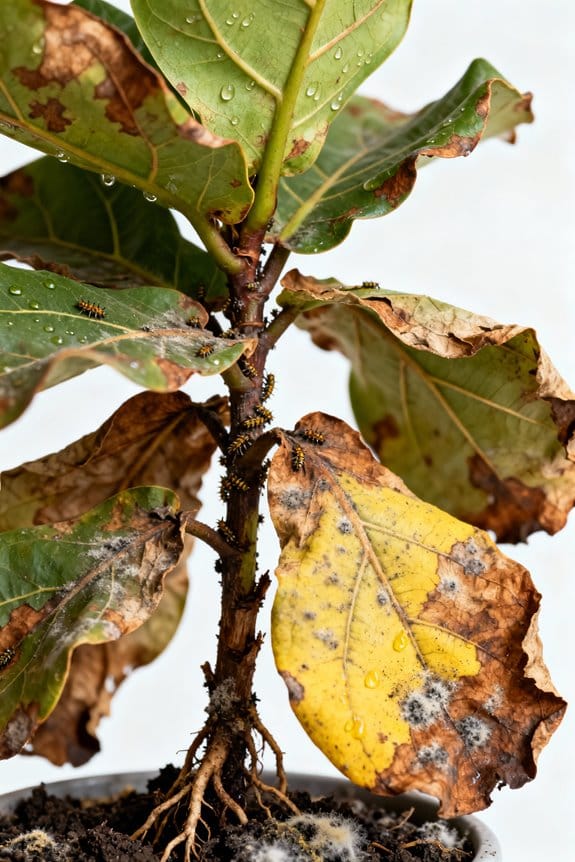
Taking care of real indoor trees can quickly become a full-time hobby if you’re not careful! 🌱 These green pals need regular watering, watching out for pesky bugs, and the right amount of sunlight—too much or too little can really stress them out. The maintenance isn’t just about watering; you also have to keep an eye on pests that love to invade your tree’s space. Lighting conditions play a huge role, so finding the perfect sunny spot is key. Overgrowth can sneak up on you, making pruning a must to keep your tree looking sharp. Plus, if you’re sensitive, allergies can pop up thanks to pollen or fragrances. So, while real indoor trees bring life, their care definitely demands time and patience! Alternatively, many people choose artificial plants to enjoy greenery without ongoing care.
Considerations for Choosing Between Real and Faux Trees
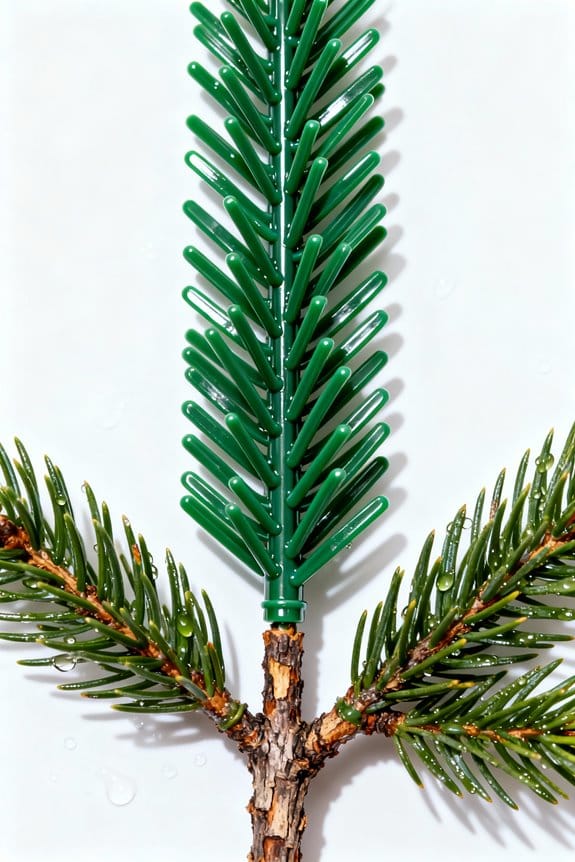
Now that the challenges of keeping real indoor trees alive and happy are clear, it’s time to weigh your options when choosing between real and faux trees. Real indoor trees boost air quality and bring that fresh, natural vibe you just can’t fake—plus, they smell amazing! But, let’s be honest, maintenance isn’t for everyone. If you’re forgetful like me, faux trees offer serious convenience: no watering, no sunlight worries, and minimal cleaning (though yes, they do collect dust!). Plus, real trees often support sustainability and local growers, which feels pretty good. So, if you love the sensory experiences and can handle the care, go real. But if you want easy decor without the fuss, artificial trees could be your new best buddy. Either way, you’ll add life to your space! 🌿😅 Faux trees with a weighted base provide enhanced stability, making them a safe and practical choice for busy indoor areas.
Frequently Asked Questions
What Are the Disadvantages of Artificial Trees?
Artificial trees often lack aesthetic appeal and realism, require maintenance for dust, have environmental impact due to production, pose allergen and safety issues, differ in cost and lifespan, disregard seasonal changes, and may present weight considerations.
What Is Better, a Real Tree or a Fake Tree?
Choosing between real and fake trees mirrors selecting a living symphony or a timeless sculpture: real trees offer authentic aesthetic, air benefits, and nurturing joy; fake ones excel in installation ease, style versatility, low maintenance, and allergy considerations, impacting cost, weight, and environment differently.
Are Fake Indoor Plants Tacky?
Fake indoor plants are not inherently tacky; their artificial aesthetics depend on plant realism and quality. They offer cost effectiveness, eliminate allergy triggers, and reduce maintenance concerns, though cleaning needs, longevity issues, environmental impact, and seasonal trends affect home decor choices.
Do Fake Plants Bring Negative Energy?
Fake plants do not inherently bring negative energy; their impact on energy levels and indoor ambiance depends on spiritual beliefs, emotional impact, psychological effects, and mindfulness practices. Decorative choices and air quality also influence perceived stimulation sources and plant aesthetics.