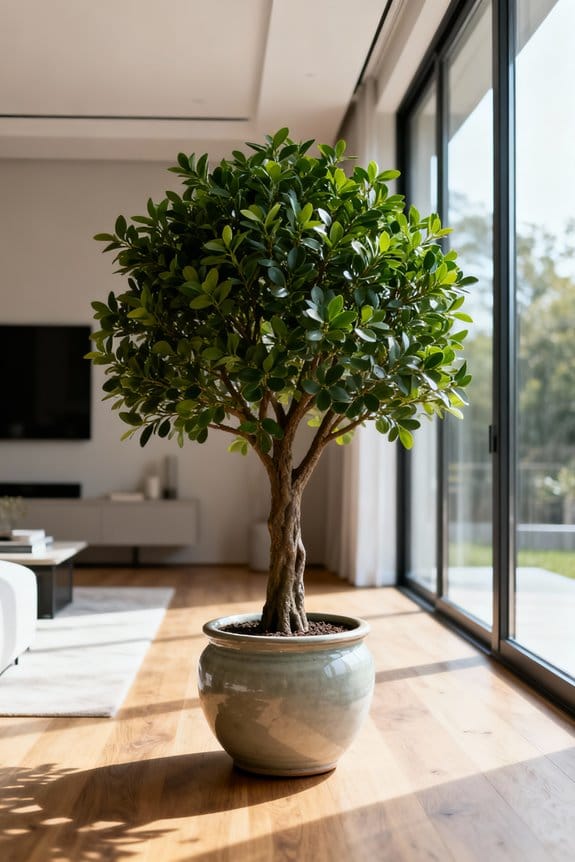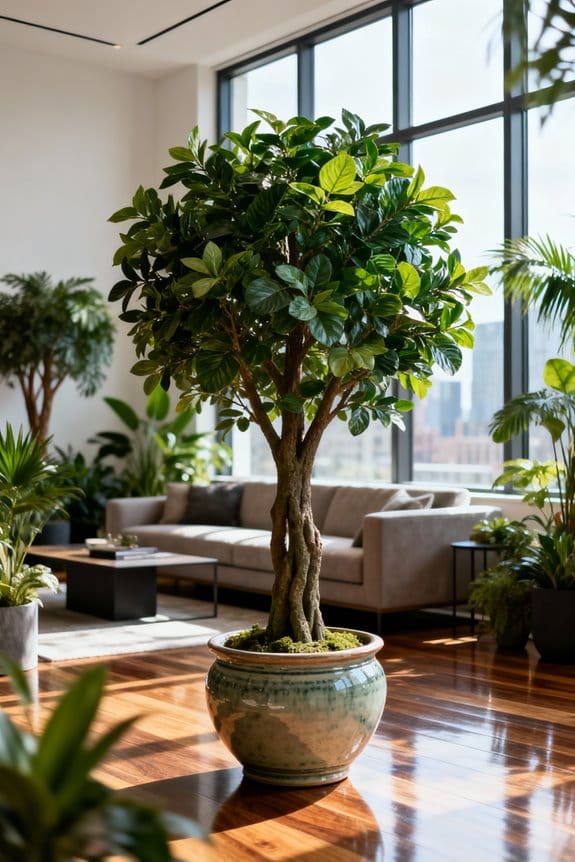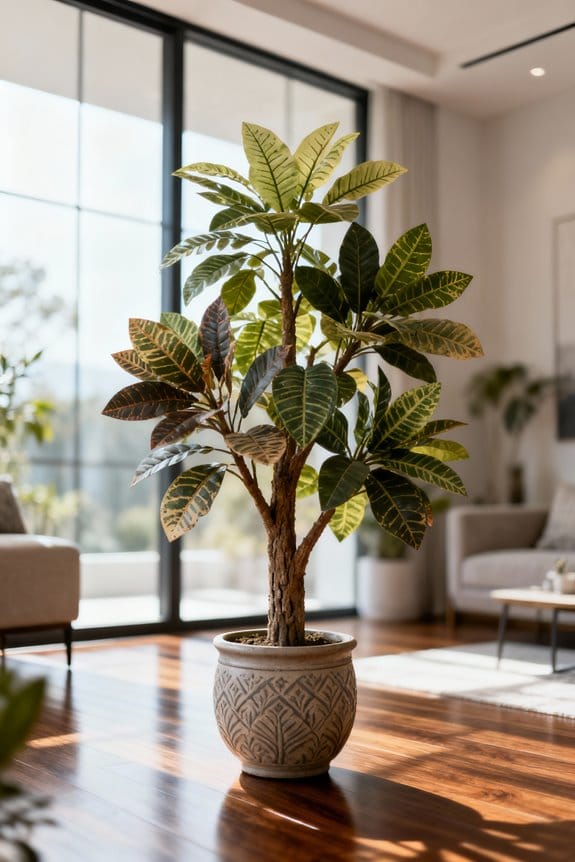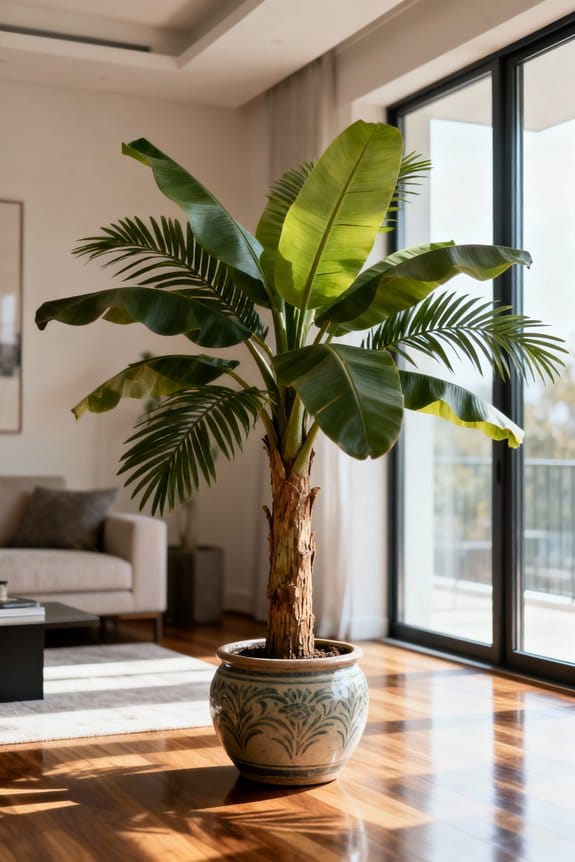
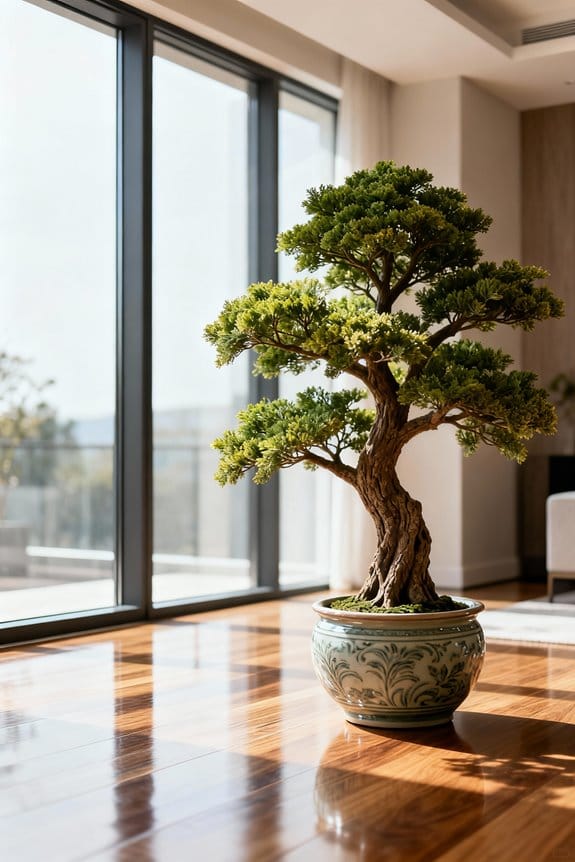

When picking faux trees, interior stylists hunt for ones that skip the fake plastic glare and feel more like real trees 🌿. They check for natural leaf shapes and textures, avoid too-smooth branches, and prefer sturdy materials like PE or silk. A good planter adds balance, and cozy lighting highlights the tree’s charm. You want your tree to fit your space without looking like a stage prop! Curious about making your room pop? Keep going!
Key Takeaways
- Interior stylists prioritize realism, focusing on varied leaf textures, natural colors, and irregular branch structures for authenticity.
- They consider material quality and durability to ensure the faux tree withstands environmental conditions and maintains its appearance.
- Stylists assess the tree’s scale and proportion relative to the room to create balanced and visually appealing arrangements.
- The compatibility of the planter and decorative accessories with the tree and room style is crucial for cohesive design.
- Lighting effects and branch flexibility are evaluated to enhance the tree’s natural look and allow customization of its shape.
Importance of Realism in Faux Tree Selection
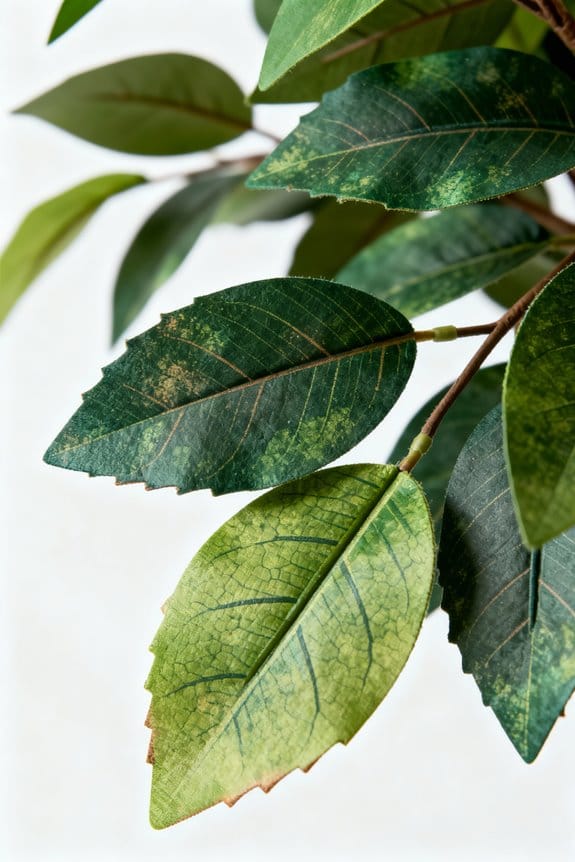
Why does realism matter so much when picking faux trees? Well, you want your space to feel cozy and natural, not like a fake jungle, right? Realistic faux trees nail this by using materials like PE or silk that don’t look shiny or plastic-y—because shiny is a dead giveaway! Plus, the leaves shouldn’t all look the same; they need different shapes, sizes, and vein patterns to trick your eye into saying, “Wow, that looks real!” Don’t forget the trunk and branches, either—the more irregular and natural, the better the authenticity. When you find a faux tree that gets these details right, it really adds life to your room without the fuss of watering. So, go for realistic—it’s worth the extra effort! 🌿 Many high-quality faux trees also come with adjustable branches to help you customize their look perfectly to your space.
Leaf Texture and Color Variations
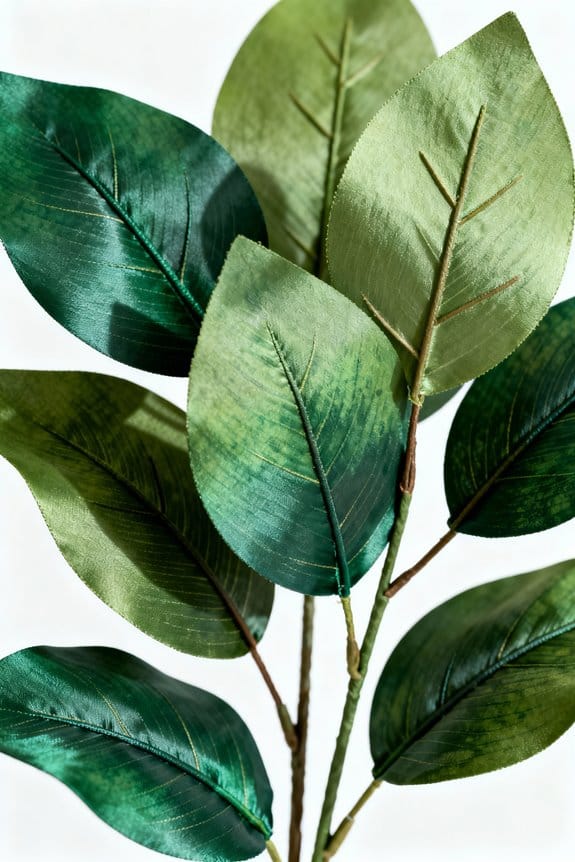
Although it might seem like just leaves are leaves, the texture and color differences truly change the whole look of a faux tree! When you pick artificial plants, paying attention to leaf texture and color variations is key. You want leaves that show natural vein patterns and a mix of shiny and matte finishes—this combo keeps things from looking flat or fake. Plus, having different leaf sizes and shapes adds interest, so your faux tree won’t scream “plastic!” Materials like PE or silk nails it for realistic colors and textures, perfect if your space needs that cozy vibe. Mixing smooth and textured leaves also helps create a lively, natural feel. Honestly, it’s like giving your tree a little personality instead of a stiff, “I’m fake” stare! 🌿 Additionally, selecting materials with visible veins and multiple shades enhances the lifelike appeal of the leaves and overall tree design.
Trunk and Branch Structure Authenticity
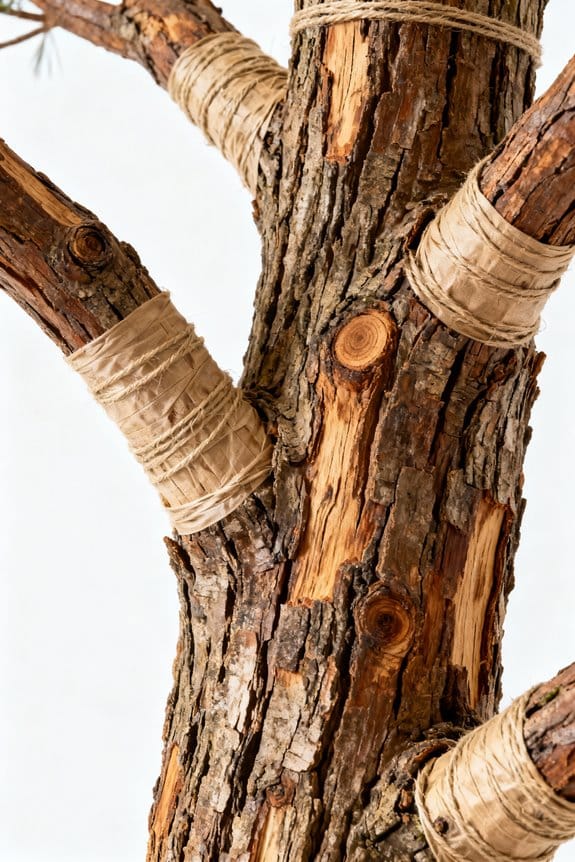
The trunk and branches are like the backbone of your faux tree, giving it character and life! When you look for good trunk structure, keep an eye out for irregular shapes and uneven spacing between branches—that’s branch authenticity in action! Real trees aren’t perfect, so if your faux option has uniform, smooth branches, it might scream “fake.” 😉 To boost visual realism, choose trunks with textured surfaces and color variations that mimic real bark. Materials like bendable PE plastic can add that organic touch you didn’t know you wanted. Also, branches that vary in length and thickness make your tree feel more natural and less like a plastic sculpture. Basically, aim for flaw-filled beauty—because nature’s messiness is what makes it charming! 🌿 Additionally, considering durable construction with UV protection can help maintain that authentic look even in sunlight exposure.
Material Quality and Durability Considerations
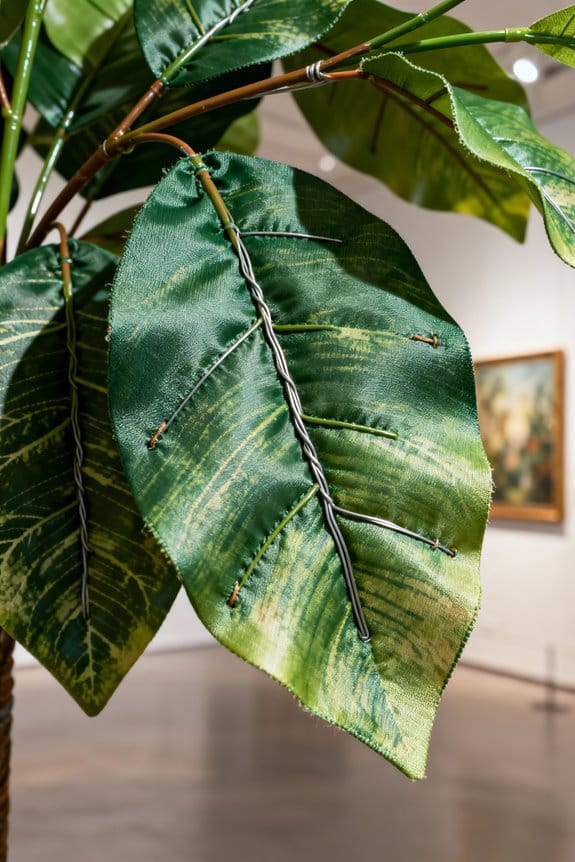
When picking a faux tree, paying attention to material quality and durability really makes a difference in how natural it looks and holds up over time! 🌿 You’ll want to go for materials like PE and silk—these give that soft, real-feeling texture that keeps your tree looking fresh, even years later. Plus, bendable, soft leaves add a lifelike touch that’s great when friends get curious and give them a little poke (I promise I’m not the only one!). Durability matters because your faux tree should stand up to humidity and daily life without turning into a sad plastic mess. Also, opting for non-toxic synthetic blends means your home stays safe for pets, which is a win-win. With the right pick, your faux tree might last 6 to 10 years—like a trusty green buddy! 🌱 Including built-in cement beds in the base design enhances stability and prevents tipping over.
Choosing Appropriate Planters for Stability and Aesthetic
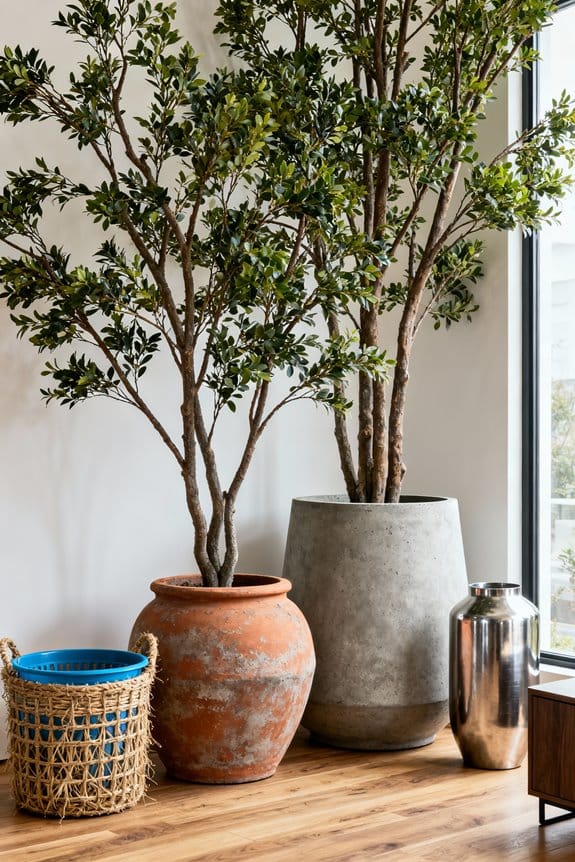
Picking the perfect planter for your faux tree is way more important than most people realize! 🌟 Heavier options like ceramic, terracotta, or even woven baskets can keep your tree from awkwardly tipping over just when you’ve got guests over (true story—I’ve been there). When choosing planters, it’s key to match the size to your tree’s height and spread so everything looks balanced and intentional. For taller trees, weighted planters or adding some stabilizing stuff inside can boost both stability and aesthetic. Plus, picking a planter that fits your room’s style helps pull the whole look together. So, don’t just grab the first pot you see—think about weight and style to keep your space safe and stunning! Most quality artificial trees also come with recommendations for sturdy, neutral-toned pots that complement modern decor.
Incorporating Natural Elements Around the Base
Stabilizing your faux tree with a sturdy planter is a great start, but adding some natural elements around its base can take your setup from “nice” to “wow!” 🌿 Imagine covering the bare pot with smooth river stones or bark chips to hide any plastic parts—that instantly makes the whole thing look more real and cozy. Toss in some preserved moss to blend the tree’s base with your space, upping its visual appeal effortlessly. These natural elements not only disguise plastic bits but also add texture and even help keep your tree steady (because who needs a tipping tree, right?). The trick is to create a little “lived-in” vibe that feels fresh and pulled together, making your faux trees look just as inviting as the real deal! Choosing a tree with a solid, weighted base enhances both stability and safety, especially in homes with pets or children.
Strategic Grouping and Placement for Visual Impact
Although arranging faux trees might sound straightforward, grouping them thoughtfully can really elevate your space without turning it into a jungle disaster! 🌿 Start by mixing trees of different heights and leaf shapes—that contrast makes your setup look natural and lively instead of fake and lonely. Strategic grouping like placing taller trees in the back and shorter ones up front adds depth and lets each plant shine. Don’t be shy about mixing in some artwork or furniture nearby; it helps your faux trees stand out but still feel part of the room. And the placement near windows or focal points? Super important! It makes sure your greenery actually gets noticed and brings good vibes to your space instead of just looking like forgotten plastic. Easy peasy, right? Remember, choosing faux trees with UV-resistant finishes ensures your display will stay vibrant over time without fading.
Balancing Scale and Proportion Within a Space
Even when you really love a super tall or bushy faux tree, it’s important to think about how it will fit in your room without making everything look cramped or weirdly spaced! 🌳 You want your greenery to feel like it belongs, not like it’s trying too hard to be the star of the show. Paying attention to scale means choosing faux trees that match your room’s size and your furniture’s height. A good tip? Taller trees should reach about two-thirds up your wall for balanced proportion. Mixing small and large faux trees keeps things lively and prevents one plant from stealing all the attention. Remember, your tree should fit smoothly into your space without blocking walkways or light—no one wants to bump into greenery on their way to the couch! Additionally, considering branch flexibility allows you to customize the tree’s shape for better integration in your space.
Enhancing Ambiance With Lighting and Accessories
Picking the right faux tree is a great start, but you can really make it shine with some smart lighting and cute accessories! 🌟 Uplighting, for instance, casts cool shadows that add depth and make your room feel warm and inviting—kind of like giving your tree a little spotlight moment. Placing uplights carefully brings out the textures and colors, making your faux trees look even more real and cozy. Don’t forget about decorative accessories like unique planters, rocks, or moss—they tuck your tree right into the room’s vibe without stealing the show. And hey, adding nearby candles or artwork can boost the look, too. If you’re forgetful like me, timers for uplighting keep the magic consistent while you enjoy your beautifully lit space effortlessly! Choosing faux trees with adjustable branches makes it easier to style them precisely with your lighting setup and accessories.
Frequently Asked Questions
What Is the Most Low Maintenance Indoor Tree?
The most low maintenance indoor tree is often an artificial variety, offering pet friendly choices that require no watering or sunlight. These options adapt to various climate considerations, providing consistent aesthetic appeal without seasonal changes or upkeep demands.
Do Interior Designers Use Fake Plants?
Like a painter’s palette, interior designers embrace artificial greenery benefits to blend style and practicality. They appreciate realistic plant aesthetics and enjoy styling faux botanicals, creating vibrant spaces without the hassle of upkeep or fading life’s colors.
What to Look for When Buying Fake Plants?
When buying fake plants, one should prioritize realistic textures that mimic natural foliage, guarantee color consistency to avoid unnatural uniformity, and maintain aesthetic balance by selecting shapes and sizes that harmonize with the surrounding decor and space.
Are Faux Plants in Style in 2026?
Faux plants remain highly stylish in 2026, disproving beliefs they’d fade. Their trending plant styles, eco-friendly options, and design versatility make them indispensable, aligning with sustainable décor trends and appealing to modern interior aesthetics effortlessly.