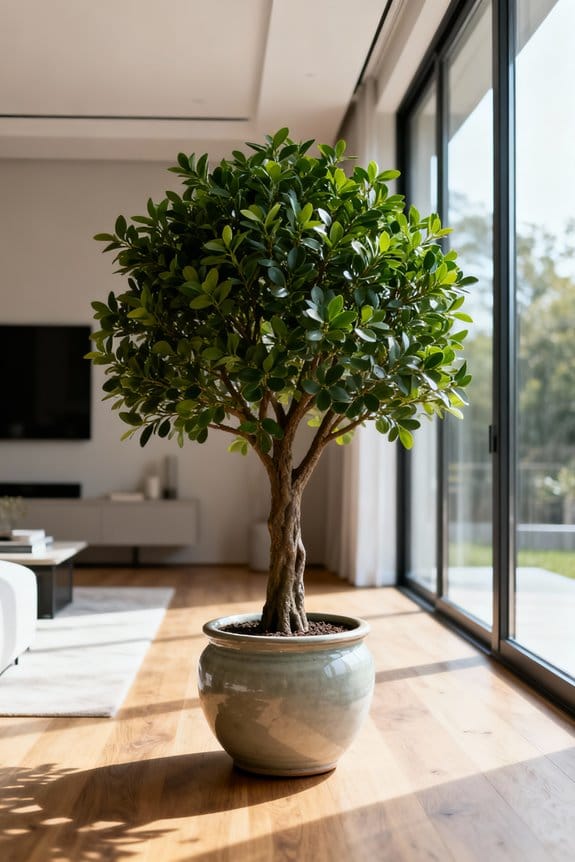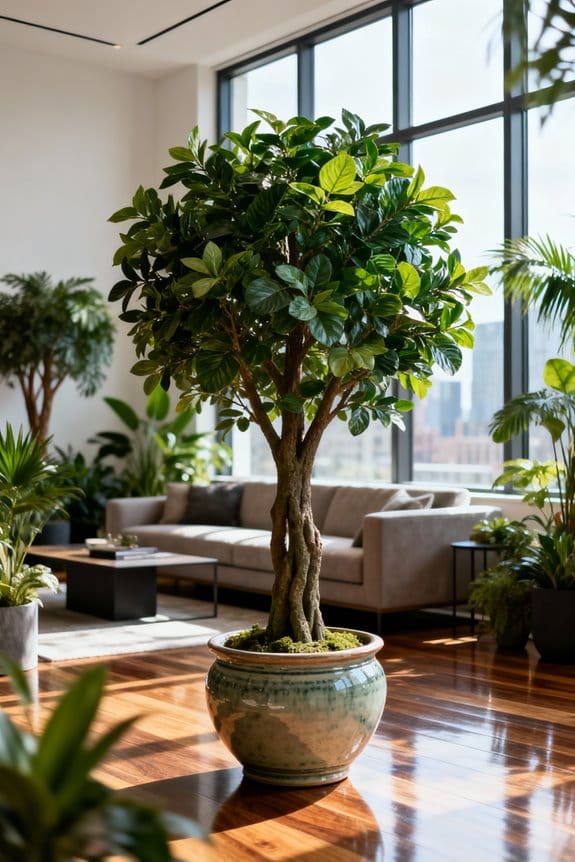
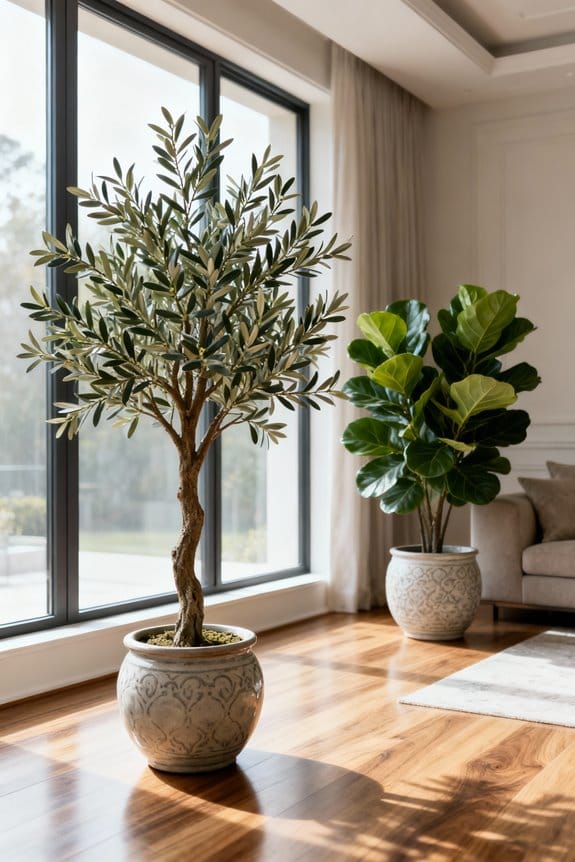

Choosing between an Olive Tree and a Fiddle Leaf Fig depends on your space and care vibe! Olive Trees love direct sunlight and grow smaller, perfect for sunniest spots, while Fiddle Leaf Figs prefer bright, indirect light and can reach tall heights, making them great statement pieces. Both need some watering but stay pretty chill with a little attention. If you want easy green with style, one of these might just fit your interior perfectly—there’s plenty more to explore on making them work for you! 🌿😊
Key Takeaways
- Olive Trees suit smaller spaces with their upright shape and need 6-8 hours of direct sunlight, ideal for bright, sunny spots.
- Fiddle Leaf Figs demand bright, indirect light, grow up to 10 feet, and fit spacious areas with a bushy, rounded top.
- Olive Trees require minimal pruning and infrequent watering, making them easier to maintain than Fiddle Leaf Figs.
- Fiddle Leaf Figs benefit from regular watering and humidity, enhancing lush leaf glossiness but needing more care.
- Faux versions of both plants offer low-maintenance greenery, perfect for those prioritizing style without the care demands.
Characteristics of the Olive Tree
Imagine bringing a little Mediterranean sunshine into your home—that’s exactly what an Olive Tree can do for you! 🌿 This beautiful plant features silvery-green leaves that are delicate but full of charm. If you’re not ready to commit to the real deal, a faux olive tree is a low maintenance way to add that same chic vibe without any watering headaches. Real Olive Trees have glossy leaves that shimmer in bright, direct sunlight and thrive with just six hours of light daily. They’re drought tolerant, so even if you forget to water once in a while, the tree will forgive you. Whether in a traditional or modern space, the Olive Tree brings just the right touch of elegance and calm to your interior (and, who doesn’t need that?). Plus, faux olive trees require no watering or sunlight and only occasional dusting to maintain appearance.
Features of the Fiddle Leaf Fig
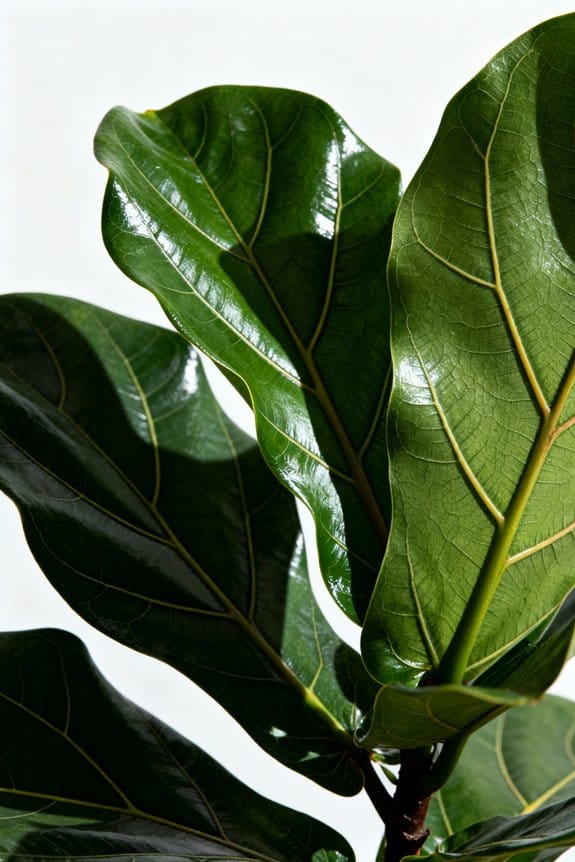
The Fiddle Leaf Fig is like that show-stopping friend who walks into the room and instantly grabs your attention with its big, glossy leaves! 🌿 You’ll want to place it somewhere bright but without harsh sunlight—it thrives in indirect light, kind of like the perfect spot by your window where morning sun filters in gently. Whether your space is big or small, this plant fits beautifully, adding a bold splash of green that’s hard to ignore. It loves regular watering and a bit of humidity, so don’t forget to check those leaves—they’ll let you know if they’re thirsty. The Fiddle Leaf Fig’s dramatic look makes it perfect for modern or tropical interiors, turning any corner into a lush, eye-catching spot without much fuss! Healthy live specimens typically have glossy leaves and firm trunks, indicating good care and vitality.
Light Requirements for Both Plants
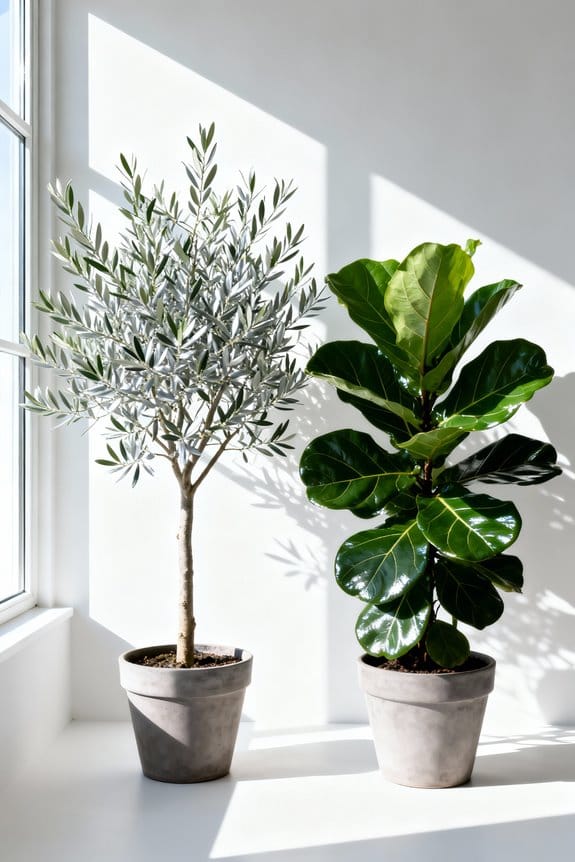
Although both plants enjoy sunlight, they actually have pretty different needs when it comes to light! 🌞 Your Fiddle Leaf Fig is a bit of a diva—it prefers bright, indirect light where it can soak up plenty of rays without getting burned. Think of it like a palm tree lounging under filtered skies. On the other hand, the Olive Tree is far more adventurous; it thrives in bright, direct sunlight, needing about 6-8 hours of sun daily to work well. Placing the Olive Tree near south-facing windows gives it a sunbath it loves, while your Fiddle Leaf Fig prefers that same spot but with a little shield from harsh rays. Getting this right helps both plants stay happy and healthy—you don’t want your Fiddle dropping leaves or your Olive tree looking sad! For those looking for easy-care alternatives, UV-rated faux palms provide a realistic tropical vibe without the fuss of managing light requirements.
Watering and Care Tips
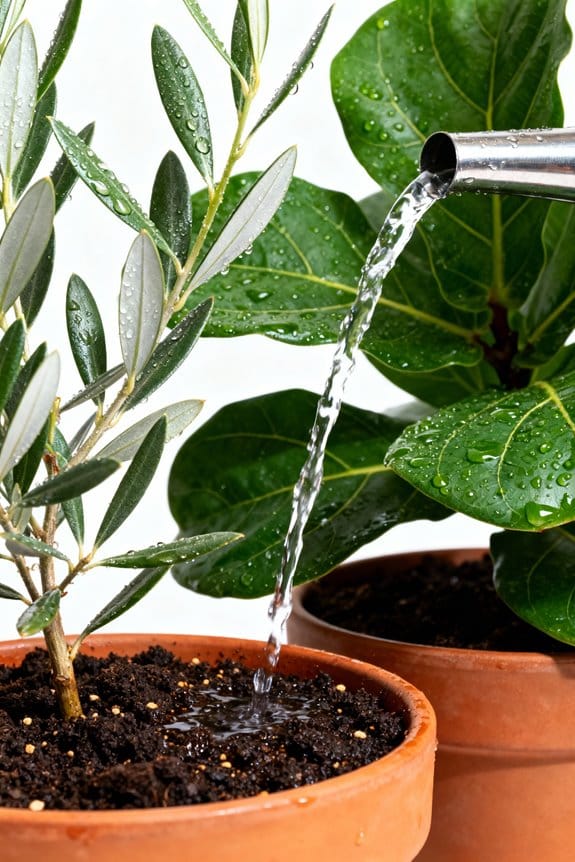
When it comes to watering your Fiddle Leaf Fig and Olive Tree, knowing their very different thirst levels can save you from some serious plant parenting headaches! 🌿 Your Fiddle Leaf Fig likes a good drink but hates sitting in soggy soil—it’s best to let the top inch dry out before the next watering. These guys also love higher humidity needs, so misting or a humidity tray helps them feel pampered. Olive Trees, on the other hand, are way more chill and prefer dry soil; water only when it’s bone dry to keep them happy. Both plants enjoy regular fertilization schedules—every 6 to 8 weeks—but the fertilizers differ, so make sure you choose the right one. Trust these watering techniques to keep your leafy friends thriving without the stress! Additionally, many artificial versions of these trees come in stylish white planters that require no watering or care at all, offering a hassle-free decor alternative.
Growth Patterns and Size Considerations
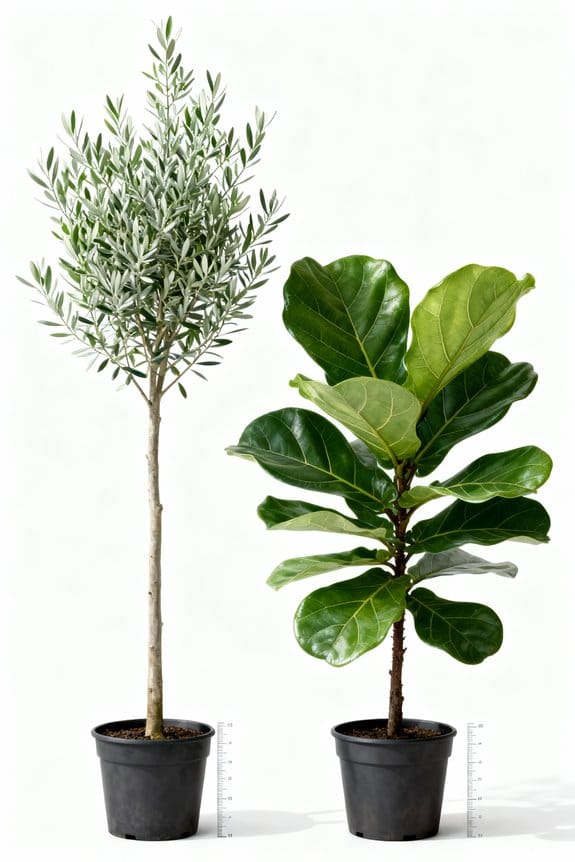
Figuring out how much space your plants will need next is almost as important as keeping their watering just right! 😊 Your Fiddle Leaf Fig can shoot up to about 10 feet indoors, so you’ll want to give it plenty of room to spread those big, dramatic leaves. Its growth habits create a bushy, rounded top, making it a bold interior impact that fills a spacious corner nicely. On the other hand, Olive Trees usually stay between 2 to 4 feet tall and have an upright, airy shape. They’re great if you need size compatibility with smaller areas since their slender branches don’t crowd a room. Plus, Olive Trees don’t demand much pruning, so they’re an easy way to add charm without taking over your space!
Design Styles Each Plant Complements
A couple of plants can totally change the vibe of your room, and the Fiddle Leaf Fig and Olive Tree each bring their own style magic! 😊 The Fiddle Leaf Fig’s big, glossy leaves scream modern or tropical vibes, making it great if you want a bold, eye-catching piece. It adds a strong texture contrast and boosts vertical interest, perfect for creating design balance in cozy spots. Meanwhile, the Olive Tree’s soft, silvery leaves bring subtle elegance, blending beautifully with Mediterranean or minimalist spaces. Its gentle color harmony helps you keep things calm and chic. Both plants really lift your space differently—one for drama, the other for refined charm—so pick based on what mood your room needs! Trust me, your interior will thank you. 😉 Artificial plants like lifelike indoor lemon trees are also a great option if you want the greenery without the maintenance.
Maintenance Levels and Lifestyle Fit
How much effort are you really ready to put into your plant parenting? 😊 The Fiddle Leaf Fig can be a bit of a high-maintenance diva, needing regular watering and attention to humidity, so it suits folks who don’t mind a hands-on approach. When it comes to plant ownership, doing a quick lifestyle assessment helps—if you’re often busy or forgetful, the low-maintenance Olive Tree might be your best buddy. This resilient plant thrives with less water and prefers direct sunlight, fitting well with various maintenance preferences. So, if you want a pretty plant but aren’t keen on daily care, the Olive Tree’s elegance and toughness are perfect! Choosing between these plants is really about matching their needs to your life, not just your style! For those seeking no-fuss greenery alternatives, artificial eucalyptus trees offer a maintenance-free option that never needs watering or sunlight.
Using Olive Trees in Mediterranean-Themed Interiors
Thinking about adding a sweet Mediterranean vibe to your space? Olive trees are an easy and stylish way to bring that charm indoors! Their silvery-green leaves instantly boost your Mediterranean decor and interior aesthetics with a fresh, calming feel. These trees love bright, direct sunlight, so placing them near sunny windows works wonders. Plus, they’re pretty low maintenance—perfect if you’re like me and sometimes forget to water plants 🙈. Olive trees also fit smoothly into various color schemes, so they blend beautifully without clashing. Pop one in your living room or bedroom, and you’ll get that effortless Mediterranean elegance you want without stress. Honestly, they’re a great way to upgrade your space without turning your home into a jungle! 🌿 Many people choose maintenance-free artificial olive trees for their ease and lasting natural vibe.
Creating a Modern Tropical Vibe With Fiddle Leaf Figs
While Fiddle Leaf Figs might seem a bit fussy at first, they’re actually a fantastic way to bring a fresh, tropical vibe into your space! Their big, shiny leaves add that perfect tropical texture, making your room feel lively without too much effort. If you want your indoor greenery to make a bold statement, this plant’s your best buddy. Just remember to keep it in bright, indirect light and water it regularly—like giving your Fiddle Leaf Fig a little spa day. It pairs beautifully with modern furniture, turning any corner into a stylish spot you’ll want to show off. So, if you’re ready to up your decor game with something lush and trendy, the Fiddle Leaf Fig’s got your back! 🌿 Unlike real plants, artificial options like low-maintenance bamboo trees bring greenery without the watering and care.
Faux Vs Real: Choosing the Right Option
Choosing between real and faux plants can feel tricky, especially after imagining your space with a dramatic Fiddle Leaf Fig or a charming Olive Tree. Real plants bring life and even improve air quality, but their care can trip you up—like watering woes or lighting needs 😊. Olive Trees need bright sun and dry spots, while Fiddle Leaf Figs crave indirect light and steady humidity. That’s where faux plant benefits shine! No watering, no sun stress, and they look great year-round. If you’re low on plant-parenting skills or time, faux plants might be your best bet. But if you love the real deal and don’t mind the fuss, go ahead! At the end of the day, it all comes down to your aesthetic preferences and lifestyle. Easy, right? 🌿 Premium artificial trees offer adjustable branches for customizable shapes that perfectly match your space and style.
Placement and Decorating Ideas for Indoor Spaces
Even if you’re not a green thumb, placing your Fiddle Leaf Fig or Olive Tree just right can totally lift your space! 😊 Fiddle Leaf Figs love bright, indirect light, so tucking one by a sunlit sofa or a cozy corner can make your room pop with drama—kind of like having a living art piece. Olive Trees thrive with 6-8 hours of direct sunlight, perfect near south-facing windows, adding a Mediterranean vibe. Try plant pairings by layering your Fiddle Leaf Fig with low furniture for aesthetic balance, while an Olive Tree fills narrow spots without crowding. Seasonal arrangements can boost your decor too—switch pots or add ornaments to match the mood. With these tips, you’ll have a stylish space and hopefully fewer brown leaves! 🌿 Faux trees with adjustable branches can also complement your natural plants by adding year-round greenery with minimal upkeep.
Frequently Asked Questions
Is an Olive Tree a Good Indoor Plant?
An olive tree is a good indoor plant due to its low maintenance and moderate light requirements. It improves air quality and adds subtle elegance, thriving with 6-8 hours of sunlight, making it suitable for various indoor environments.
What Is the Best Indoor Fig Plant?
The best fig varieties combine striking aesthetics, manageable fig plant care, and indoor fig benefits. Among these, the fiddle leaf fig excels with its glossy leaves, moderate care demands, and ability to elevate interior spaces visually and atmospherically.
Are Olive Trees in Style?
Olive trees remain in style due to their silvery leaves and minimalistic appeal. Their olive tree benefits, including drought tolerance and easy indoor olive care, align with current style trends favoring low-maintenance, natural, and sophisticated indoor plants.
Are Olive Trees in Style in 2026?
Bathed in soft Mediterranean light, the olive tree remains a trendy plant in 2026, enhancing interior decor with its graceful silhouette. Its adaptable growing conditions make it a favored choice for contemporary, low-maintenance spaces.