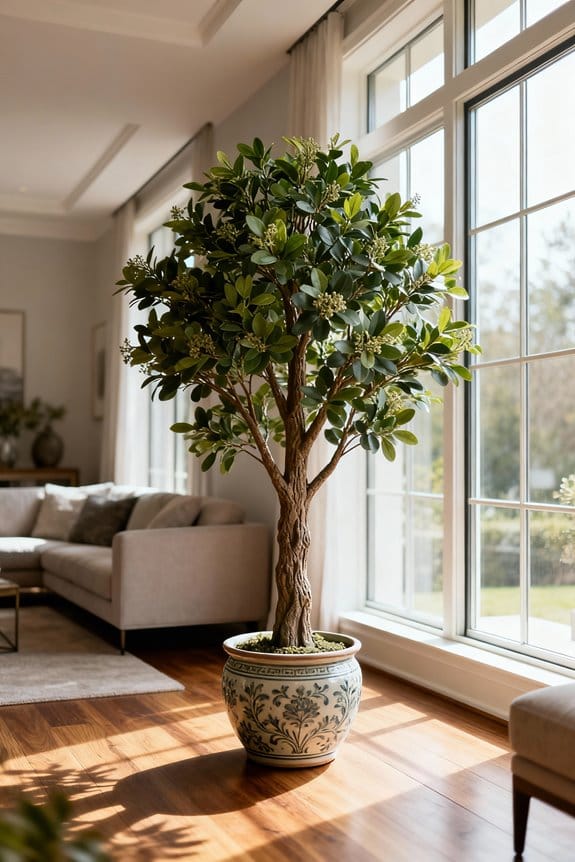

To mix faux trees with real plants naturally, start by picking quality faux trees with detailed leaves that match your real plants. Place them in well-lit spots and use bigger planters to hide fake bases—trust me, it makes a difference! Adding moss or stones around helps too. Shuffle your setup now and then to keep it fresh. With a few tricks, your space can look surprisingly real and inviting! Stick around if you want even more easy tips! 🌿
Key Takeaways
- Choose high-quality faux trees with detailed, smaller leaves and realistic materials like PVC or PE for seamless blending with real plants.
- Match leaf shapes, sizes, colors, and textures between faux and real plants to create a cohesive and balanced aesthetic.
- Place faux trees in well-lit areas and use uplighting to enhance their natural appearance alongside real plants.
- Utilize larger planters and cover plastic bases with soil, moss, or stones to ground faux trees and improve authenticity.
- Arrange plants with varying heights and layers, incorporating both faux and real, to add visual interest and natural flow.
Select High-Quality Faux Trees for Realism
Finding the right faux tree can feel a bit like dating—looks matter, but so does the quality! 🌿 When you’re picking out faux trees, go for the ones that really nail the textures and colors of real plants. High-quality options usually have smaller, detailed leaves that don’t scream “plastic!” Believe it or not, those tiny leaves often trick your eyes better than big, chunky ones. Brands like Nearly Natural offer botanically accurate choices that look convincingly real without breaking the bank. It’s like finding the perfect match that fits your style and budget! You don’t have to settle for anything less than gorgeous. Choosing well-made faux trees means you get that realistic look without worrying about watering or sunlight—talk about hassle-free green vibes! 🌱 Look for trees made from high-quality PVC or PE materials to achieve the most lifelike leaf texture and color variations.
Match Faux Trees With Complementary Real Plants
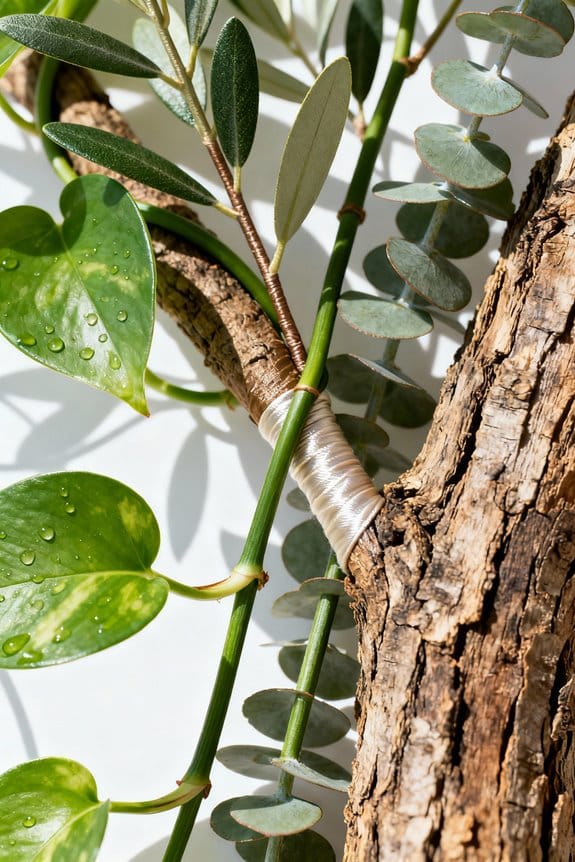
Three simple tips can make mixing faux trees with real plants feel less like a puzzle and more like teamwork! 🌿 When you match leaf shapes or sizes, the plants look like they belong together instead of crashing a party uninvited. Choosing faux plants with realistic leaf patterns that echo your real plants creates a complementary flow, making the space feel natural. Don’t forget to mix heights! Taller faux trees can be your room’s centerpiece, while smaller real plants fill the gaps for a lively contrast. Also, pay attention to colors and textures. Pair smooth faux leaves with your real plants’ varied textures to keep things interesting without overwhelming your eyes. A thoughtful match keeps everything balanced and cozy! Additionally, considering the maintenance needs of both faux and real plants ensures a harmonious and stress-free workspace.
Choose Appropriate Lighting and Placement
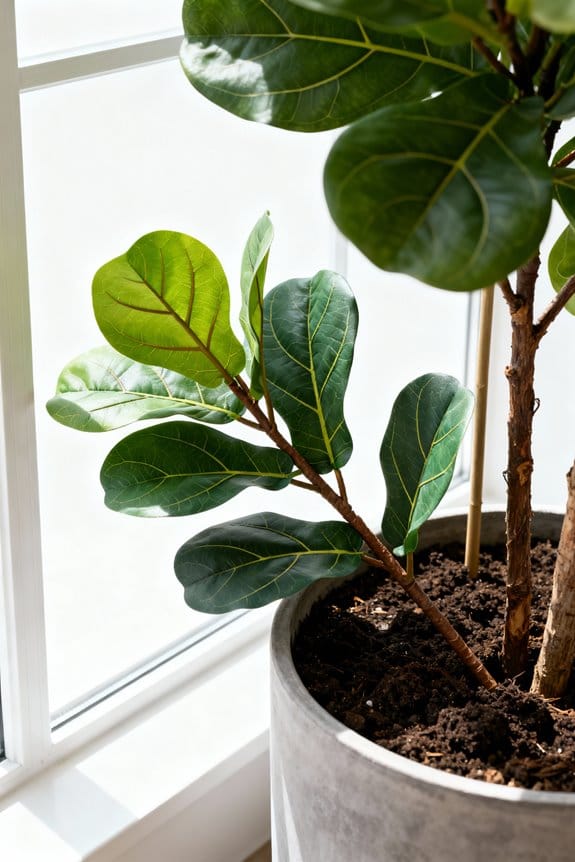
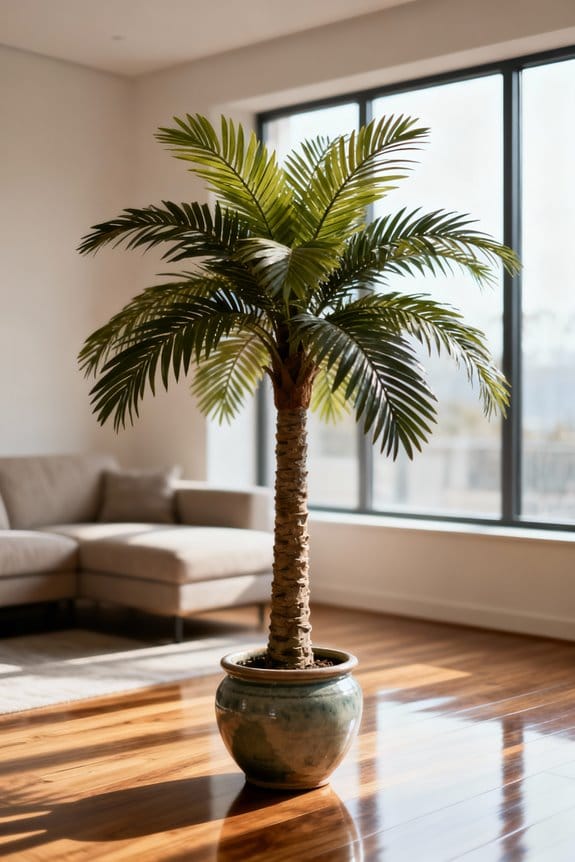
Now that your faux and real plants are looking like best friends by matching shapes and sizes, it’s time to think about where they hang out and how the light hits them. When placing faux plants, aim for well-lit, open spots where natural light can do its magic 🌞. This lighting not only brightens your space but makes those fake leaves look way more believable! Try putting a little uplighting around faux trees to mimic the soft shadows real plants get—kind of like giving them a warm spotlight 😊. Avoid dumping faux trees in dark corners that scream “fake alert.” Instead, pick places where sunlight filters through nicely, helping to blend your plants together into one happy, green family. Lighting and placement? Small tweaks, big charm! For optimal results, choose faux trees that feature UV-resistant silk/polyester leaves to keep their colors vibrant under sunlight.
Use Larger Planters to Conceal Bases
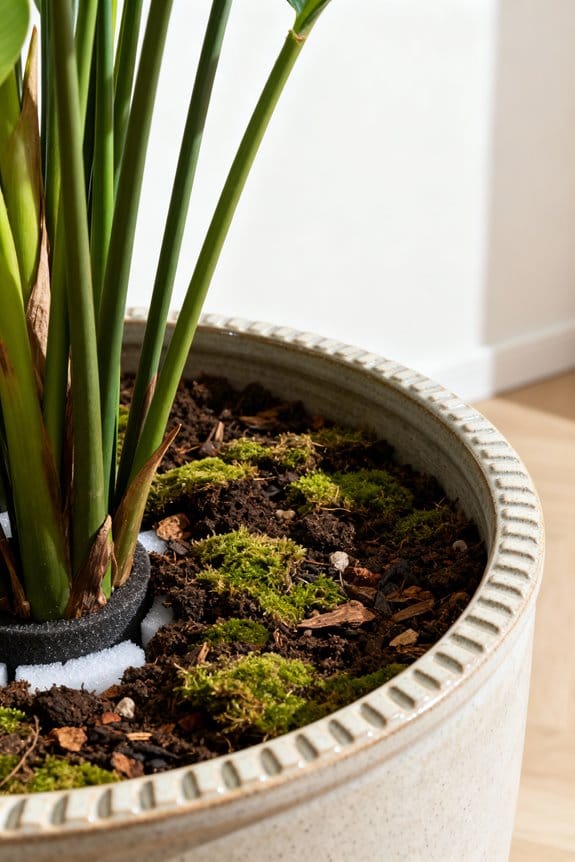
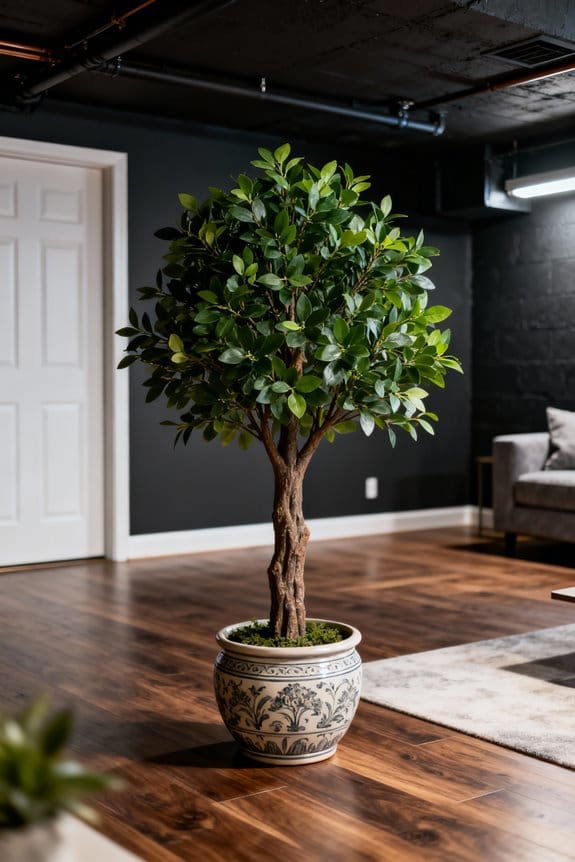
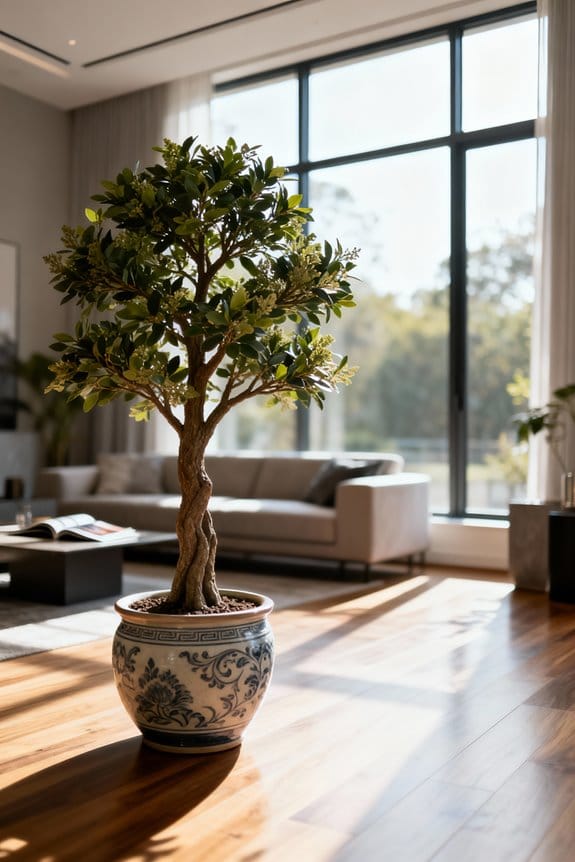
A larger planter can work wonders when it comes to hiding those awkward little plastic bases at the bottom of faux trees! 😊 Seriously, no one wants to stare at clunky plastic—it kills the vibe. Using larger planters not only hides these bases but also makes your faux plants look more grounded and natural. Plus, bigger planters give your realistic faux tree a solid foundation, helping it “grow” just like a real one. You can even find stylish, budget-friendly options at thrift stores, so there’s no need to break the bank. Just pop your faux plant into a larger planter, maybe add some craft moss on top, and voila! Your setup looks way more polished without all that base distraction. Who knew bigger could truly be better? For added stability and longevity, consider selecting pots with weighted bottoms and wider bases to keep your faux trees secure.
Add Natural Elements Around Faux Trees
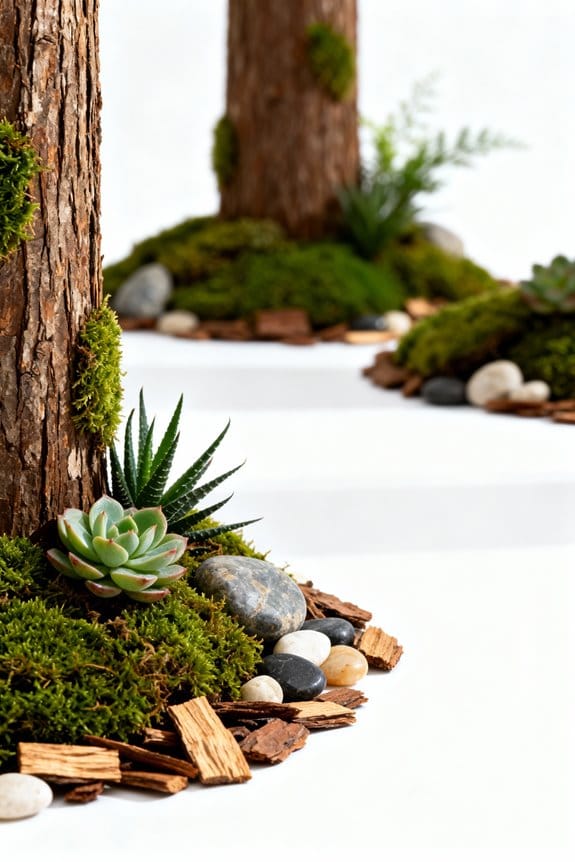
Once the bases of your faux trees are nicely hidden with larger planters, it’s time to add some natural touches around them! 🌿 You might think fake plants don’t need real soil or moss, but sprinkling a little of those natural elements around the base works wonders for making everything look authentic. Covering plastic bases with craft moss or small stones adds that extra natural look we all want. Don’t forget to tuck in a few real branches or leaves near your faux plants to boost texture and keep things cozy. Surrounding faux trees with real plants also helps them blend in better—it’s like they’re all part of the same green family. With these little tricks, your mix of faux and real plants feels way more natural and less “fake friendly,” trust me! For extra realism and easy customization, consider faux trees featuring internal wire branches that allow you to shape them naturally and seamlessly with your real plants.
Vary Plant Heights and Textures in Arrangements
Frequently, mixing different heights and textures when arranging your faux trees with real plants can really make your setup pop! 🌱 It’s like giving your eyes a fun little treasure hunt, moving from tall, skinny trees to shorter, bushy greenery. By varying plant heights, you create natural layers that trick the eye into thinking it’s a real outdoor scene. Adding diverse textures—like the smooth plastic leaves of faux plants next to the rough, real ones—gives your arrangement more depth and interest, so faux plants can look way less fake. Try to pick heights that flow together; tall faux trees blend nicely with smaller, bushy real plants. Trust me, your plant pals will thank you for the extra dimension—and hey, it’s less chance someone’ll spot the plastic! You can also enhance the overall effect by choosing faux trees made from real wood trunks to boost the natural appearance.
Shape and Position Faux Branches Naturally
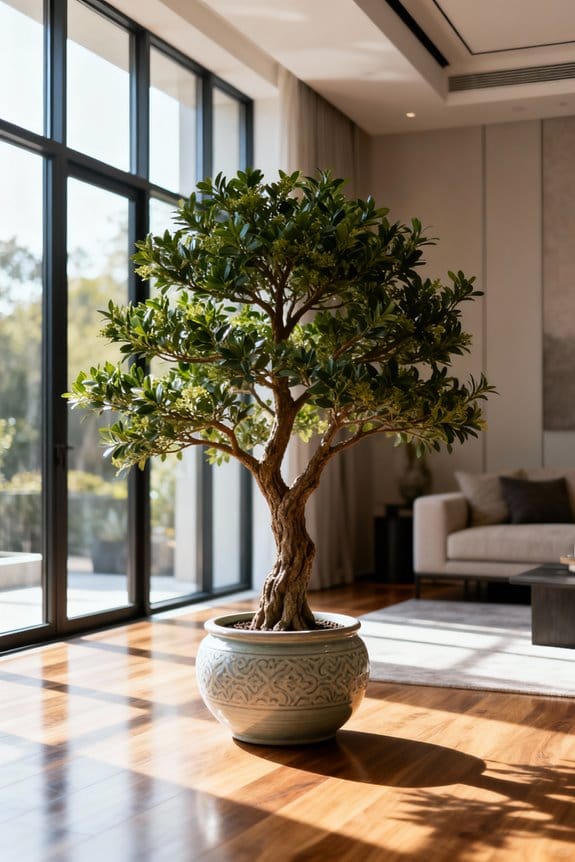
Many little tweaks to shaping and positioning faux branches can make them blend surprisingly well with your real plants! 🌿 Try bending branches gently to mimic how natural plants grow—don’t worry, you’re not breaking anything, just adding some personality. When you shape and position faux branches, pull some stems outward and away from the center for that open, full vibe you see in real plants. Mixing faux branches with real plants closely helps create depth and a natural flow. If your faux tree looks a bit short, pop it up on a box or book to match nearby plants’ height. Keep adjusting every now and then to avoid a stiff look—plants, real or faux, like to stay lively! You’ve got this! For a perfectly stable and realistic setup, consider using weighted planters that prevent tipping and offer balance to your arrangement.
Maintain Cleanliness of Both Faux and Real Plants
Dust bunnies might be tiny, but they sure know how to ruin your plant’s vibe! 😅 Keeping both faux and real plants clean not only makes your space look fresh but also helps your green friends thrive. Establish a simple cleaning routine—once a month works well. For faux plants, grab a damp cloth or soft brush to dust off that sneaky dirt. Stubborn stains? A gentle cleaning solution will do, but steer clear of harsh chemicals to avoid damage. Real plants need a little more love: wipe leaves gently with a damp cloth to boost photosynthesis and follow a consistent watering schedule. Remember, dusty spots aren’t great for real plants, so pick those spots for your faux pals instead. Trust me, your plants will thank you! 🌿
Refresh the Arrangement by Rotating Plant Positions
Shake up your plant setup every now and then to keep things feeling fresh and fun! 🌿 Rotating your faux and real plants around your space isn’t just for looks—it helps each one soak up new light and shows off their best features. Moving your fake plants and real ones lets them catch different light, making them look even better. Plus, switching spots highlights the vibrant greens of real ones and the textured charm of the Best Artificial plants you’ve carefully picked. It’s like giving your plant crew a little makeover! This simple trick stops your display from feeling boring and keeps your space lively. So, every few weeks, shuffle those pots around. Your plants—and your eyes—will thank you! Incorporating items like metal planters can add a stylish and durable touch that complements both real and faux greenery.
Frequently Asked Questions
How to Make Fake Plants Look Natural?
Like an Elizabethan playwright crafting nuanced tales, one achieves natural plant textures by shaping faux foliage tips, incorporating diverse leaf sizes, and arranging mixed greenery strategically, ultimately improving indoor aesthetics through convincing, harmonious displays that mimic genuine growth.
Can You Mix Fake Plants With Real Plants?
Yes, mixing fake vs real plants is common in home decor. Faux plants require minimal plant care, while real plants need maintenance. Combining both creates visual interest, balances upkeep, and enhances natural ambiance in interiors.
How to Make Your Fake Tree Look Real?
To make a fake tree look real, careful fake tree care includes gently shaping branches and choosing realistic foliage. Proper artificial tree placement in natural light and using natural bases enhance the lifelike appearance convincingly.
What Is the Most Realistic Looking Fake Tree?
Nearly Natural’s faux trees, designed by botanists, offer 90% lifelike accuracy, maximizing faux tree benefits. Choosing faux foliage with varied textures and imperfections plays an essential role in enhancing indoor aesthetics convincingly and naturally.