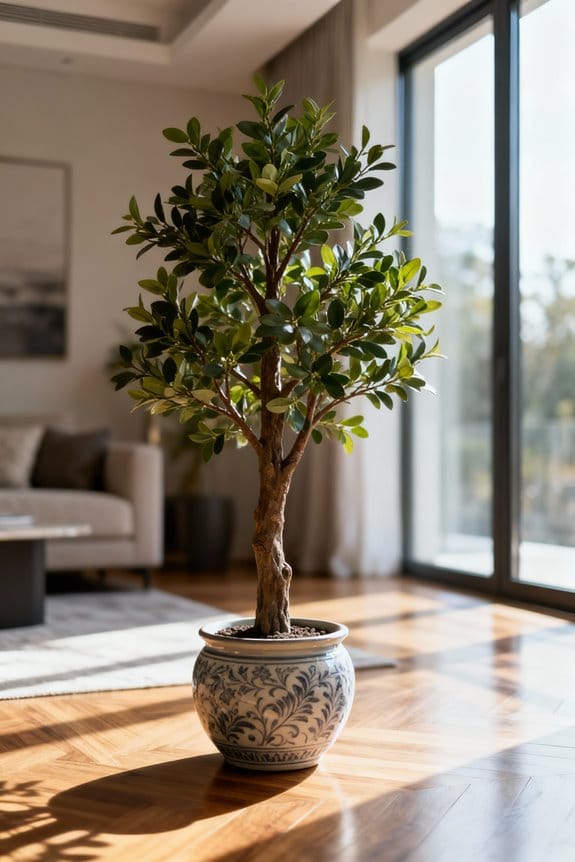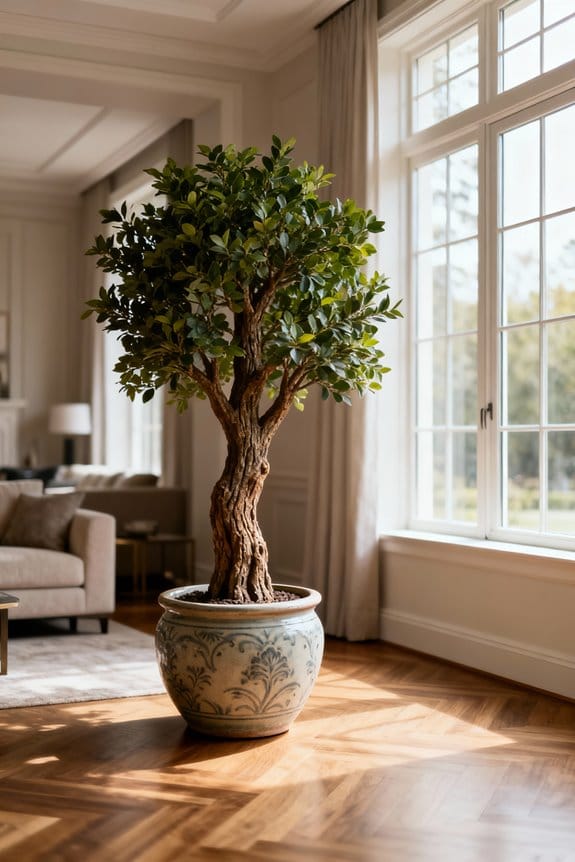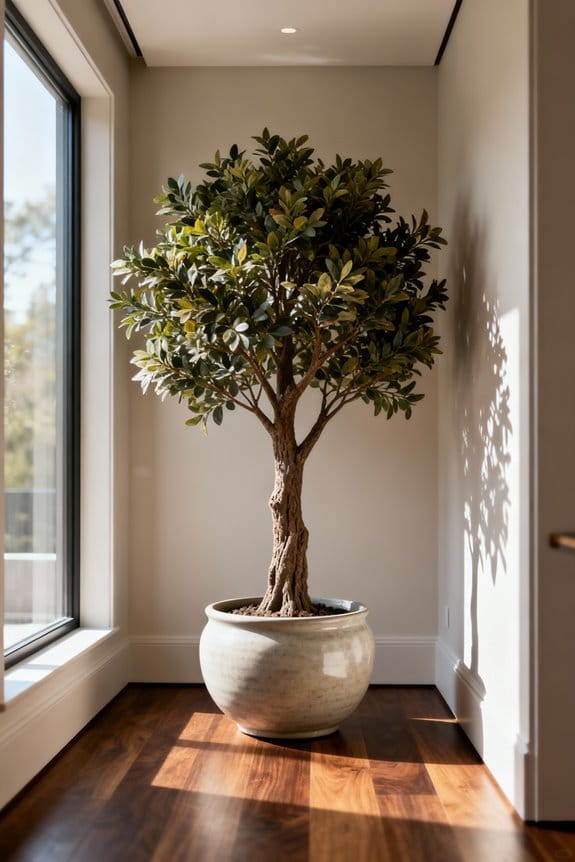
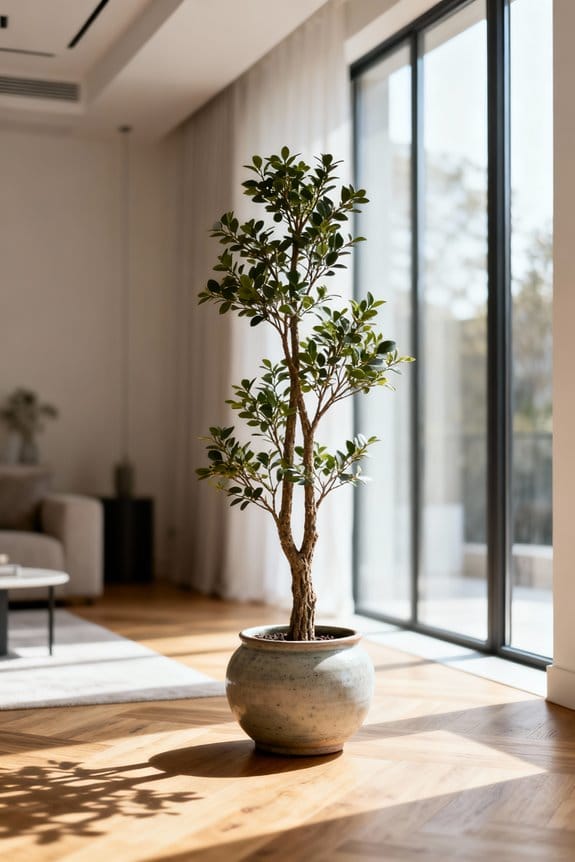

Got a tiny studio? Slim trees are your new best friend—they squeeze into little corners and draw your eyes up, making rooms feel taller and airier! Choose slim varieties like a baby lemon tree or a pencil-thin palm to keep things fresh without hogging space. You can even wheel them around to catch the light or switch up your vibe. They’re low-maintenance but pack a green punch! Stick around, and you’ll find neat ways to maximize every inch! 🌿
Key Takeaways
- Slim trees fit into tiny spaces, creating a taller, airier feel without crowding the studio floor.
- Positioning slim trees in corners or beside furniture maximizes visual depth without blocking pathways.
- Combining slim trees with vertical storage like tiered pots frees floor space and adds cozy height.
- Mobile containers with wheels allow easy relocation for optimal light and flexible room rearrangement.
- Regular pruning and proper watering maintain healthy, neat slim trees, preventing overcrowding in compact areas.
Benefits of Slim Trees in Small Studio Spaces
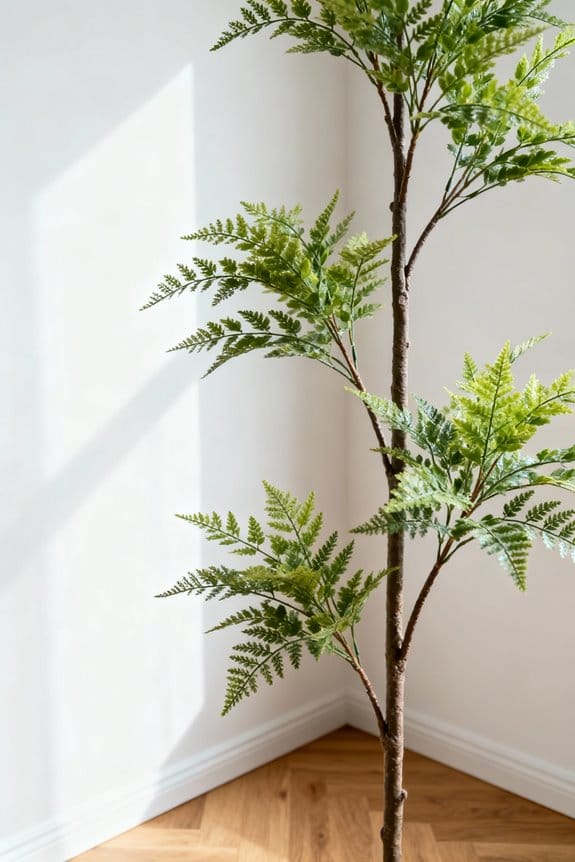
Tiny trees might just be the unsung heroes of small studio spaces! Slim trees fit perfectly in tiny spots, taking up minimal floor space while adding vertical charm. They create an illusion of space by drawing your eye upward, making small living areas feel taller and airier. You don’t need to worry about squeezing in bulky plants—these little guys bring in fresh greenery without crowding your room or needing too much care. Placing slim trees in corners or on shelves makes great use of unused areas, promoting an open feel that’s both calming and organized. Plus, using mobile containers means you can easily move your plants around to catch the best light or switch up your style—just don’t blame them if they end up blocking your morning coffee spot! 🌿😉 Many slim artificial trees offer hinged branches that allow for easy setup and shaping, perfect for small and flexible spaces.
Selecting the Right Slim Tree Varieties
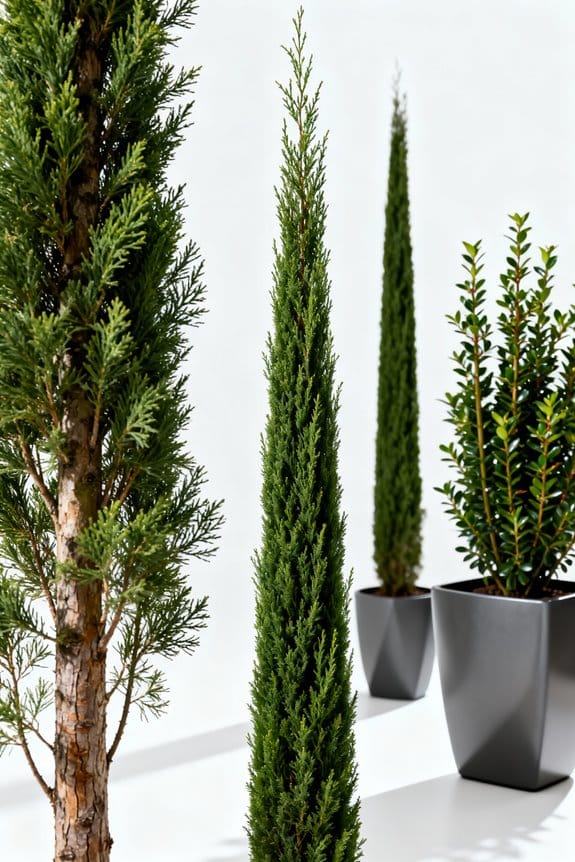
Choosing the right slim tree for your space can feel like a mini adventure, but don’t worry—it’s simpler than it sounds! 🌳 Whether you’re after something that stays petite and tidy or a taller plant that stretches upward without hogging room, there are plenty of great options. For small spaces, smart design means picking trees like dwarf citrus—think Improved Meyer Lemon—that top out around 3 to 4 feet. Slim palm varieties such as the Parlor Palm offer lush greenery without eating up limited floor space. If you’re feeling tall and slim, the Pencil Tree grows up to 10 feet but stays narrow. Plus, Japanese Aralia adapts well to low light, while bonsai varieties bring charm with customizable shapes. These choices help keep your studio feeling open and lively! Measuring your space carefully helps ensure the tree’s size and proportion fit perfectly without overcrowding.
Positioning Slim Trees for Maximum Visual Impact
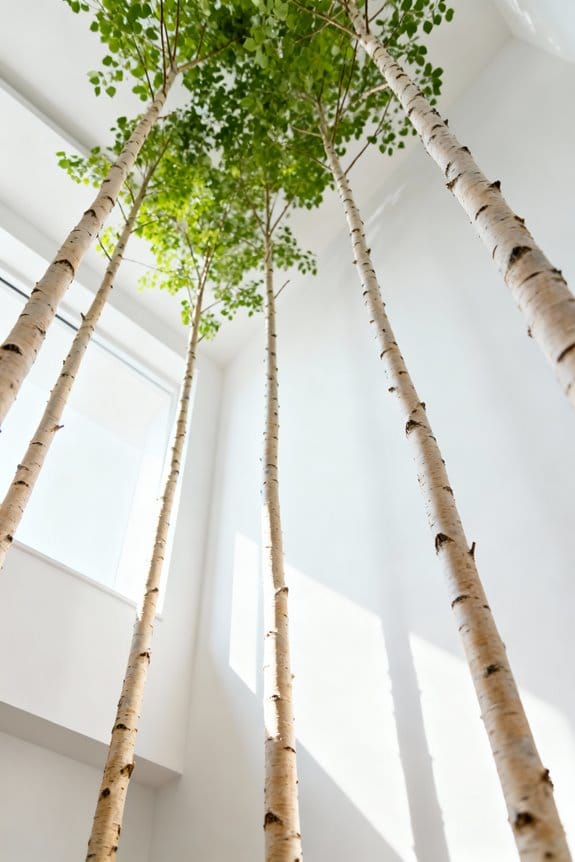
When it comes to making slim trees shine in your space, where you put them really matters! 🌿 Placing these green friends in corners or right next to furniture can create cool little focal points without blocking your path—that way, you get fresh vibes without tripping hazards. Positioning slim trees this way helps you use floor space wisely while making your room feel more open. Try elevating them on tiered pots or stands to pull eyes upward and boost that vertical space magic. You can even group them with taller artwork to create natural focal points that make the ceiling seem higher. If you’re like me and love rearranging, grab containers with wheels—easy to move for light or styling changes. This strategic setup truly maximizes visual impact without overcrowding! Many artificial corner trees come with weighted bases for stability, ensuring they stay securely in place once positioned.
Combining Slim Trees With Vertical Storage Solutions
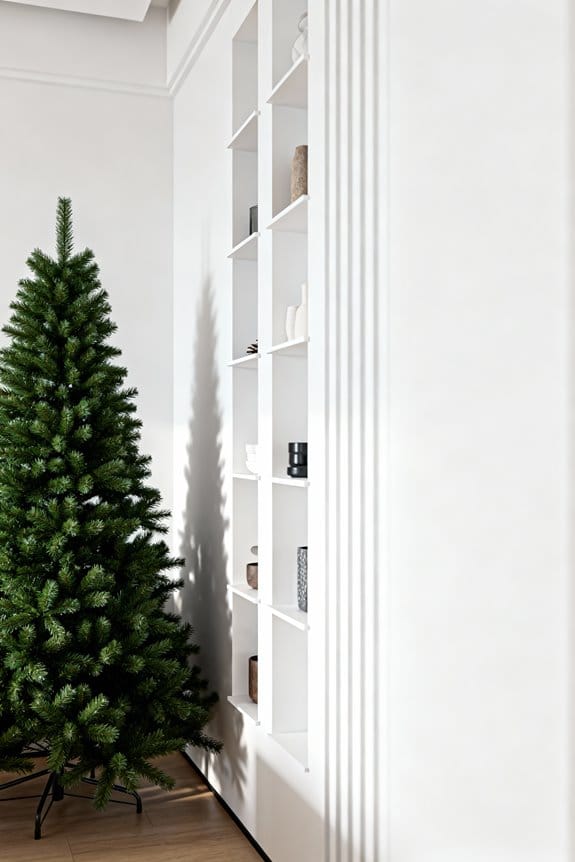
A handful of clever tricks can help you merge slim trees with vertical storage solutions in small spaces! 🌿 For example, placing a dwarf citrus or bonsai in tiered pots not only adds height but frees up floor space by stacking your greens and books alike. Using open shelving is a smart move, too—slim trees soften the sometimes cold look of shelves, making your studio feel cozier without clutter. If you want to keep things flexible, try mobile containers with wheels for your trees; moving them around for cleaning or rearranging is way easier than you’d think! Combining slim trees with vertical storage isn’t just practical, it makes your small space look organized and fresh—plus, who doesn’t want a little garden vibe right where you work or relax? Additionally, opting for silk or UV-resistant leaves can enhance the realism and durability of your indoor greenery, ensuring your studio stays vibrant over time.
Using Slim Trees to Enhance Natural Light
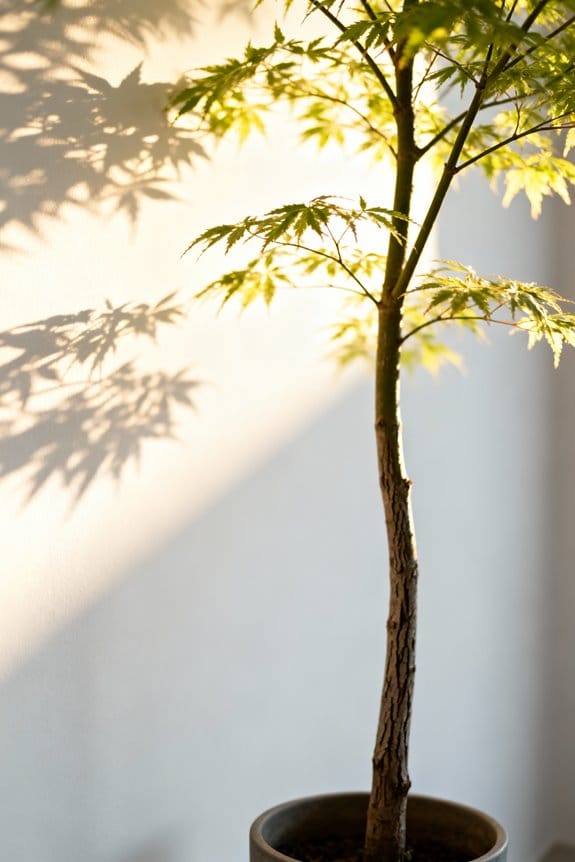
Your studio’s natural light can get a serious upgrade by adding slim trees near windows—think dwarf citrus or bonsai that won’t steal the spotlight but still work their leafy magic. 🌞 These trees don’t block sunlight because their slender trunks and light-colored leaves let rays sneak through, keeping your space bright and breezy. Placing slim trees by windows not only boosts natural light but also creates a great sense of openness in a small space. Their vertical growth tricks your eyes into thinking ceilings are higher—like magic! Plus, grouping them with light-colored decor helps bounce more light around. So, if you want a fresh, airy feel without losing floor space, slim trees are your natural light allies—no green thumb required! 🍃 Many slim artificial olive trees offer adjustable branches that allow you to customize the look and fit perfectly even in the narrowest spaces.
Creative Pot and Planter Options for Slim Trees
Three clever planter ideas can give your slim trees a stylish home without crowding your space! 🌿 Tiered pots, for example, stack up height and add that “wow” factor while saving floor room—perfect if you like your greenery with a little drama. Another smart move is using mobile containers with wheels, so you can easily move your slim trees to catch sunlight or clear the way when guests arrive. Ultimately, slim vertical planters that double as multifunctional furniture, like room dividers or benches, pack two perks into one spot. Choose lightweight materials like fiberglass or ceramic for easy handling and blend decorative pots that match your studio’s vibe—you’ll gain both beauty and visual interest. It’s the kind of creative pot options that make small spaces feel big! Maintenance is minimal, requiring just occasional dusting to keep faux trees looking their best, making them perfect for small, busy living areas with low upkeep benefits.
Maintaining Slim Trees in Compact Environments
Even though slim trees don’t take up much space, they still need some TLC to stay happy and healthy in tight spots! 🌿 Think about giving them plenty of light and making sure their soil drains well—this keeps their roots from throwing a little tantrum. In small spaces, regular pruning helps keep your slim trees neat and prevents them from hogging room. Using mobile containers is a smart storage solution, letting you move your plants to catch sunlight or freshen up the space. Water carefully, since humidity can play tricks indoors, and avoid overwatering—your slim trees will thank you! With these simple tips, you’ll create a sense of calm and greenery without feeling cramped. Trust me, even a tiny tree can make a big impact! Consider choosing trees with adjustable branches to maximize space and customize their shape for your studio.
Incorporating Tiered Plant Displays With Slim Trees
While small spaces might feel like a puzzle, using tiered plant displays with slim trees can be a game-changer for your room’s vibe! 🌱 These clever shelves stack plants at different heights, making your space look taller and fuller without tripping over pots on the floor. In a small studio, tiered plant displays make the most of vertical space, so you don’t lose precious floor room. Placing slim trees on various shelf levels pulls your eyes upward, giving a bigger sense of space—almost like a magic trick! Lightweight shelves and pots mean you can easily move things around when the sunlight changes or if you just want a fresh look. Plus, mixing small plants below with taller slim trees creates a great balance that’s both functional and pretty. Choosing UV-resistant leaves ensures your plants stay vibrant and lifelike even in bright indoor lighting.
Mobile and Modular Plant Containers for Flexibility
Imagine having a little army of plant pots on wheels ready to roll around your space whenever you want—a bit like green ninjas! 🌿 Mobile plant containers are a smart way to keep your plants flexible and happy since sunlight can be a bit picky about where it falls. In a small space with limited square footage, these containers help you shift plants easily, whether to chase the sun or clear space for guests. Rolling saucers let you experiment with different layouts without heavy lifting, making your studio feel fresh and alive. Plus, modular containers let you mix and match, fitting your style and mood. They’re compact and light, so moving them won’t hurt your back or scratch floors. It’s a clever, playful trick to add greenery without commitment! Choosing lightweight artificial bamboo trees for these containers ensures easy mobility while maintaining an authentic look.
Pairing Slim Trees With Multifunctional Furniture
When space feels tighter than your favorite jeans after Thanksgiving, pairing slim trees with multifunctional furniture is a smart move to breathe life into your room! 🌿 Slim trees don’t hog space like their bulky cousins, and when you use them with stuff like planters that also work as seats or side tables, you double up on style and function. In a small living area, combining slim trees with narrow bookshelves or tiered shelves offers vertical storage without cluttering floors. Rolling pots for trees help you easily shift furniture during get-togethers too, so your space stays flexible and fresh. This teamwork not only saves space but creates zones in a studio, giving your home a neat, cozy vibe without feeling cramped. Practical and pretty? Yes, please! Choosing slim trees made from low-VOC materials ensures a healthier indoor environment while keeping your studio stylish.
Styling Tips to Create Depth and Openness With Greenery
Adding slim trees to your small space does more than save room—it can actually make your place feel bigger and fresher! 🌿 Placing plants like dwarf citrus or bonsai in corners or next to furniture draws your eyes up and across the room, creating a sense of depth. To boost visual openness, try arranging these slim trees near mirrors—it’s a neat trick that doubles light and brightens your studio. Using tiered pots or mobile containers helps layer your greenery without crowding floors, keeping things flexible and fresh. Remember, lighter-colored pots keep the vibe airy, so your intentional design feels open, not cluttered. It’s like magic but with leaves—your space looks bigger, and you get a nice green friend who’s low-maintenance!
Frequently Asked Questions
How to Make a Small Studio Look Bigger?
To make a small studio look bigger, one must embrace minimalist decor paired with light colors. Open shelving draws the eye upward, while strategic mirrors reflect light, creating an illusion of endless space and enchanting openness.
What Are the Best Skinny Trees for Small Spaces?
The best skinny trees for small spaces include slim tree varieties like Lady Palm and Dracaena marginata. These indoor tree options serve as space enhancing plants, especially when combined with vertical gardening techniques such as tiered pots.
What Is the Smallest Fully Grown Tree?
Among dwarf tree varieties, the smallest fully grown tree is the Bonsai, often remaining between 6 to 12 inches. Its miniature tree care yields impressive indoor tree benefits, making it an ideal space-saving plant for compact environments.
What Trees Can Be a Material in Making Furniture?
Oak, maple, birch, walnut, cherry, pine, and cedar are commonly used in furniture design. Woodworking techniques optimize space, while eco friendly materials, including reclaimed wood, promote sustainability and aesthetic appeal in durable, functional furniture pieces.